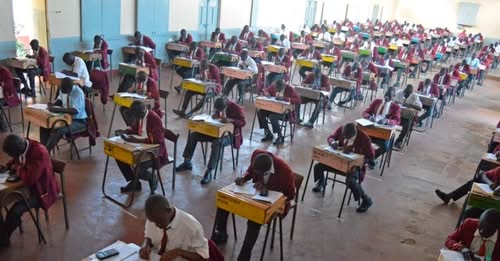
Every year, Kenya watches the same drama unfold. KCSE results are released, and suddenly the nation becomes a scoreboard. Schools parade their mean scores, newspapers splash lists of top performers, parents compare children as if they were commodities, and learners either glow with pride or slump into despair. Social media erupts with photos, posts, and trending hashtags that dominate for days. In the frenzy, one critical truth is often ignored: grades matter, but they do not define life success.
For decades, we have treated the KCSE results as a verdict on character, intelligence, and potential. We have assumed that a straight-A student is destined for greatness, while a learner who scores modestly has failed life before it even begins. This misconception is dangerous. It narrows our view of education, misguides parents and learners, and obscures the qualities that truly determine success: resilience, adaptability, creativity, and emotional intelligence. KCSE grades measure performance under a very narrow set of conditions. They reward memory, exam technique, and punctuality. They do not test problem-solving under ambiguity, collaboration, communication, or decision-making, skills essential for real life. A student who excels in mathematics and biology may struggle with financial literacy, time management, or interpersonal conflicts. Yet society applauds only the grades, rarely addressing this gap.
Consider the university entrants we see every year. Many top-performing students excel academically but quickly encounter difficulties adjusting to independent living. They struggle with budgeting, meeting deadlines without constant reminders, and managing social interactions in group projects. Exams do not prepare learners for negotiating challenges outside structured classrooms. High grades can also foster a false sense of security. Some learners believe that academic excellence will automatically guarantee life success. When challenges arise that cannot be solved by memorisation or examination strategy, they feel unprepared. Overconfidence, lack of resilience, and fear of failure become barriers. The very certificates we celebrate may inadvertently leave our children vulnerable
ALSO READ:
While high achievers face invisible pressure, learners whose results fall below expectations face visible consequences. In many homes, poor KCSE grades trigger anger, ridicule, or shame. Some parents unconsciously equate performance with worth. The result: learners internalise failure as identity rather than outcome. Some sink into depression; others withdraw socially. In extreme cases, self-harm and substance abuse have followed the release of poor results. These reactions highlight a critical national issue: we confuse grades with life value. A learner who scores modestly may still have tremendous potential-especially in practical, creative, or technical fields. Unfortunately, societal pressures and a rigid perception of success often prevent young people from exploring these pathways.
Parents hold enormous influence at this stage. Your reaction to the results matters far more than the results themselves. Calm, supportive, and advisory guidance can restore confidence and help your child navigate the next steps. Harsh criticism or constant comparison can have long-lasting negative effects on self-esteem and motivation. Ask constructive questions instead of condemning grades: “What have you learned about yourself?” “Which path excites you?” “How can we support your next step?” These questions shift the focus from shame to growth, turning disappointment into opportunity. Parents should also challenge societal obsession with prestige. High grades do not automatically dictate career or life success. For instance, a learner who performs modestly in KCSE could become a skilled artisan, entrepreneur, or digital professional, roles increasingly critical in Kenya’s evolving economy.
For years, teaching has focused on examination performance at the expense of holistic education. Creativity, critical thinking, collaboration, and practical problem-solving are often sidelined. Guidance and counselling departments exist in name only in some schools, leaving learners ill-equipped to make informed decisions after KCSE. A school may celebrate a high mean score while ignoring learners who struggled silently. Real success in education is not just about producing straight-A students; it is about nurturing young people who can think, adapt, and contribute meaningfully to society. Teachers must intentionally integrate life skills into learning. Time management exercises, leadership activities, financial literacy, and conflict resolution are just as important as syllabus mastery.
KCSE results reflect academic achievement, but success in life is far broader. A plumber who builds a thriving business, a teacher who shapes generations, a farmer who innovates and employs others, or a software developer who solves real problems, these are all successes that KCSE grades may not predict. Yet as a nation, we continue to reward letters on a certificate more than competence, accolades more than applied skills, and theory more than practice. This imbalance leaves learners unprepared for the realities of adulthood. High grades without life skills can result in adults who are intelligent but ineffective, knowledgeable but directionless.
Life skills are not optional; they are essential. Adaptability, resilience, financial literacy, communication, problem-solving, leadership, and ethical judgment equip young people to handle challenges that exams cannot simulate. Consider the entrepreneur who dropped out of school yet thrives because of creativity, determination, and networking skills. Or the artisan who pursued vocational training after modest KCSE results and now employs others. Real-life success often depends on attributes beyond grades: courage, resourcefulness, and the ability to navigate uncertainty.
The release of KCSE results can be emotionally intense. High achievers may face pressure to maintain performance; low performers may feel shame and hopelessness. Parents and schools must support learners emotionally. Open conversations, reassurance, and professional counselling when necessary can prevent long-term psychological harm. Emotional intelligence, the ability to understand and manage one’s own feelings and respond effectively to others, is a life skill often neglected in Kenyan schools. Yet it plays a critical role in personal and professional success.
Repeating KCSE is often seen as a “do-or-die” decision. It is not. Some learners benefit from repeating if they have a plan, proper support, and strong motivation. Others may gain more by moving forward, pursuing vocational training, skill development, or alternative education pathways. The key is careful, thoughtful guidance. Decisions should be informed, not emotional. Pressuring learners to repeat solely to protect family pride or school reputation is counterproductive. Life is long, and second chances are always available.
Equity is another urgent issue. KCSE results reflect access to resources, teacher quality, and infrastructure. Rural schools often struggle with fewer teachers, larger class sizes, and limited materials. Yet learners are judged by the same standard as their urban peers. Equity in education means providing support where it is most needed—mentoring, materials, and skills development, not merely ranking performance.
ALSO READ:
Learners themselves have agency. Good grades are valuable, but they are not the only ticket to success. Seeking experiences beyond exams, volunteering, internships, entrepreneurship, sports, and creative projects helps learners build confidence and life skills. Reflection, self-directed learning, and risk-taking cultivate adaptability and resilience. Even learners who did not perform well can excel if they leverage practical skills, creativity, and determination. KCSE is a checkpoint, not a prison.
As a nation, we must rethink how we respond to KCSE results. Schools, parents, and policymakers must focus on holistic development, not just certificates. Learners must be encouraged to develop both academic knowledge and practical life skills. We must stop celebrating grades in isolation and start nurturing competence, creativity, resilience, and ethical judgment. Only then will Kenyan learners graduate ready not just for exams—but for life.
KCSE results are important; they reflect effort, knowledge, and dedication. But a certificate alone cannot guarantee success. Life demands adaptability, problem-solving, leadership, emotional intelligence, and practical competence. High grades without life skills leave learners partially prepared. Low grades with strong skills can lead to remarkable success. Parents, teachers, and policymakers must guide learners beyond letters and numbers. Learners themselves must seize opportunities to grow holistically.
KCSE is a chapter in a life-long story. The story continues beyond the exam hall, and success depends on how we equip learners to navigate the real world. It is time to stop treating KCSE as a verdict on life and start treating it as what it truly is: one step in a much bigger journey.
By Hillary Muhalya
You can also follow our social media pages on Twitter: Education News KE and Facebook: Education News Newspaper for timely updates.
>>> Click here to stay up-to-date with trending regional stories
>>> Click here to read more informed opinions on the country’s education landscape