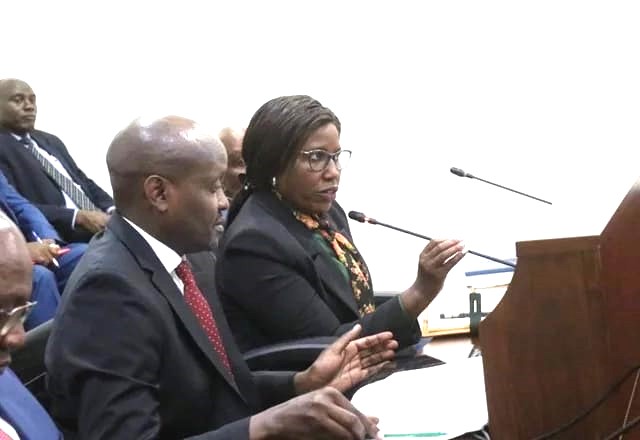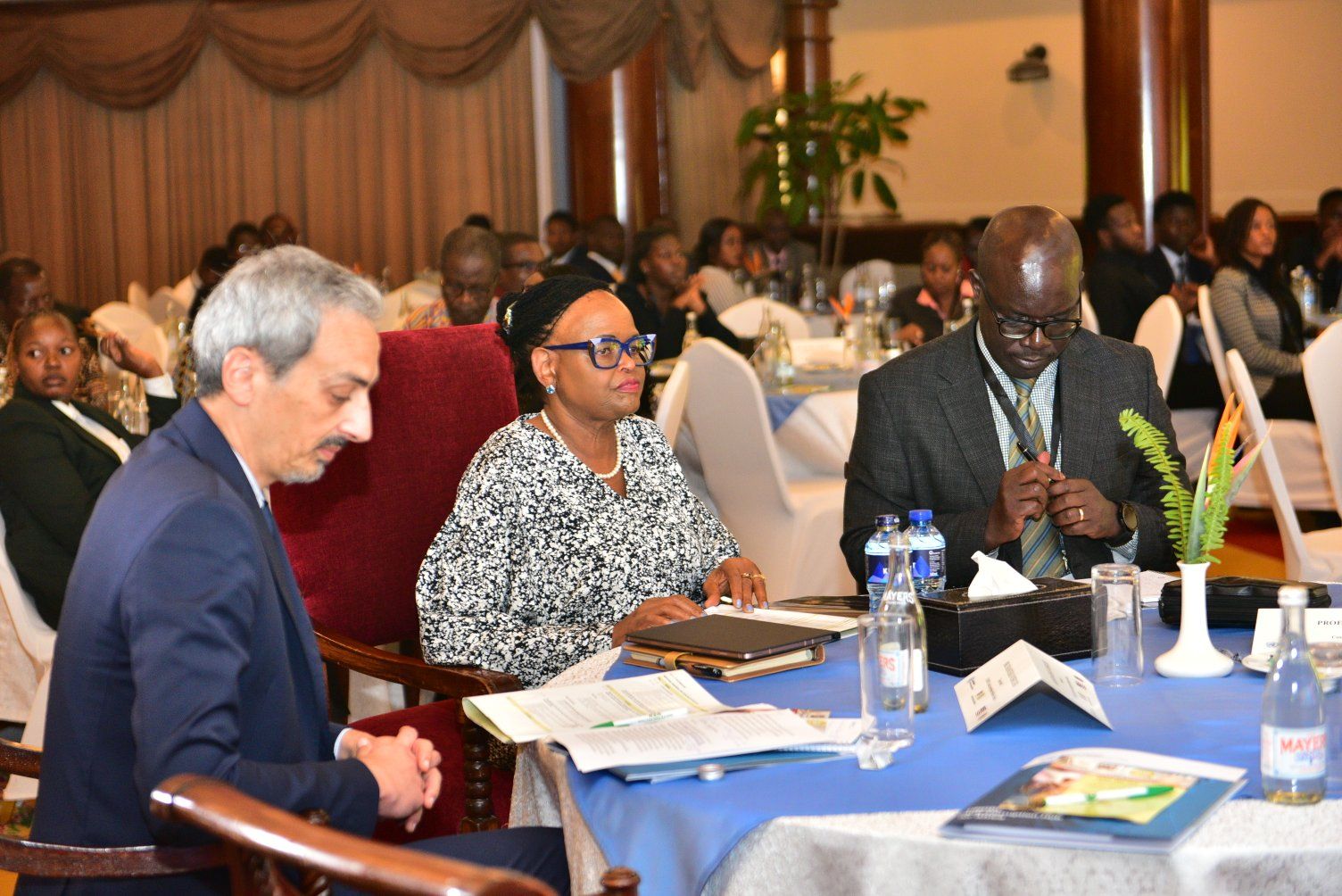
The Council of Legal Education (CLE) in partnership with UNODC Anti-Corruption Hub for Africa on Tuesday launched its inaugural conference on the future of legal education and training in Kenya and the East African region.
The three days conference brings together legal practitioners, academia, law enforcement representatives, and other stakeholders from across EA.
Speaking during the opening session, CLE Chairperson Prof. Collins Odote emphasized that the conference aims to harmonize legal education standards across the region under East African Community (EAC), COMESA, and AfCFTA frameworks with a view to facilitating cross border legal practice.
Prof Odote said discussions should focus on training advocates to serve a global market, rather than simply on the number of law schools, stating that the priority is to ensure access to well-equipped advocates who can operate internationally.
Participants will also assess the current state of legal education and training across EA identifying strengths, gaps, and best practices in regulation, accreditation, and professional standards.
Key topics include integrating Anti-Money Laundering (AML), Countering the Financing of Terrorism (CFT), and financial integrity education into university and bar curricula.
The conference will further encourage research collaboration between universities, bar associations, and the UN Office on Drugs and Crime (UNODC) to develop a sustainable African knowledge base on AML/CFT, asset recovery, and anti-corruption law.
ALSO READ:
Quality Assurance, Standards and Risk management in Senior Schools
There was call for need for legal education to evolve in order to produce practice-ready, ethically grounded, and globally competent lawyers capable of navigating the complex interplay between law, technology, and financial integrity.
Chief Justice Martha Koome called for a bold rethinking of legal education in Kenya one that responds to rapid growth in the profession, shifting global realities and the lived experiences of Kenyans.
Stakeholders also called for curriculum reforms to include emerging technologies such as artificial intelligence and to prepare law students to handle issues related to digital currencies.
Ugenya MP David Ochieng Ouma, who served as the Chief Guest at the inaugural conference, emphasized the need for lawyers to be trained to global standards. He said legal professionals must be equipped with the skills and competencies required to meet the demands of a rapidly evolving world.
Law Society of Kenya President Faith Odhiambo echoed the call for regular curriculum reviews to ensure alignment with modern demands, technological advancements, and global trends.
ALSO READ:
Egerton University pushes for modern farming as experts call for faster adoption of drones
Francesco Checchi, Team Lead of the UNODC Anti-Corruption Hub for Africa, reaffirmed the agency’s commitment to supporting reforms that enhance integrity, professional competence, and the future of legal education in Kenya and the wider region.
He noted that universities in EA should collaborate with global institutions to produce lawyers equipped to work in international legal markets.
Rose Cave, Deputy High Commissioner, British High Commission Nairobi said legal education is the foundation of justice systems.
“Legal education shapes the values, skills, and ethical compass of those who will interpret apply, and enforce the law,” she said.
The conference marks a significant step toward regional collaboration in legal education, aiming to prepare a new generation of lawyers equipped for the challenges of a rapidly evolving legal and technological landscape.
By Obegi Malack
You can also follow our social media pages on Twitter: Education News KE and Facebook: Education News Newspaper for timely updates.
>>> Click here to stay up-to-date with trending regional stories
>>> Click here to read more informed opinions on the country’s education landscape