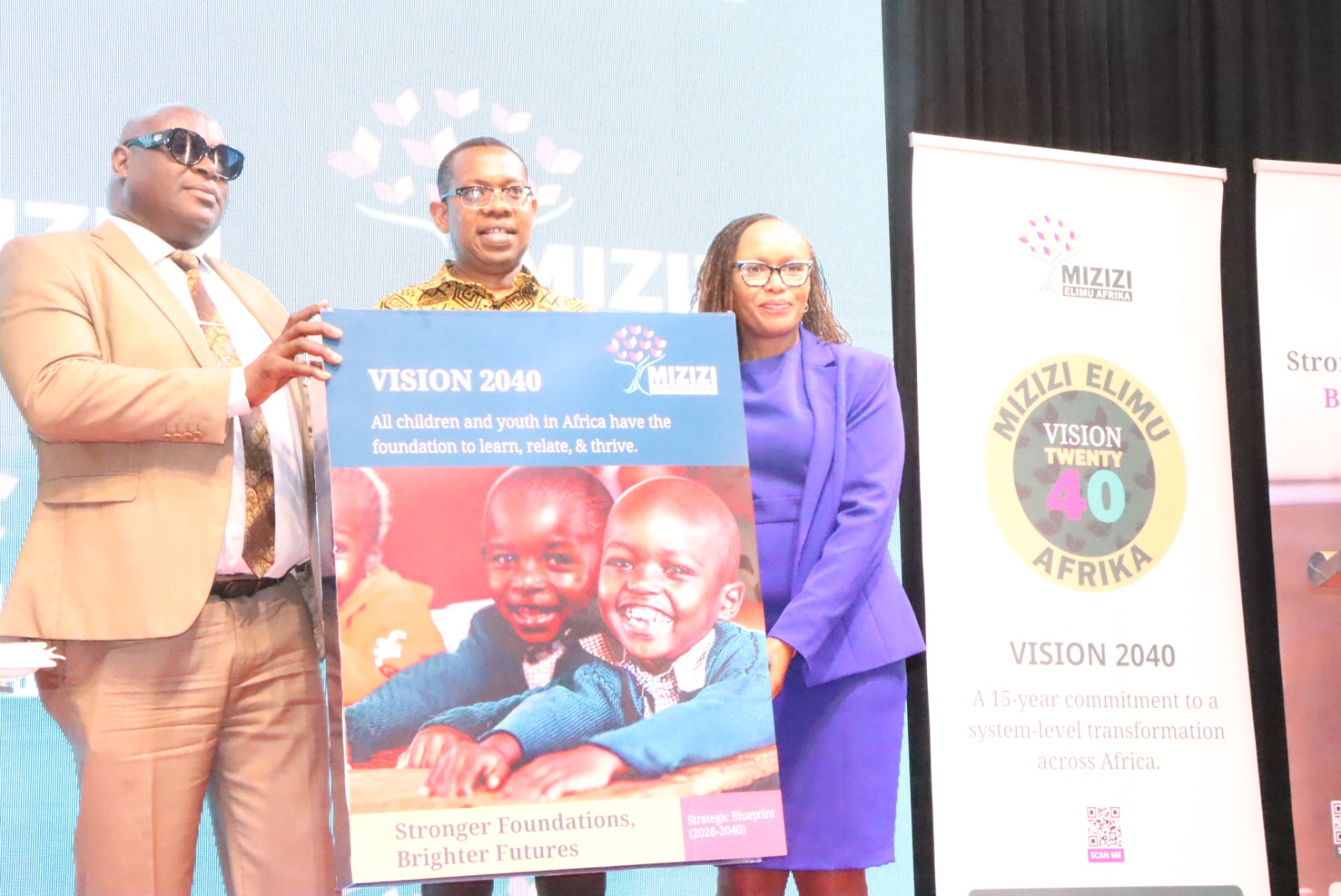
Education stakeholders convened in Nairobi on March 10, 2026, for the launch of Vision 2040 Strong Foundations for Lasting Change and the rebranding of Zizi Afrique Foundation to Mizizi Elimu Afrika.
The organization said the new identity signals a renewed focus on strengthening foundational learning across Africa, with an emphasis on improving literacy, numeracy and life skills among children and youth.
According to the organization, the name Mizizi, the Kiswahili word for roots, reflects its commitment to strengthening the early foundations of learning that shape academic success and long-term opportunities.
Chief Executive Officer (CEO) John Mugo said foundational skills acquired during early schooling play a critical role in shaping a child’s future. He said learners who develop strong reading, numeracy and life skills early are better equipped to navigate academic and life challenges.
The Vision 2040 strategy outlines a plan to reach at least 10 million children across Africa by strengthening foundational learning systems through research, policy engagement and partnerships with governments, educators and civil society.
ALSO READ:
Moi University partners with Afriwatt to launch Phase Two of Solar Power project
The plan focuses on three key priorities. These include improving foundational learning in classrooms and communities, strengthening accountability in education systems and building partnerships that support long-term reforms.
Education experts attending the launch said strengthening early literacy and numeracy remains critical as countries work to improve learning outcomes.
The event Chief Guest Florence Wanja, Regional Head, EA, Business and Commercial banking, Stanbic Bank commended the organization for enabling children to learn, relate and thrive.
She noted that life skills and values play key role in children development.
“When we look at life skills, there are some of the things that are also important to the young learners, and this includes financial literacy which we are seeing as bankers where adults are getting into a point where they start earning income and they don’t have financial literacy. This is a gap that we are trying to close but to the extent that some of these initiatives can also be done at a foundational level for it to have a lot more impact,” she said.
Director of Special Needs Education at the Ministry of Education Fred Haga who represented Basic Education Principal Secretary Prof Julius Bitok also said that the government will continue partnering with the organization to provide meaningful education and address foundational learning in the country.
ALSO READ:
Over 300 secondary schools admitted no Grade 10 learners as MoE reviews placement policy
The African led education organization had partnered with the ministry to strengthen education systems in the country.
The challenge comes as Kenya’s Competency-Based Curriculum (CBC) aims to have at least 60 percent of learners pursue science, technology, engineering and mathematics pathways.
According to the organization, weak literacy and numeracy skills in early grades often contribute to poor performance in later stages of education.
Data from the Kenya National Examinations Council (KNEC) indicates that more than 50% of learners scored a D+ or below in Mathematics in the 2024 KCSE.
Founded in 2018, Zizi Afrique has worked with governments and development partners across Africa to improve learning outcomes through research, policy engagement and evidence-based education programs.
The organization said the transition to Mizizi Elimu Afrika reflects its broader ambition to support more effective and equitable education systems across the continent while building a stronger African-led movement for education reform.
By Benedict Aoya and Obegi Malack
You can also follow our social media pages on Twitter: Education News KE and Facebook: Education News Newspaper for timely updates.
>>> Click here to stay up-to-date with trending regional stories
>>> Click here to read more informed opinions on the country’s education landscape