

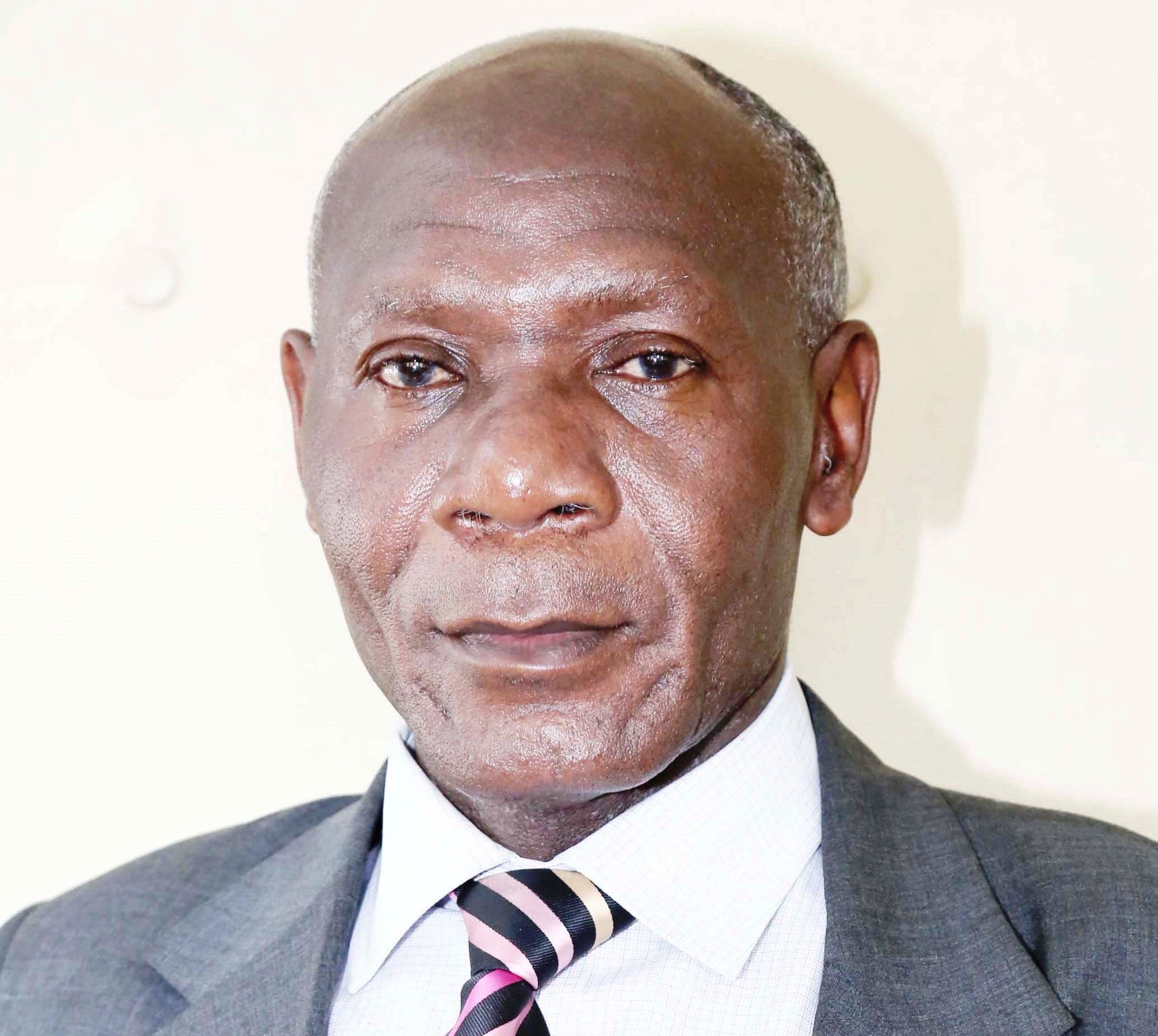
Recently, the Principal Secretary for Basic Education, Prof. Julius Bitok, revealed that the government was considering expanding senior schools to enable them to admit more students than they currently do.
Bitok said the applicants for grade 10 at these schools exceeded their capacities, adding that the government was planning to expand opportunities at the schools by building more classrooms, dormitories, and laboratories.
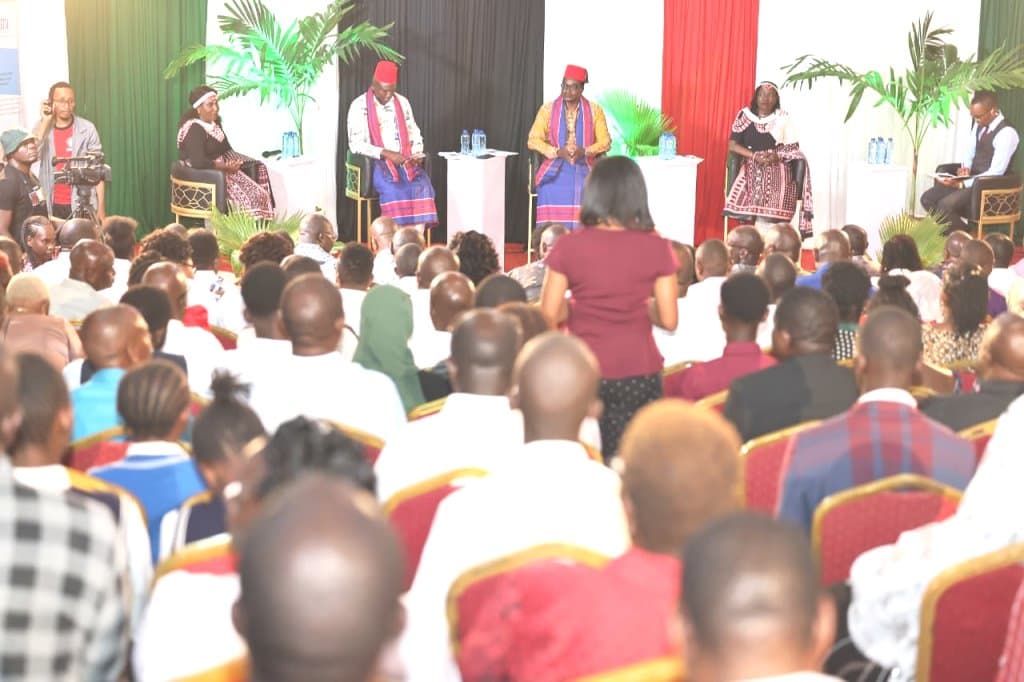
The PS spoke at Makueni Secondary School in Makueni County during the Elimu Mashinani show on a local television station.
He said parents and their children expressed interest in joining only 20 secondary schools across the country.
“The schools have a tradition of good performance. It takes 95percent of their students to university. They have good teachers and infrastructure,” Prof. Bitok said.
He said the government could expand these schools, admit more students and convert schools which don’t attract students into Junior Schools or whatever the communities want them to become.
The plans to expand big schools violate education, a major principle in the national education system. Central to our national education system is the principle of equity.
Equity education refers to fairness and inclusion to provide all students with the resources, opportunities, and support they need to succeed, regardless of their background, abilities, or socioeconomic status.
An equitable education system provides every student with the support and resources they need to reach their full potential, no matter their personal or social circumstances.
ALSO READ:
https://educationnews.co.ke/kakamega-school-secures-national-rugby-slot-after-eligibility-audit-axes-bungoma-high-school/
Why “Big Schools” have an unfair advantage
The excellent educational outcomes big schools post from year to year didn’t just happen. It is because they have advantages that have historical roots compared to other schools.
Most were well-established secondary schools before independence. Others were schools reserved for children of European and Indian extraction. They had the infrastructure necessary for quality education.
Post-independence government continued to support these schools, even though they were now open to mostly children from middle-class families.
Children from public primary schools in the 70s, 80s and 90s comfortably got admitted into these schools courtesy of the strong foundations of public schools in teaching and learning then.
Something went inexcusably wrong from early 2000 to the present. The emergence of the private primary system and now the private Junior school system meant that the students who post good marks and grades in KCPE and now KJSEA are from private and elite private schools.
They take more than 70percent of Form one selection into the original 18 National Schools and former Provincial Schools, most of which are now either National or Extra County schools.
It was former Permanent Secretary for Education, Prof. James Ole Kiyiapi, who, seeing the gross inequality between educational outcomes measured through KCPE, introduced affirmative action in Form One selection and admission. The courageous permanent secretary, I came to learn, with strong advice from the bureaucrats at Jogoo House, introduced equity and fairness in the selection of Form One students.
The argument that the educationists in the Ministry advanced was that the public primary school system focuses on academic quality. The only difference, perhaps, was that the focus is more nuanced, refined, and subtle. Most of them—with 250 marks out of a maximum of 500—can intelligently follow a secondary curriculum if delivered professionally. Marks alone, they advised, shouldn’t determine placement in Form I. Prof Ole Kiyiapi listened.
Let me be frank. Big schools don’t have the capacity to accommodate all the students who transition to secondary or senior school. Even if they had, bigness is not suitable for learning.
Big institutions make the members lonely. If adults experience ennui or listlessness in big establishments, you can imagine what under-18-year-olds feel. Some learners join this school with good marks, but leave with less than a D+.
When you admit 700 learners in grade 10 alone, it means the other grades already have over 1400 learners. You want to add 700 more learners? You will have a 2,800-student population. These schools are already overcrowded.
However attractive a school may be, there are enrollment limits. A school is not and should not be a matatu.
The National Association of Secondary School Principals (NASP) in the USA recommended that public high schools in the country limit their enrollment to no more than 600 students, with teachers responsible for no more than 90 students during a given term. They made the recommendations in a report, Breaking Ranks: Changing an American Institution, which was released in 1996.
“Students take more interest in school when they experience a sense of belonging,” the report said.
Schools and regions in historically disadvantaged areas that have unsafe or no infrastructure because of unfair, racially and religiously inclined education spending by colonial governments and missionaries.
Expanding big schools that have historically had an unfair advantage over C3 and C4 schools is bad policy. It will further deepen unequal access to equitable quality education by learners with respect to regions and rural and urban settlements.
ALSO READ:
https://educationnews.co.ke/kewota-dismisses-payroll-heist-claims-vows-legal-action-over-defamation/
The government should be thinking of rectifying the iniquity instead of widening it
I have in mind two critical things it should do;
It should address the relatively poor educational outcomes that have defined public primary schools since the introduction of free basic education. Most of the students who get admitted to big schools are from private schools. While the affirmative action that the government uses to transition learners into senior schools is laudable, it is not enough. The government should firmly and without equivocation ensure that quality teaching is taking place in all primary and Junior schools. Quality teaching leads to quality learning. Strong supervision and inspection should ensure that learners attend public schools, but get to learn.
Teacher attendance is critical; however, it is not enough. Teacher presence in the classrooms is equally critical. Curriculum delivery according to the prescriptions by the curriculum maker is also very important. What is taken as syllabus coverage in many schools, including elite private schools, leaves a lot to be desired. Learners complete the syllabus but don’t get to learn. We never had such a phenomenon in primary schools in the 70s
The relatively poor performance of learners in C4 schools is traceable to the public primary school system. It is because more than 60percent of the learners join secondary school with weak entry behaviour. Most are from public schools. They have serious gaps in the knowledge, skills and other capabilities to intelligently follow a secondary curriculum. Their reading proficiency is dismal. If they cannot read, they cannot learn. Their numeracy skills aren’t good either.
Big schools do well because they admit students who are adequately prepared to follow a secondary curriculum intelligently. Teachers in big schools are not more competent than their counterparts in C4 schools.
The teachers in big schools have several advantages. They receive learners with cognitive abilities that correspond to a secondary curriculum. The schools are relatively well-equipped with laboratories and other teaching and learning materials. Most have teachers in, if not all subjects, but critical subjects.
C4 schools are poorly equipped. They lack essential facilities for learning. It is these schools that the World Bank and other development partners target in supporting.
ALSO READ:
https://educationnews.co.ke/jss-teachers-launch-membership-drive-to-strengthen-their-voice-and-push-for-independence/
The way forward for equity
What the government should perhaps do to improve equity is to review the model of financing senior schools. The current model, which focuses exclusively on learners, has increased disparities among secondary schools.
Schools with a higher enrollment receive more financial support from the government than those with lower enrollment. There is no equity in the current free day secondary education programme.
You have bigger schools receiving millions for facilities they already have, while smaller schools don’t have such facilities. Yet they are expected to finance them using the measly capitation they receive courtesy of low enrollment.
C4 schools have the potential to deliver a secondary curriculum if supported by the government. They are the future. Don’t ignore them.
By Kennedy Buhere
Communication Specialist
You can also follow our social media pages on Twitter: Education News KE and Facebook: Education News Newspaper for timely updates.
>>> Click here to stay up-to-date with trending regional stories
>>> Click here to read more informed opinions on the country’s education landscape

Reader Discussion (0)
Sign in to comment