

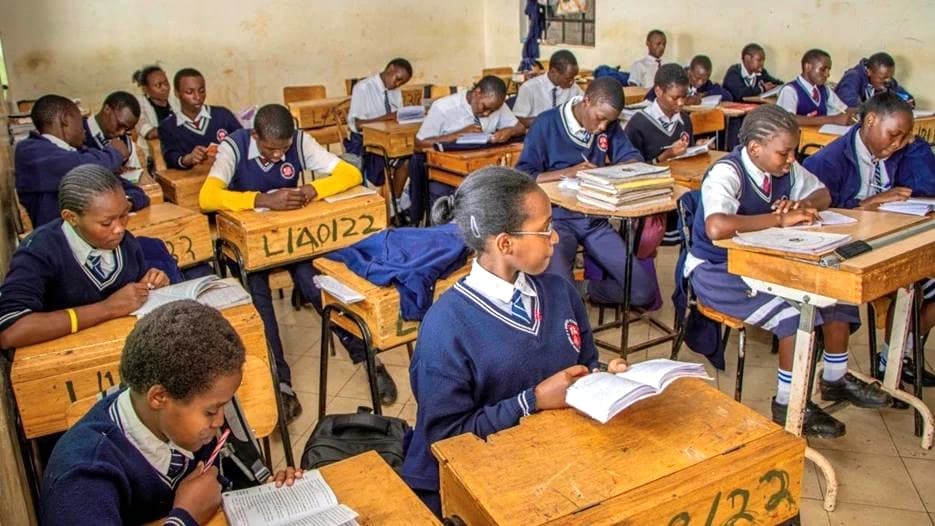




Anyone keeping abreast of educational matters knows about the heartfelt concerns of teachers in Junior Schools (Grades 7-9). They were trained to teach Senior Schools. Instead, TSC decided to deploy them in Junior Schools. They are also complaining about the doit amount of salary. Therefore, the government should listen to their hue and cry.
Then, there is another concern, which is the nub of my 35th treatise on Competency-Based Education (CBE). Teachers in Junior Schools are calling for autonomy, separation from Comprehensive Schools. Yet, in CBE, we have three schools in one compound and under one management: Pre-Primary, Primary (Grades 1-6) and Junior School (Grades 7-9). Some union officials have also supported the call for autonomy of Junior Schools. It is an open secret. Of the source of this quiet conflict. More so, when teachers in Junior School talk about leadership lapses. Or money matters and government capitation. Some teachers in Junior School also have a sense of self-importance. Being degree holders, they think they are more educated than the HoIs whom they should submit to.
In all these endless tussles, one wonders whether fellow noble teachers often set aside some time to pore over important policy documents defining the existence of schools. Therefore, as a scribe, I pause and pose the quality question: Do teachers know that the CBE abuts on the policy framework? Meaning, mandarins at the MoE cannot just wake up one day, and suddenly overall a particular policy in the education sector based on whimsical demands of some distraught stakeholders.
Therefore, the proper application of education policy frameworks makes you know why the incessant call for autonomy of Junior School is just a pipe dream. Meaning, it is a goal, plan or aspiration, which is seemingly impossible, or very difficult to achieve within the purview of the policy framework. With sharp shafts of etymology, we can trace the provenance of “pipe dream.” In the 19th century, people would smoke opium through a pipe. Then, when they felt high in the sky due to the intoxication of the drugs, they would blab about impossible dreams and ambitions, which they never truly believed they would reach. So, it led to the coining of “pipe dream.”
ALSO READ:
https://educationnews.co.ke/how-to-help-children-adjust-back-to-school-routine-after-long-december-holiday/
In the recent past, when the Kenya Kwanza administration took the reins of power from the Jubilee administration, people had cast aspersions on CBC. So, President William Ruto came up with a task force: The Presidential Working Party on Education Reform (2023). It reviewed the new education system. Largely, the high-brow taskforce chaired by Prof Raphael Munavu, focused on transforming education, training and research for sustainable development in Kenya.
The report had a raft of recommendations to be implemented. One of them is the existence of Comprehensive Schools, which is three schools in one compound led by Head of Institution (HoI). Comprehensive Schools: Pre-Primary, Primary (Grades 1-6) and Junior School (Grades 7-9). The Comprehensive Schools should be led by one HoI, assisted by two Deputies: One in charge of the Primary wing, and the second one in charge of Junior School.
Therefore, when some teachers in Junior School call for the schism, their agitation contradicts policy. We can imagine of a situation where any vacillating education stakeholder can acquire powers to advocate for changes in education, not anchored on any policy framework. Such a move can cause chaos and confusion.
Moreover, there is the Basic Education Curriculum Framework (2017). It defines the structure and organisation of the curriculum. In a perfect syllogistic figure, architects of CBE see it as an age-based system. In that schema, education begins with the 2-year Pre-Primary at age 4, with interaction. From ages 6 to 11, children spend time in Primary (Grades 1-6) for socialisation. From ages 12 to 14, they should be in Junior School (Grades 7-9) for exploration. From ages 15-17, they should be in Senior School (Grade 10-12) for pre-career or specialisation purposes. This system ensures that children progress consistently through the system. As they will be set to sit to write the Kenya Certificate of Basic Education (KCBE) at the zenith of Grade 12, going by age, they will be at the verge of adulthood, hence ready to join tertiary institutions.
ALSO READ:
https://educationnews.co.ke/decorated-moi-girls-kamusinga-handball-coach-still-waiting-for-tsc-employment/
So, CBE strives to reflect the philosophy of childhood, learning and maturity. Largely, age comes out as a key factor in the decision to domicile Junior School in Comprehensive Schools. A typical Grade 7 learner is around 12 years old. Developmental Psychologists would argue; such a child is in a vulnerable developmental stage. It explains the logic of not domiciling Junior Schools in Senior Schools. These are two different age brackets. Teens in Senior Schools (ages 15-17) are older teens. Some caught up in what Erik Erikson called “identity crisis” and “identity moratorium.”
So, mixing pre-teens and teens in Senior Schools is exposing them to the demands and social pressures of Senior School settings, which is actually risky because of the developmental challenges. At the peak of adolescence, teens are caught up in what the great psychologist Erik Erikson called “identity crisis” – a period of uncertainty and confusion about one’s sense of self. Triggered by life transitions or major changes. It revolves around questioning one’s values, beliefs, goals and roles in life. This is not far from “identity moratorium” related to James Marcia’s Identity Status Model, explaining how adolescents navigate identity formation based on two key dimensions: Exploration and commitment.
Finally, most of the public Comprehensive Schools are day schools, which is in order. At that age stage, it is misguided to take children to boarding schools. They are still young and fully dependent on their parents. Therefore, domiciling Junior Schools in Comprehensive Schools encourages day schooling, which international studies show promotes more parental involvement in children’s growth. Children in Junior School are experiencing rapid physical, cognitive and emotional growth. Keeping them closer to home supports parental support and good guidance.
By Victor Ochieng’
Victor Ochieng’ is a writer and an educator. vochieng.90@gmail.com. 0704420232
You can also follow our social media pages on Twitter: Education News KE and Facebook: Education News Newspaper for timely updates.
>>> Click here to stay up-to-date with trending regional stories
>>> Click here to read more informed opinions on the country’s education landscape
>>> Click here to stay ahead with the latest national news.

Reader Discussion (0)
Sign in to comment