





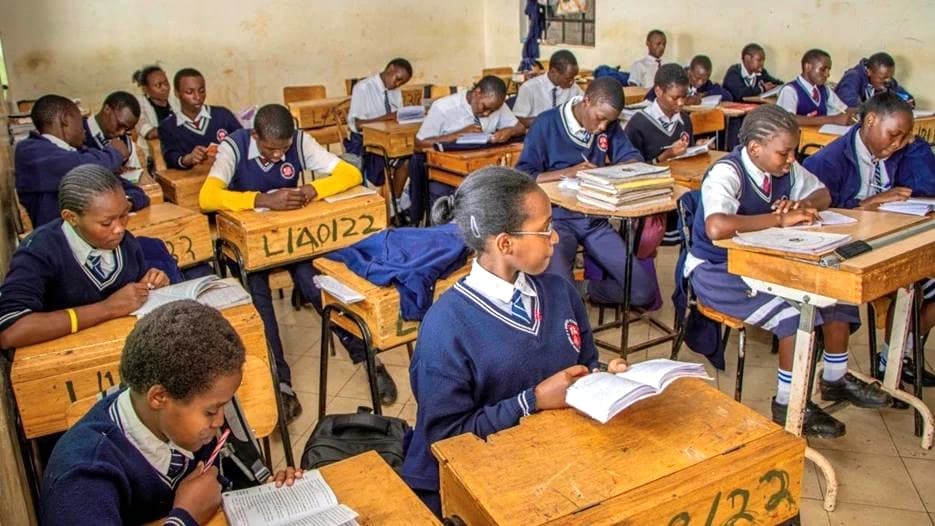


This week, Kenyan high schools opened their gates to a historic cohort: the first ever Grade 10 learners under the Competency Based Education (CBE) system. They arrived amid fanfare, policy speeches and years of breathless promises about a revolution in learning. These were the ‘pioneers,’ the proof that CBC; now rebranded as CBE; was finally bearing fruit. Yet barely hours into the school week, a sobering question was already circulating quietly in staffrooms across the country: if these are the pioneers, what exactly have we been pioneering?
For many teachers, the instinctive response was comparison. Memories drifted back to the Form One classes admitted under the old 8-4-4 system after KCPE. Those learners were far from ideal. They were exam hardened, pressure trained and often creatively constrained. But they walked into secondary school with something today’s Grade 10 learners are visibly lacking: academic readiness. In literacy, numeracy, concentration span and basic learning discipline, the KCPE Form Ones were, by a wide margin, better prepared for the demands of secondary education. This is not nostalgia masquerading as analysis. It is lived classroom experience.
The 8-4-4 system had many flaws, but ambiguity was not one of them. Expectations were clear and unchanging. Content was tightly defined. Assessment was unforgiving and frequent. By the time a learner sat KCPE, they had written countless timed tests, mastered note taking, internalized revision habits and learned how to survive academic pressure. Secondary school teachers knew where to begin because learners arrived with a shared baseline. They could read instructions, write coherent paragraphs, follow structured arguments and work independently. In short, Form One under 8-4-4 arrived school ready.
Grade 10 learners under CBE are arriving assessed, but unanchored. On paper, they come bearing portfolios, project files, pathway selections and competency descriptors. In reality, many are struggling with foundational skills that secondary school quietly assumes are already in place. Teachers are encountering learners who struggle to write coherent paragraphs, who cannot read set texts independently, who lack arithmetic fluency, who have difficulty following multi step instructions and who display little study discipline or revision culture.
ALSO READ:
https://educationnews.co.ke/outgoing-siaya-tsc-county-director-given-befitting-farewell-as-she-exits-public-service/
This is not because the learners are incapable. It is because for years, the system emphasized activity over mastery. CBC promised competencies but, in many classrooms, delivered compliance. Projects were submitted, but often completed by parents. Assessments were recorded, but frequently inflated. Progress was reported, but rarely interrogated. Learners moved from grade to grade with gaps quietly accumulating beneath the surface, masked by checklists and polite language.
By the time these gaps reached Grade 10, they were no longer small cracks. They had become structural faults.
The tragedy is that the philosophy behind CBE is not inherently wrong. Teaching creativity, collaboration, communication and problem solving is sound. The failure lies squarely in implementation. Kenya attempted to sprint before learning how to walk. Primary schools were under resourced. Teachers were retrained midstream. Learning materials arrived late or not at all. Assessment guidelines shifted repeatedly. Supervision focused more on paperwork than pedagogy. In many schools, CBC became an exercise in satisfying inspectors rather than building competence.
As the paperwork grew, something quietly eroded: academic rigour. Reading deeply, writing frequently, practising consistently and revising deliberately were slowly displaced by projects, presentations and portfolios that looked impressive but often rested on shaky foundations.
Now, policymakers speak confidently about ‘pathways’ in senior school, while teachers are left asking a far more basic question: pathways built on what?
The unfolding CBC story risks following a familiar Kenyan script. Big vision. Global comparisons. Confident speeches. Then a collision with local reality. Like the endlessly invoked ‘Singapore model,’ the narrative soared while the groundwork lagged behind. What we are witnessing is not innovation, but disorientation.
ALSO READ:
https://educationnews.co.ke/kemei-hails-impressive-kcse-results-by-usawa-scholarship-beneficiaries/
High schools are now being asked to perform academic triage. Teachers must remediate basic skills while simultaneously delivering senior school curricula. They are expected to individualize learning at scale, often without adequate time, training or support. Learners, meanwhile, carry the psychological burden of a system that assured them they were ready, only to confront them with standards they were never properly prepared to meet.
It must be said, clearly and without cruelty: these children are not the failure. They are not wasted. They are not lazy. They are the casualties of policy impatience. They did exactly what the system asked of them. They completed projects. They advanced grades. They trusted adults. If they are struggling now, it is because adults confused movement with progress.
What happens next will define this reform. Kenya can continue pretending that Grade 10 is merely ‘settling in,’ that gaps will close on their own and that criticism is sabotage. Or it can choose honesty. Honesty that CBE learners need aggressive foundational reinforcement. Honesty that assessment must recover rigour. Honesty that teacher capacity, not slogans, determines outcomes. Honesty that reform without resources is performance, not policy.
The old 8-4-4 system produced exam soldiers. The new CBE system was meant to produce thinkers. But thinking requires tools and tools require training. Until Kenya rebuilds the academic foundations beneath CBE, Grade 10 will remain not a triumph of reform, but a warning. History will not judge this moment by the policy documents written, but by whether we had the courage to admit what teachers saw on Monday morning, when the pioneers walked into class; and the hype quietly walked out.
By Angel Raphael
Angel Raphael is an education analyst with over a decade of experience in Kenyan schools, focusing on curriculum reform, pedagogy and student learning outcomes.
You can also follow our social media pages on Twitter: Education News KE and Facebook: Education News Newspaper for timely updates.
>>> Click here to stay up-to-date with trending regional stories
>>> Click here to read more informed opinions on the country’s education landscape

Reader Discussion (0)
Sign in to comment