

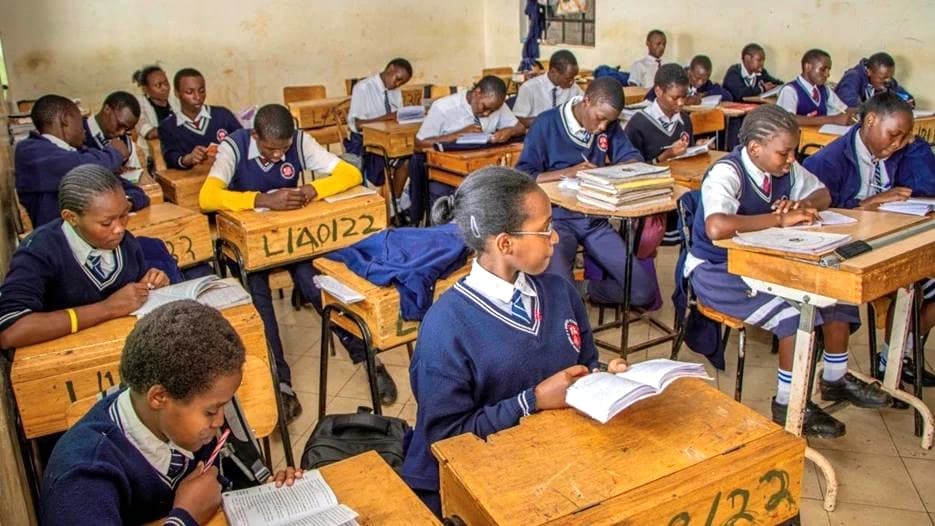

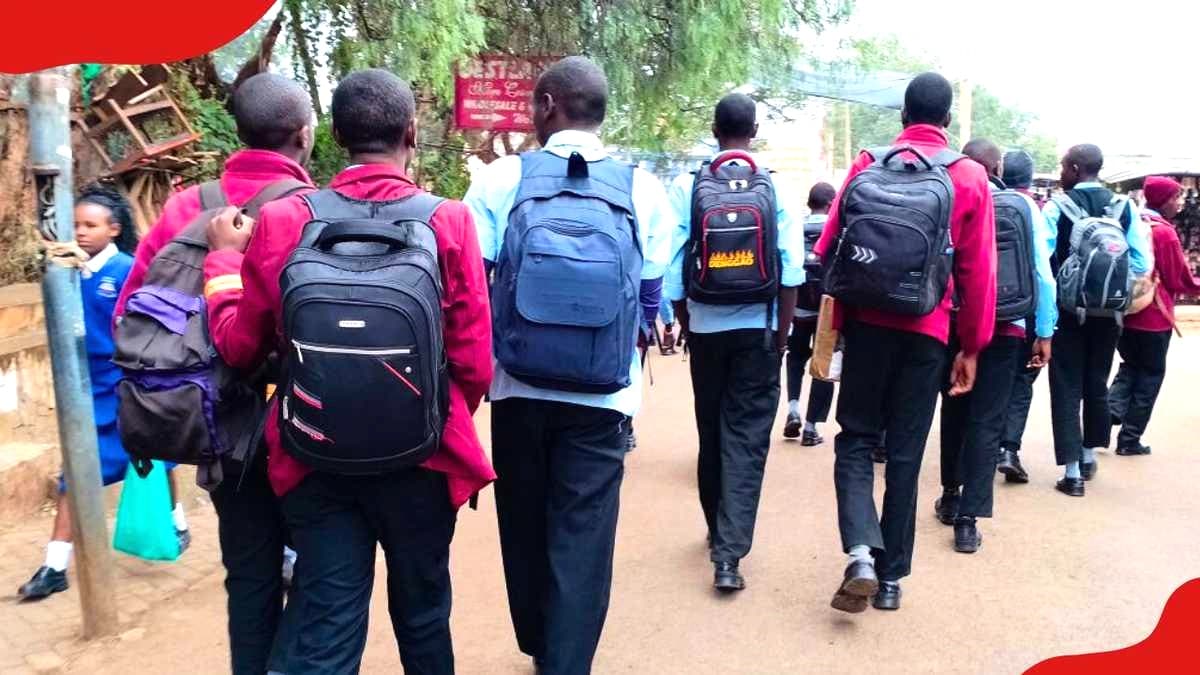


Dear reader, after the release of the Kenya Junior School Education Assessment (KJSEA), the Ministry of Education shifts gears to the placement process for Grade 9 students into Grade 10 in Senior Schools. Fast forward, the pioneers of Competency-Based Education (CBE) should report to Senior Schools on January 12, 2026. Before reporting, there is an important placement exercise, which is the gist of my 31st treatise on CBE.
Ideally, for purposes of fairness, equity, and transparency in the placement process, information from credible sources indicates that Grade 9 learners will be placed in Senior Schools using a formula akin to the County Revenue Allocation (CRA), which is currently used to distribute funds to the 47 counties across the country. The plausible plan considers a raft of factors such as population, performance, poverty level, distance to school, school size, and infrastructure.
Meaning, larger and populous counties such as Nairobi, Kiambu, Nakuru, Kakamega and Bungoma are poised to receive more slots. Comparatively, under the 8-4-4 System of Education, which became moribund in 2027, STD 8 leavers were placed in Form 1 of secondary schools based on the marks they scored in the Kenya Certificate of Primary Education (KCPE). Top-ranking schools had an upper hand, edging out learners from marginalised counties. Actually, placement favoured learners with higher scores. Or in close proximity to top schools.
Therefore, under the new placement formula, 42% of placement consideration is based on county population, which allows larger counties to receive a proportionate number of slots. Then, 22% will be determined by the learner’s academic performance or merit. Consequently, 14% will take into consideration the poverty levels, supporting learners from disadvantaged areas. Additionally, 13% will consider distance to school to reduce travel barriers. Moreover, 9% will focus on school size and infrastructure, which will help match students to institutions with sufficient facilities.
More importantly, all Grade 9 learners who sat for the KJSEA assessment will be placed in Senior Schools. So, there will be a 100% Transition from Junior to Senior School.
Haply, as part of factors known to us earlier, placements into Grade 10 in Senior Schools will also abut on performance in KJSEA and choice of Career Pathways offered in various Senior Schools. For instance, the top 6 students in each STEM Track, by gender, in each sub-county will be placed in their preferred boarding schools. The top 3 students per gender in each Social Science Track and sub-county will also be placed in boarding schools of their choice. As well as the top 2 students in each Arts and Sports Science Track per sub-county.
Ostensibly, the outcome of the KJSEA assessment may prompt some Grade 9 learners to opt to change Senior Schools. Such requests can be made through the portal at least 14 days before the official Grade 10 reporting date, which, as stated right at the onset, is slated to be January 12, 2026. Priority will be given to those who had earlier selected the schools they are requesting.
READ ALSO:
https://educationnews.co.ke/teachers-reject-further-pay-deductions-as-president-ruto-unveils-sh5-trillion-singapore-style-economic-transformation-plan/
Approval by MoE will be based on the Senior Schools’ documented capacity. Upon a request’s approval, the joining instructions shall be accessed online. At no time shall a school issue printed letters for placement cases.
In retrospect, Grade 9 students selected their preferred 12 Senior Schools before taking the KJSEA assessment. In the selection, 9 were boarding schools (3 from the learner’s home county and six from outside it). The other 3 were day schools in their home sub-county. On the contrary, some Senior Schools, such as Starehe Boys Centre, were allowed to do pre-selection because they do not conduct open placements.
From 2026 onwards, secondary schools will evolve into Senior Schools (Grades 10-12). Currently, secondary schools are categorised as national, extra-county (1 and 2), county and sub-county. But in the new education dispensation, they will be categorised as C1, C2, C3 and C4. The current national schools will be C1; extra-county schools will be C2; county schools will be C3; and sub-county schools will be C4. The C1 and C2 will be Triple Pathway Schools offering all three 3 Career Pathways. The STEM Career Pathway, which will cater for 60% of learners, will be compulsory in all Senior Schools. The Social Sciences Career Pathway will cater for 25% of learners. Then, the Arts and Sports Science Pathway will cater for 15% of learners.
My nearest dearest, just to rack your brain on Career Pathways offered in Senior Schools, the first one is: Science, Technology, Engineering and Mathematics (STEM). It has three Tracks: Pure Sciences, Applied Sciences and Technical Studies. Subjects in the Pure Sciences Track include: Physics, Chemistry, Biology, and Core Mathematics. Subjects in the Applied Sciences Track include: Computer Science, Home Science and Agriculture. Then, subjects in the Technical Studies Track include: Aviation, Building Construction, Electricity, Metalwork, Power Mechanics, Woodwork, Media Technology, and Marine and Fisheries Technology. Social Sciences is the second Career Pathway, with two Tracks: Languages and Literature and Humanities and Business Studies. Subjects in Languages and Literature Track include: Literature in English, Indigenous Languages, Kenya Sign Language (KSL), Fasihi ya Kiswahili, Arabic, French, German, Mandarin (Chinese). Subjects in the Humanities and Business Studies Track include: Religious Education (CRE, IRE, or HRE), Business Studies, History and Citizenship, and Geography and Community Service Learning (CSL). Arts and Sports Science is the third Career Pathway with two Tracks: Arts and Sports Science. Subjects in the Arts Track include: Music and Dance, Theatre and Film, and Fine Art. Subjects in the Sports Science Track include: Physical Education (PE) and Sports and Recreation.
Finally, there will be four compulsory subjects in Senior Schools: Core Mathematics (for STEM students) or Essential Mathematics (for non-STEM students), English, Kiswahili or Kenya Sign Language (KSL), and Community Service Learning (CSL). Learners will pick three elective subjects from the Career Pathways. Then, there will be three supportive non-examinable subjects, including Information and Communication Technology (ICT), Physical Education, and Religious Education (CRE/IRE/HRE). It is instructive to note that a learner in a non-STEM Career Pathway may be permitted to do the Core-Mathematics so long as their KJSEA results depict the ability to do it. Advisedly, the choice of subjects will be based on learners’ ability, aptitude, career choice, interests and personalities.
By Victor Ochieng’
Victor Ochieng’ is a writer and an educator. He is a speaker in Grade 10 students’ and parents’ orientation and induction events in Senior Schools.
vochieng.90@gmail.com. 0704420232
You can also follow our social media pages on Twitter: Education News KE and Facebook: Education News Newspaper for timely updates.
>>> Click here to stay up-to-date with trending regional stories
>>> Click here to read more informed opinions on the country’s education landscape
>>> Click here to stay ahead with the latest national news.



Reader Discussion (0)
Sign in to comment