








As the placement of learners into Senior School continues, the government’s decision to allow unsuccessful candidates to revise their selections on 6th January has been a timely and welcome intervention. With Grade 10 learners expected to report to their respective schools on 12th January, it is important that learners, parents, and guardians clearly understand what lies ahead under the Competency-Based Education (CBE) system. This transition marks a significant shift in how learning is organized, delivered, and experienced in Kenya’s education system.
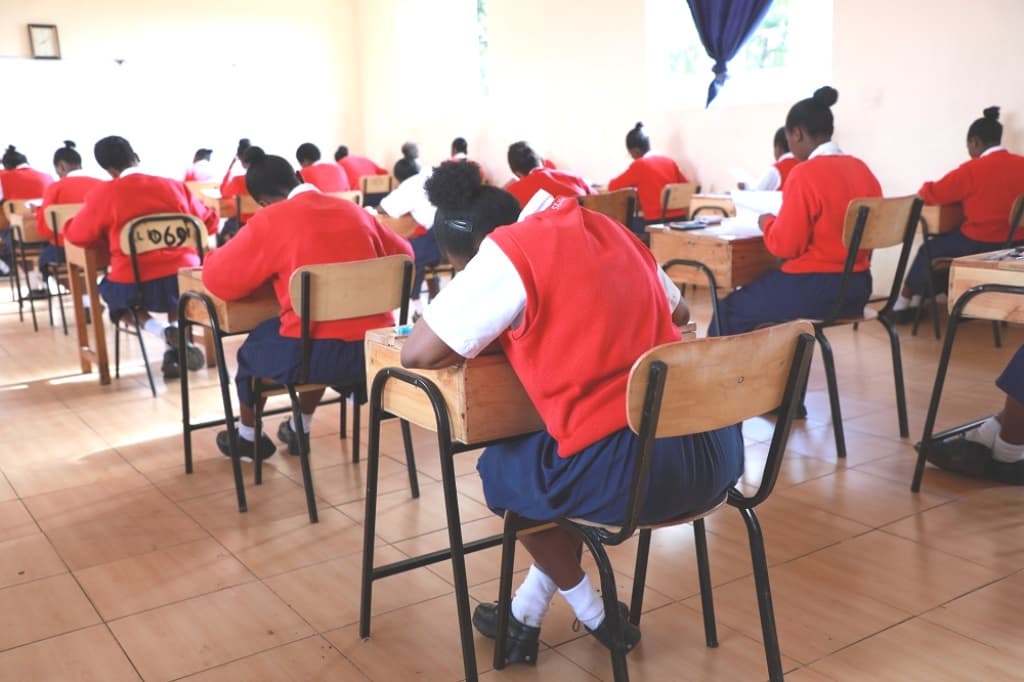
Admission into Senior School will not follow the traditional class-based model that many families are familiar with from the 8-4-4 system. Instead, learners will be admitted based on their pathways and subject combination codes, not fixed classes or streams. The Ministry of Education has already communicated that each subject combination code must attract a minimum of fifteen learners for it to be offered. As a result, learners may not belong to one permanent class. Rather, they will move from one room to another to attend lessons according to the school timetable.
In many respects, this structure mirrors university-style learning, where students attend lectures based on registered courses rather than being confined to one class. This approach is intentional. It encourages independence, responsibility, and exposure to diverse peer groups, while aligning learning more closely with the learner’s interests and future aspirations.
To fully appreciate this transition, it is important to understand how Competency-Based Education is structured. CBE is organized into four progressive levels, each designed to develop specific competencies that build upon one another as the learner grows.
ALSO READ:
https://educationnews.co.ke/how-to-download-grade-10-senior-school-admission-letters-from-the-moe-portal/
Level 1: Pre-Primary Education
This foundational stage focuses on the development of interaction skills. Learners are guided to communicate effectively, listen attentively, share resources, and relate positively with others. Learning at this level is largely play-based and experiential, allowing children to explore their environment while building confidence, curiosity, and basic communication skills. These competencies form the bedrock upon which all future learning is built.
Level 2: Primary Education
At the primary level, the emphasis shifts to socialization skills. Learners are helped to understand themselves in relation to others, develop teamwork and cooperation, take responsibility, and acquire basic literacy and numeracy skills. The goal is not excessive competition or early academic pressure, but the nurturing of well-rounded individuals who can function positively and responsibly within society.
Level 3: Junior School.
Junior School represents the exploration stage of learning. At this level, learners are exposed to a broad range of learning areas designed to help them discover their interests, talents, and strengths. The intention is not for every learner to excel uniformly in all subjects, but for each learner to identify areas of potential that can inform future academic and career pathways. For this reason, varied performance across learning areas is expected and accepted. What matters most is helping learners understand themselves and make informed choices.
Level 4: Senior School.
Senior School is the specialization and pre-career stage. At this level, learners narrow their focus and begin deliberate preparation for specific career paths. The system recognizes that learners have different abilities, interests, and aspirations, and therefore allows them to concentrate on learning areas that are directly relevant to their future goals. This is a critical departure from the one-size-fits-all approach of the past.
As Grade 10 learners join Senior School, each learner will study a maximum of seven learning areas. These are divided into three elective learning areas and four core learning areas.
The three elective learning areas are selected based on the learner’s chosen pathway – whether STEM, Social Sciences, Arts, or Sports Science. These electives are the learner’s priority subjects, as they form the foundation for related courses at universities, colleges, and other tertiary institutions. Learners are therefore encouraged to take these subjects seriously, as they will strongly influence future academic and career opportunities.
ALSO READ:
https://educationnews.co.ke/moes-policy-that-denies-principals-power-to-admit-grade-10-students-could-backfire/
In addition to the electives, all learners will study four core learning areas, which are designed to strengthen essential life skills such as communication, logical reasoning, ethical awareness, and social responsibility. These core learning areas are: English Language, Kiswahili Lugha, Community Service Learning and Mathematics.
Mathematics will be offered in two forms, depending on the learner’s pathway. Learners in the Social Sciences and Arts pathways will take Essential Mathematics, while those in the STEM pathway will study Core Mathematics, which is more rigorous and aligned to scientific and technical fields.
Learners who selected subject combination codes that include Mathematics during placement will be required to pick an additional science subject to meet the maximum requirement of seven learning areas in Senior School. This ensures balance and coherence in the learner’s academic program.
As Kenya transitions fully into the Competency-Based Education system, it is important for all stakeholders to appreciate that this is a deliberate shift from the 8-4-4 mindset. Long hours of teaching late into the evening, early morning preps, and overreliance on commercial examination papers are no longer necessary or appropriate. The approved curriculum designs, teacher guides, and textbooks are sufficient when used effectively, professionally, and creatively. Learning under CBE emphasizes understanding, application, reflection, and continuous assessment rather than rote memorization.
Parents and guardians also have a new role to play. Rather than focusing solely on grades and rankings, they are encouraged to support learners in developing discipline, time management, curiosity, and responsibility for their own learning. Open communication between schools and families will be essential in ensuring a smooth transition.
As Grade 10 learners step into this new phase of education, they are entering a system designed to empower them, respect their individuality, and prepare them for real careers and life beyond school. Senior School is not just another academic level; it is a bridge between education and the world of work and citizenship. This is a new era for education in Kenya, and we wish all Grade 10 learners every success as they begin this important and transformative journey.
By Polycap Ateto
Polycap is an educator of long standing, a trainer and a passionate CBE champion.
You can also follow our social media pages on Twitter: Education News KE and Facebook: Education News Newspaper for timely updates.
>>> Click here to stay up-to-date with trending regional stories
>>> Click here to read more informed opinions on the country’s education landscape

Reader Discussion (0)
Sign in to comment