




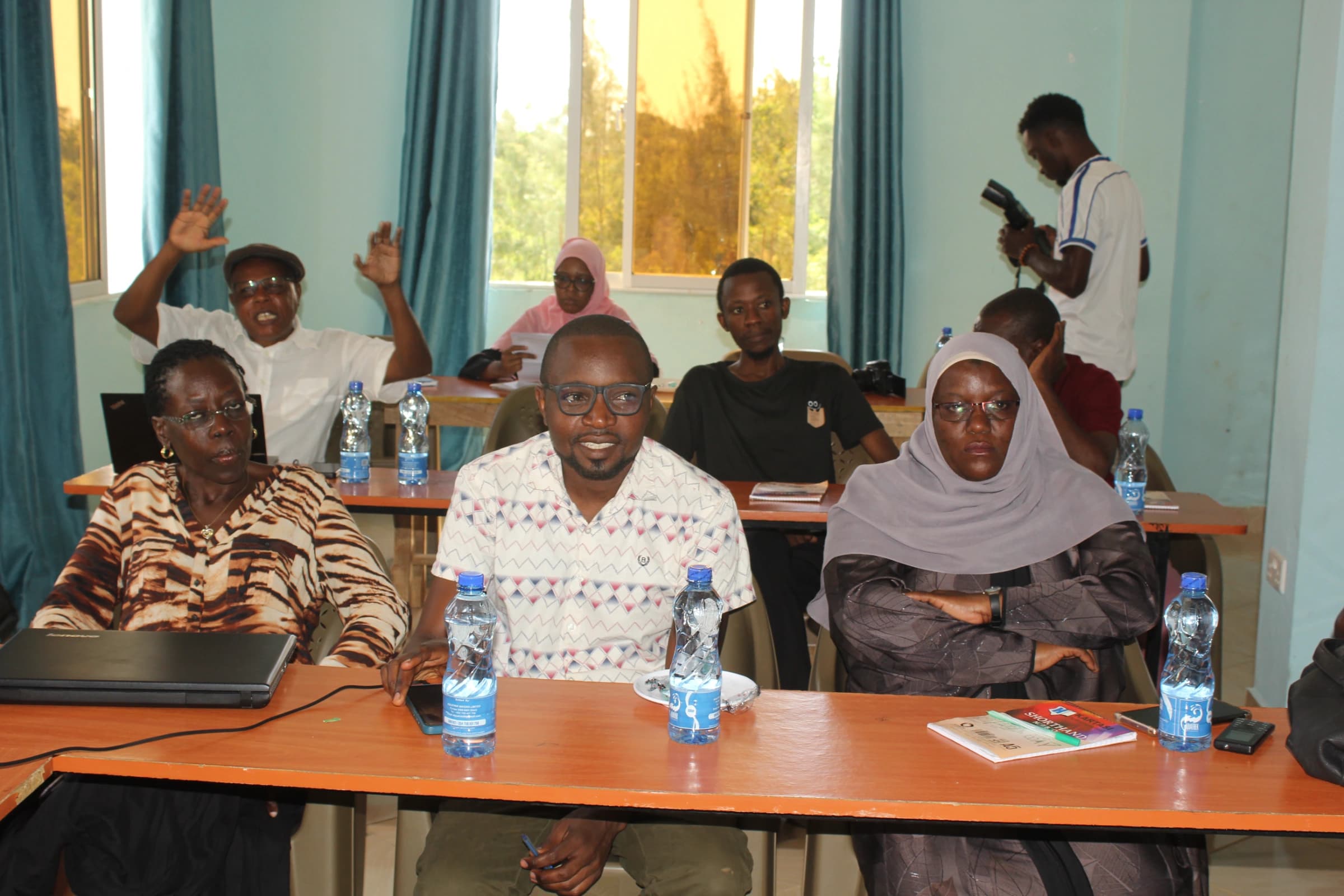




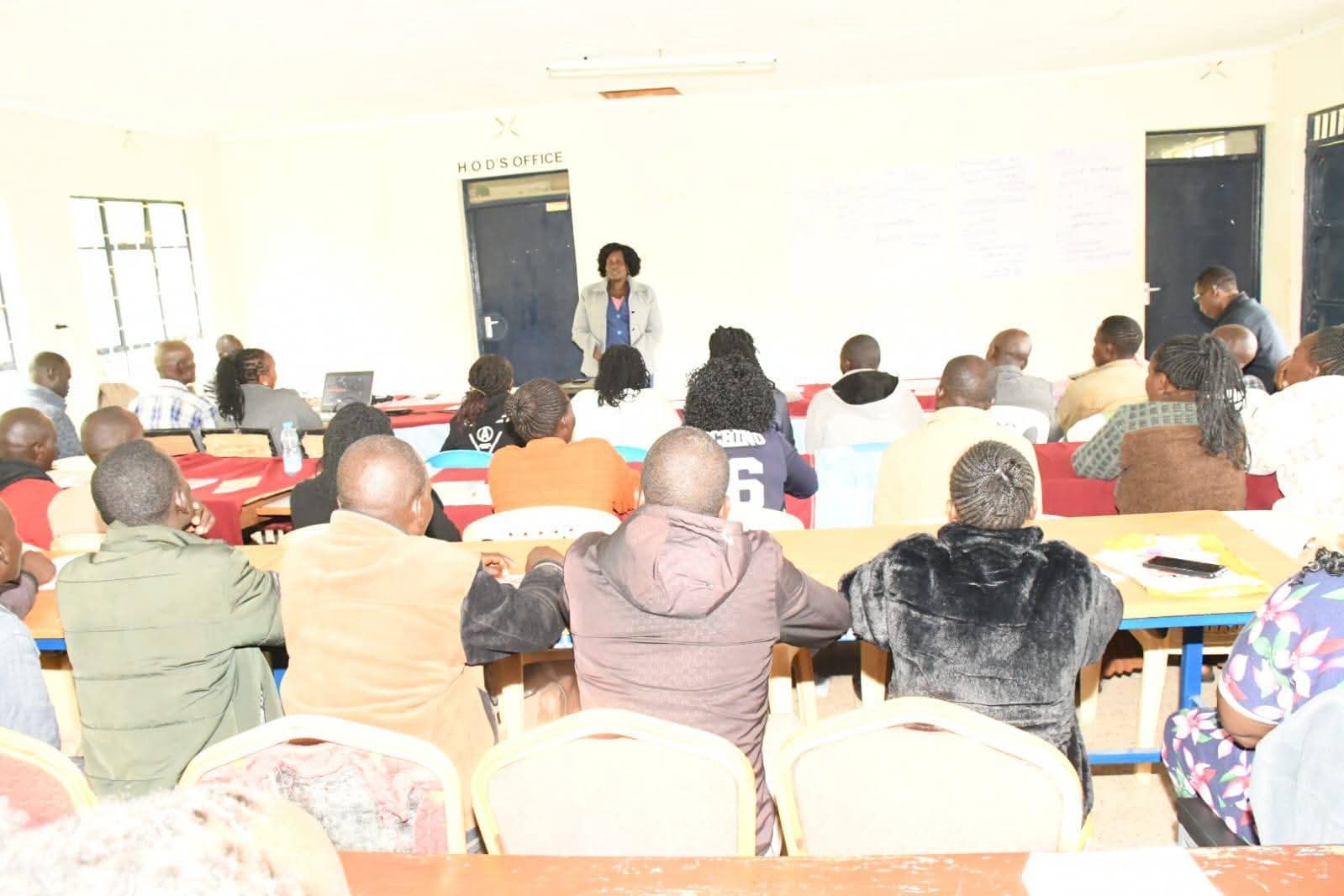
Vocational College instructors in West Pokot County have today been retooled on the new Competency-Based Education and Training (CBET) curriculum.
The training session led by the Chief Officer for Technical Training, Lilian Korinyang, marked a bold and deliberate step toward reshaping the future of technical skills development, placing emphasis on practical competence, industry relevance, and learner-centered instruction.
Held at Kapenguria Vocational Training Centre, the capacity-building session brought together 45 instructors drawn from various VTCs across the county, creating a powerful convergence of experience, ambition, and shared purpose.

Lilian korinyang, West Pokot CEC for Education and Technical Training. Photo by Hillary Muhalya
The training was facilitated by seasoned master trainers from Kitalakapel Technical Training Institute, whose expertise and hands-on approach injected fresh energy into the session.
In her address, Korinyang underscored the urgent need to align vocational training with the demands of a rapidly evolving job market. She emphasized that the shift to CBET is not optional but necessary, noting that traditional models of instruction, heavily reliant on theory, are no longer sufficient in preparing learners for real-world challenges.
According to her, the future belongs to a workforce that is not only knowledgeable but demonstrably skilled, adaptable, and innovative.
ALSO READ:
https://educationnews.co.ke/west-pokot-inches-closer-to-getting/
She challenged instructors to embrace the CBET framework fully, highlighting that their role goes beyond teaching to mentoring, coaching, and nurturing talent.
“We are not just training students; we are shaping livelihoods and building the economic backbone of our county,” she remarked. Her message resonated strongly with participants, many of whom acknowledged the need to upgrade their teaching approaches to meet modern standards.
The presence of the Acting Director of Vocational Training, Isaac Kukui, further reinforced the importance of the session. In his remarks, Kukui emphasized that continuous professional development for instructors is central to sustaining quality in vocational education.
He pointed out that CBET demands a shift in mindset, where instructors must transition from being content deliverers to facilitators of learning, guiding students through practical, hands-on experiences that mirror real workplace environments.
The training sessions themselves were highly interactive and practical, reflecting the very principles of CBET being promoted. Participants engaged in group discussions, simulations, and real-life problem-solving exercises designed to deepen their understanding of competency-based instruction.
They explored modern assessment methods that focus on what learners can do, rather than what they can recall, marking a significant departure from traditional examination systems.
One of the key highlights of the training was the emphasis on modular learning and flexible assessment. Instructors were introduced to strategies for breaking down courses into manageable units, each with clearly defined competencies.
ALSO READ:
https://educationnews.co.ke/meru-ngaaf-coordinator-cautions-youth/
This approach not only allows learners to progress at their own pace but also ensures that each skill acquired is measurable and relevant to industry needs. For many instructors, this was a paradigm shift—one that promises to make vocational training more inclusive, practical, and impactful.
Equally important was the focus on industry linkage. Trainers stressed the need for VTCs to work closely with local industries and businesses to ensure that training programs are aligned with market demands. By doing so, institutions can bridge the gap between training and employment, increasing the chances of graduates securing meaningful work or venturing into self-employment.
This aspect of CBET was particularly well received, as it directly addresses one of the biggest challenges facing vocational education—graduate employability.
Participants also had the opportunity to share their experiences, challenges, and success stories from their respective institutions. Issues such as limited resources, outdated equipment, and resistance to change were openly discussed, with facilitators providing practical solutions and encouragement.
Beyond the technical aspects, the training also touched on the importance of attitude and mindset in delivering CBET. Instructors were urged to cultivate a culture of continuous improvement, innovation, and adaptability. They were reminded that the success of CBET ultimately depends on their commitment to change and their willingness to go the extra mile in supporting learners.
The impact of the training is expected to ripple across the county’s vocational institutions, bringing about tangible improvements in the quality of instruction and the relevance of training programs. With instructors now better equipped to implement CBET, learners stand to benefit from a more engaging, practical, and outcome-oriented education. This, in turn, will contribute to the development of a skilled workforce capable of driving local economic growth and development.
As the session came to a close, there was a palpable sense of renewed purpose among participants. Many expressed optimism about the future of vocational training in the county, noting that the knowledge and skills gained from the training would significantly enhance their effectiveness as instructors.
There was also a shared recognition that while the journey toward full CBET implementation may be challenging, it is both necessary and achievable.
By Hillary Muhalya
You can also follow our social media pages on Twitter: Education News KE and Facebook: Education News Newspaper for timely updates.
>>> Click here to stay up-to-date with trending regional stories
>>> Click here to read more informed opinions on the country’s education landscape





Reader Discussion (0)
Sign in to comment