








University students are increasingly playing a pivotal role in advancing the government’s digital transformation agenda, taking the lead in assembling computers destined for digital hubs across the country.
By actively participating in the assembly process, the students are not only accelerating the deployment of critical digital infrastructure but also acquiring hands-on technical expertise essential for sustaining Kenya’s expanding digital economy.
The initiative, led by the Ministry of Information, Communication and Digital Economy, forms part of a broader government strategy to expedite the establishment of digital hubs in all 1,450 wards. Each hub is expected to be equipped with between 50 and 100 computers to enhance access to digital services.
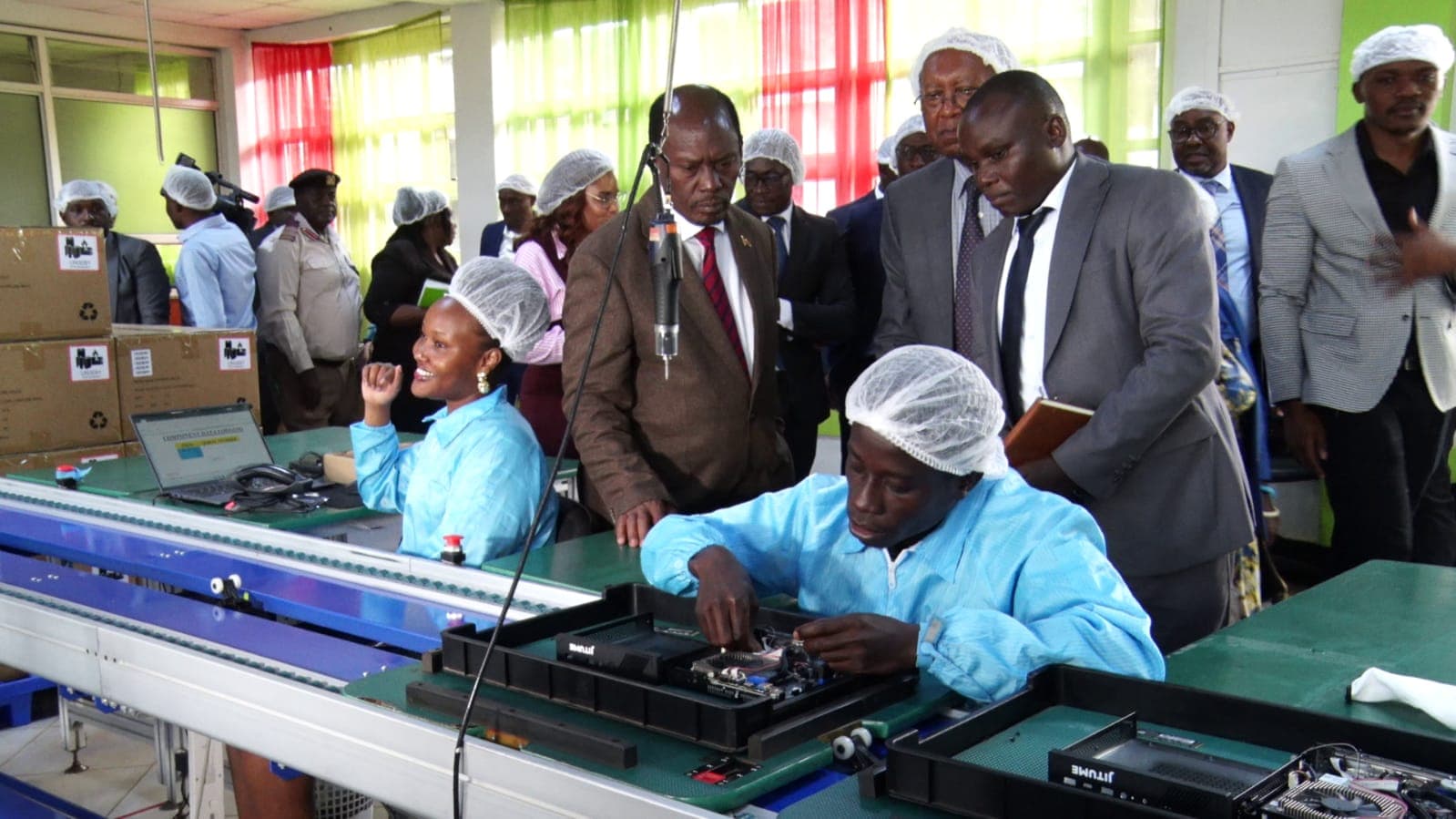
During an inspection tour of the Jitume programme at Jomo Kenyatta University of Agriculture and Technology, Cabinet Secretary for Information, Communication and Digital Economy William Kabogo underscored the government’s deliberate decision to involve local university students in computer assembly. He noted that the approach is aimed at building domestic technical capacity while ensuring the swift rollout of digital hubs nationwide.
Under the programme, Jomo Kenyatta University of Agriculture and Technology has been tasked with assembling 3,000 computers, while Moi University will handle the production of 7,000 units.
Beyond meeting immediate equipment needs, the project also seeks to promote local manufacturing by encouraging institutions to assemble computers from imported components instead of relying on fully assembled imports. According to Kabogo, this approach will enhance Kenya’s competitiveness in the global digital economy, a sector that continues to play a significant role in national development.
ALSO READ;
https://educationnews.co.ke/school-digital-devices-lying-idle-in-stores-while/
The Cabinet Secretary further called for increased funding to accelerate the equipping and operationalisation of digital hubs across the country.
“Our goal is to support the local assembly of an additional 50,000 devices,” he said.
At Jomo Kenyatta University of Agriculture and Technology, the initiative has been integrated into academic training programmes, with students gaining practical experience through direct involvement in assembly lines. This includes exposure to hardware integration, diagnostics and production processes.
Vice Chancellor Prof. Victoria Ngumi said the programme is equipping learners with industry-relevant skills, significantly improving their employability prospects. She added that the institution has the capacity to scale up production and advocated for the establishment of a free zone to facilitate easier access to components and support expansion.
Kabogo also encouraged young people to seize opportunities within the digital space, noting that many are already generating income through online platforms, including content creation.
He observed that the growing uptake of digital skills among the youth signals strong potential for innovation, job creation and increased participation in the country’s digital economy.
By Felix Wanderi
You can also follow our social media pages on Twitter: Education News KE and Facebook: Education News Newspaper for timely updates.
>>> Click here to stay up-to-date with trending regional stories
>>> Click here to read more informed opinions on the country’s education landscape




Reader Discussion (0)
Sign in to comment