








Culinary arts is often casually associated with home cooking, festive meals or personal passion in the kitchen. Yet such a limited view obscures its true nature. Culinary arts is not merely an activity; it is a fully developed professional field with defined pathways, rigorous training and significant economic relevance. To ask whether culinary arts is a career is to invite a deeper examination of what constitutes a profession, and by every measurable standard, culinary arts qualifies.
At its core, a career implies structured growth, specialized knowledge and the possibility of long-term advancement. Culinary arts meets all these criteria. Individuals who enter the field do not simply cook; they undergo systematic skill development. They begin by mastering foundational techniques – knife skills, food preparation methods, kitchen hygiene and basic recipes. Over time, these foundational competencies expand into advanced areas such as menu engineering, flavour pairing, food presentation and kitchen management. This progression is neither accidental nor informal; it is intentional and often guided by training institutions or professional mentorship.
The career trajectory within culinary arts is also clearly defined. Entry-level roles such as kitchen assistants or commis chefs introduce individuals to the operational realities of professional kitchens. With experience and competence, one advances to roles like chef de partie, overseeing specific sections of the kitchen, such as sauces, pastries or grilling. Beyond this lies the position of sous chef, a critical managerial role that bridges execution and leadership. At the apex is the executive chef, responsible not only for food production but also for menu design, staff supervision, budgeting and quality control. This hierarchy demonstrates that culinary arts is not static; it offers upward mobility and professional growth.
ALSO READ:
https://educationnews.co.ke/kenya-school-of-tvet-orders-nairobi-students/
Moreover, culinary arts extends beyond the traditional restaurant environment. The modern culinary professional operates within a broad and dynamic industry. Opportunities exist in hotels, hospitals, airlines, schools and corporate institutions. Catering services represent another major avenue, especially in contexts where events and social gatherings are integral to cultural life. In Kenya, for instance, weddings, corporate functions and community celebrations create a steady demand for skilled culinary practitioners. This diversification of opportunities strengthens the argument that culinary arts is a sustainable and adaptable career.
Entrepreneurship is another defining feature of culinary arts as a profession. Unlike many careers that confine individuals within organizational structures, culinary arts offers a relatively accessible pathway to self-employment. A trained individual can establish a catering business, open a restaurant, run a bakery or even develop a food product line. The rise of digital platforms has further expanded these possibilities. Today, culinary professionals build brands through social media, sharing recipes, cooking tutorials and food experiences with global audiences. This convergence of culinary skill and digital entrepreneurship has redefined the boundaries of the profession.
However, recognizing culinary arts as a career also requires acknowledging its demands. It is a field characterized by intensity and discipline. Professional kitchens operate under time pressure, often requiring long hours of standing, multitasking and rapid decision-making. Precision is critical; small errors in measurement, timing or temperature can significantly affect outcomes. Furthermore, teamwork is essential, as kitchen operations depend on coordination among multiple roles. These demands distinguish culinary arts from casual cooking and underscore its professional rigour.
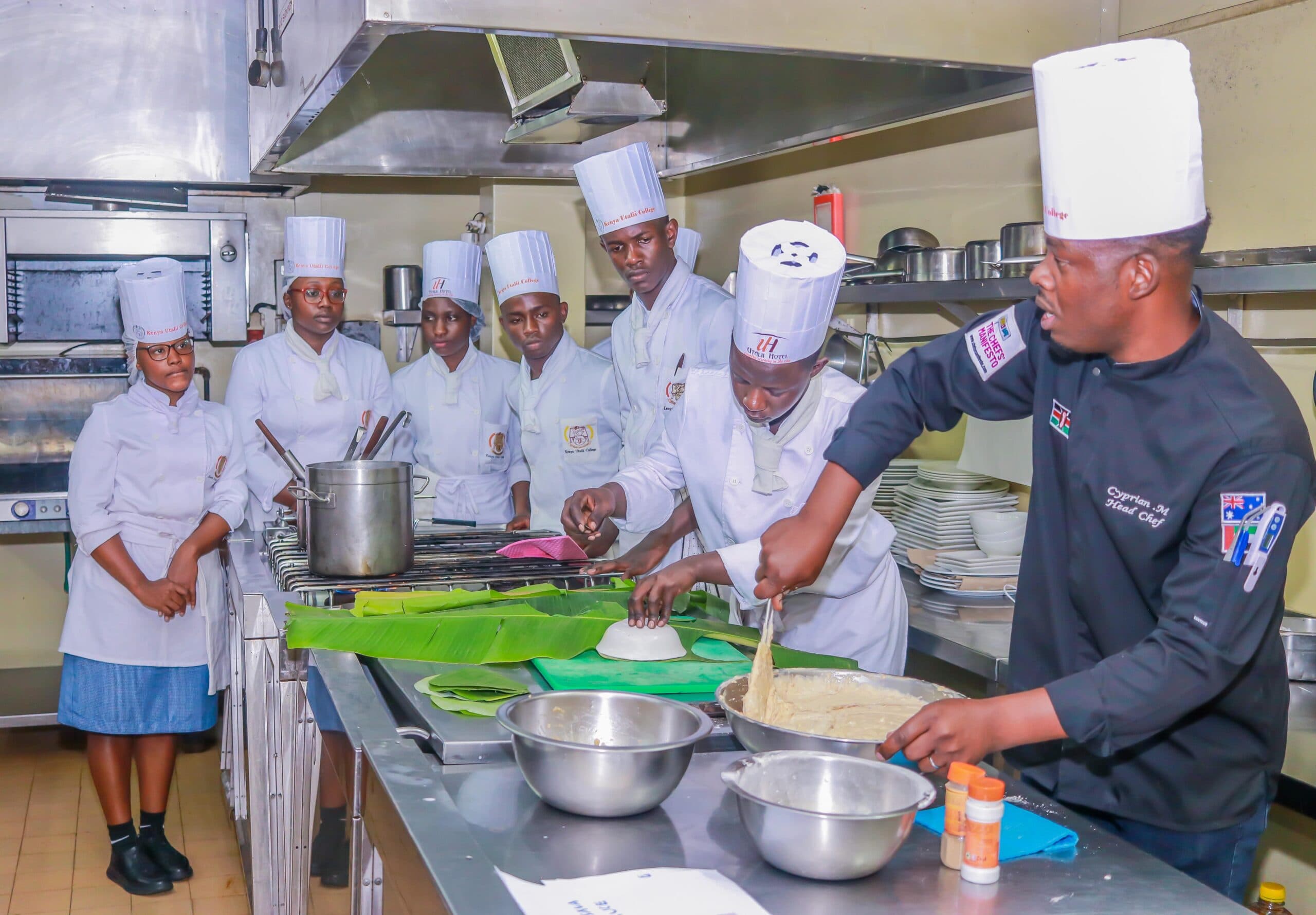
Education and training play a central role in shaping a culinary career. While some individuals acquire skills informally, formal training provides a structured and comprehensive foundation. Culinary schools and hospitality institutions teach not only cooking techniques but also nutrition, food safety, cost control and customer service. In Kenya, institutions such as Utalii College have contributed significantly to the professionalization of the field, producing graduates who meet international standards. Continuous learning remains essential, as culinary trends, technologies and consumer preferences evolve.
Another critical dimension is the integration of science and creativity. Culinary arts is not purely artistic; it is grounded in scientific principles. Understanding how heat affects proteins, how emulsions work or how fermentation develops flavour enables chefs to produce consistent and high-quality results. At the same time, creativity allows them to innovate, combining ingredients and techniques in novel ways. This duality – science and art – makes culinary arts intellectually engaging and professionally rewarding.
Financially, the culinary arts offers varied outcomes depending on skill level, specialization and career choices. Entry-level positions may offer modest earnings, but experience and expertise significantly increase earning potential. Executive chefs, specialized pastry chefs and successful entrepreneurs can achieve substantial financial success. Additionally, the global nature of the hospitality industry allows skilled professionals to seek opportunities beyond national borders, enhancing both income and exposure.
ALSO READ:
https://educationnews.co.ke/criminalising-competence-wont-save-our-tvet-why-kenya-must-stop-punishing-unregistered-trainers-and-start-fixing-the-system/
Importantly, culinary arts also contributes to societal well-being. Food is a fundamental human need, and those who prepare it professionally play a vital role in health, culture and social cohesion. Culinary professionals influence dietary habits, promote nutrition and preserve cultural heritage through cuisine. In educational settings, integrating culinary arts can equip learners with practical life skills while opening pathways to employment and entrepreneurship.
In conclusion, the culinary arts is unequivocally a career. It embodies the essential characteristics of a profession: structured training, defined progression, diverse opportunities and economic viability. While it demands discipline, resilience and continuous learning, it also offers creativity, independence and global relevance. To view culinary arts merely as cooking is to underestimate its scope and significance. Properly understood, it is a dynamic and impactful career that transforms not only food but also lives.
By Esther Wanjiru
Esther is a fourth-year Culinary Arts undergraduate student at Kenyatta University
You can also follow our social media pages on Twitter: Education News KE and Facebook: Education News Newspaper for timely updates.
>>> Click here to stay up-to-date with trending regional stories
>>> Click here to read more informed opinions on the country’s education landscape



Reader Discussion (0)
Sign in to comment