





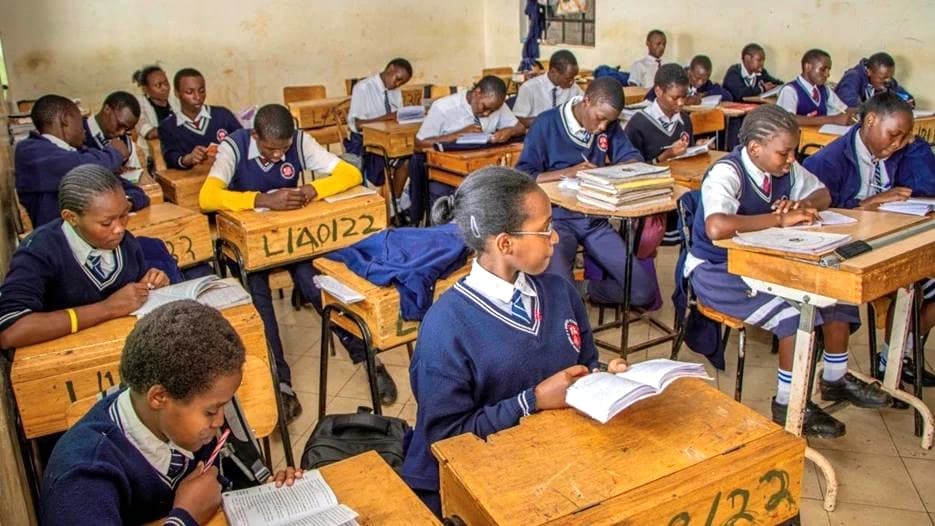


Ideally, in the new education dispensation, all Senior Schools should implement the infrastructure standards as provided for in policy documents and directives of the Ministry of Education. Therefore, dear reader, Notes on Standards for Infrastructure in Senior Schools form the central plank of my 30th treatise on Competency-Based Education (CBE).
Approval of Infrastructure
Foremost, no physical infrastructure should be constructed or occupied without the approval of the Ministry of Public Works, the Ministry of Education, and the Ministry of Health (Public Health Department) as per the Safety Standards Manual for Schools (2008). Likewise, the designs and specifications of structures should conform to Section 12.2 of the Registration Guidelines for Basic Education Institutions (2021) and to the good guidance of the School Infrastructure Management Unit (SIMU) at the Ministry of Education.
Site Plan and Sign Posts
Secondly, Senior Schools should consult relevant service-providers to assist them in developing a Site Plan. The site layout should take the form prescribed in the Physical and Land Use Planning Act (2019). Sign posts should be installed at strategic exterior and interior entrances, indicating the school’s name, contact details, and GPS coordinates, as per the ISO 21001/2018 Organisational Management System for Educational Organisations.
Landscaping and Sporting Facilities
Thirdly, compounds of Senior Schools should be well-graded and well-drained as per the Safety Standards Manual for Schools in Kenya (2008). Every school should configure its landscape to ease access for persons with special needs and disabilities, as per the Sector Policy for Learners and Trainees with Disabilities (2018). Meaning, all physical facilities should be safe for all learners and disability-friendly, with auxiliary arrangements for People Living with Disabilities (PLWDs).
READ ALSO:
https://educationnews.co.ke/education-cs-welcomes-new-klb-ceo-george-wanga-assures-support-for-publishing-house/
Consequently, schools should make wise use of available outdoor space to facilitate sports and leisure activities for all learners. This should take into consideration the acceptable safety standards. There should be ample playgrounds in the school, or the school leases a playground within a radius of 200 m, in accordance with the Registration Guidelines for Basic Education Institutions (2021). Schools should adhere to the Safety Standards Manual for Schools in Kenya (2008) in all matters pertaining to school transport, while taking into consideration learners with special needs and disabilities.
Tree-Planting and Water Weltering
Moreover, trees should be planted in every Senior School, in collaboration with the Department of Forestry. All trees should be labelled in both botanical and local names. Then, there should be adequate, clean and safe water for each learner, allowing 5 litres and 20 litres per learner daily in day and boarding schools, respectively. Water sources should be sited away from human activities and waste disposal sites. All water intakes should be well-protected. Then there should be safe water storage facilities. Water in the school should be sampled and tested at least once annually in a certified water quality testing laboratory, and a certificate should be issued towards the same in accordance with the Kenya School Health Policy (2018). Water tanks should be emptied and cleaned once annually with the approved cleansing materials.
Proper Waste Management System
More importantly, there should be proper waste management systems and mechanisms established and maintained in the school. Potential waste streams should be assessed, and an appropriate disposal route established. Then, there should be provision of Menstrual Hygiene Management (MHM) as per the Menstrual Hygiene Management in School: A Handbook for Teachers (2020).
Administrative Offices and Electricity
Furthermore, Senior Schools should have administrative offices commensurate with prevailing curriculum needs. There should be an annual assessment of the school infrastructure to ascertain safety. Therefore, any life-threatening structure should be repaired or demolished. The Management should look for more money from the government and development partners: to facilitate the establishment and acquisition of affordable physical and mobile laboratories as per the standards for laboratories, equipment and materials in STEM schools, and other basic institutions in Kenya. Electrical installations should be inspected regularly by qualified, licensed electricians for safety.
Sufficient Sanitation Facilities
Ipso facto, there should be sufficient sanitation facilities for students at a ratio of 1:25 for girls and 1:30 for boys, and a urinal where appropriate. A separate sanitation facility should be provided for the staff as well as learners with special needs and disabilities, as stipulated in the Registration Guidelines for Basic Education Institutions (2021).
Then, pit latrines should be located at least 15m from a borehole, well, or water supply point, and from the general wind direction. They should measure not less than 20 ft. (6m) deep, three ft. across, and not more than 25 cm in diameter for the hole. Pit latrines should be disinfected on a regular basis in perfect agreement with Registration Guidelines for Basic Education Institutions (2021). There should be adequate provision of sanitation-adapted toilets and walkways for learners and stakeholders as per the Kenya Persons with Disability Act (2003). There should be soap and a variety of handwashing devices, such as sinks with taps, buckets with taps, and basins with a pour cup.
Disaster Management and Mitigation
Likewise, schools should establish appropriate measures for emergency preparedness as per the Education Sector Disaster Management Policy (2017). Schools should organise to sensitise forums on fire emergency response. Identify fire assembly points. Ensure learners and staff undertake periodic fire drills as per the Safety Standards Manual for Schools in Kenya (2008). The school should have a plan and a well-thought-out budget for emergency responses, including damage from natural disasters, equipment breakdowns, or facility failure.
Preventive Maintenance and Repairs
Finally, it should enhance preventive maintenance involving general repairs. Or replacement of building components and systems, which includes maintaining the cleanliness of school grounds, classrooms, toilets, offices, dormitories, and kitchens, as spelt out in the School Safety Standards Manual (2008). There should be fencing around dangerous areas, such as swimming pools and wells. Stagnant water should be cleared. There should be a hazard-free environment, enhanced by removing harmful materials such as lead, asbestos, and other pollutants. The school should undertake planned maintenance involving regular inspections, servicing and repairs: to either keep school facilities in a sound state, and prevent unexpected breakdowns. Or immediately address any infrastructure issue that require repair.
By Victor Ochieng’
Victor Ochieng’ is an Education Consultant. He assists schools to write new, or review existing Strategic Plans (SPs). vochieng.90@gmail.com. 0704420232
You can also follow our social media pages on Twitter: Education News KE and Facebook: Education News Newspaper for timely updates.
>>> Click here to stay up-to-date with trending regional stories
>>> Click here to read more informed opinions on the country’s education landscape



Reader Discussion (0)
Sign in to comment