





At 4:30 a.m., while most of Nairobi suburbs still sleep, 11 year-old Christine Kinyua, not her real name, is already awake.
By 5 a.m., in the darkness of Ongata Rongai, she walks hand in hand with her mother to a matatu stage. The journey ahead is uncertain not because of distance, but because of what it takes to get there.
Christine is a pupil at Lang’ata Road Primary School, around 17 km away from home. Like many children living along Magadi Road and Langata Road, her school commute is a daily test of endurance, risk, and resilience.
At the roadside stage, she waits quietly as Matatus speed past, most unwilling to stop for a child paying a reduced fare. While adult passengers pay about Ksh 100 to the Nairobi’s Central Business District (CBD), Christine can only afford Ksh 20 if she is lucky. On many mornings, she waits for nearly half an hour before one finally pulls over.
Inside, the vehicle is often already full. Conductors, focused on maximizing earnings, issue a familiar instruction: “Watoto wasimame” children should stand. And so she does. For the next hour, Christine balances herself in the moving vehicle, swaying with every turn and sudden brake, without a seatbelt, without stability, just trying not to fall.

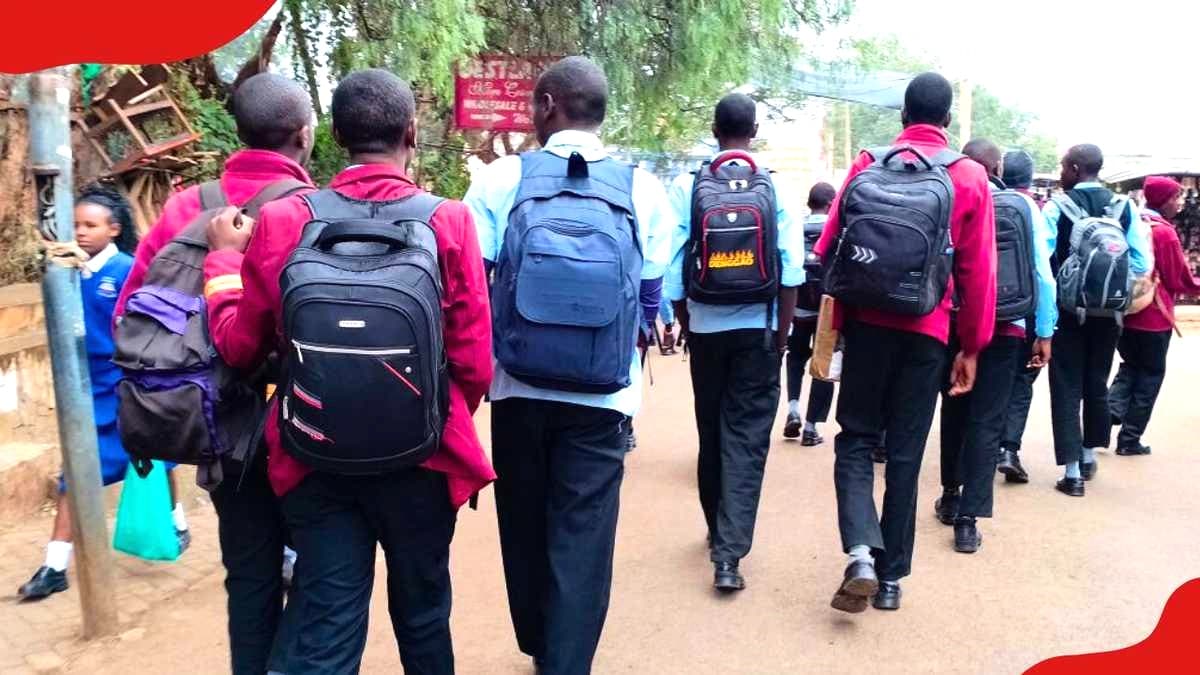
Students dangerously crossing Magadi Road in Ongata Rongai. The road has no pedestrian crossing ways,. Photo by Obegi Malack
Christine finally walks through her school gate, blending in with other pupils. There is little to show the difficult journey she has endured no sign of the hour long struggle that began before dawn.
Her experience mirrors that of dozens of children seen daily along these routes. At dawn and dusk, they gather by the roadside, some as young as six, waiting, hoping, and sometimes pleading for a ride. Some squeeze into overcrowded public vehicles. Others take greater risks, flagging down private cars driven by strangers.
ALSO READ:
https://educationnews.co.ke/bomet-central-residents-urged/
For taxi drivers like James Wanjala, the situation presents a difficult dilemma.
“They ask for lifts constantly. You want to help, but it’s risky. Anything could happen, and you’d be held responsible,” he says.
Those fears are grounded in reality. In Naivasha, a motorist was once stopped carrying several children hidden in a car boot. Along Limuru Road, children were rescued after a driver diverted them off the main road.
Even acts of goodwill can have consequences. A former principal, Lernard Barasa, was dismissed and deregistered by the Teachers Service Commission after giving a student a lift an action deemed to have violated professional conduct.
For Christine’s mother, Mercy Wangui, the risks are clear but so are the limitations.
“I know what she goes through, but I don’t have another option, private schools here are expensive and public congested. I just want her to get a better education,” she says.
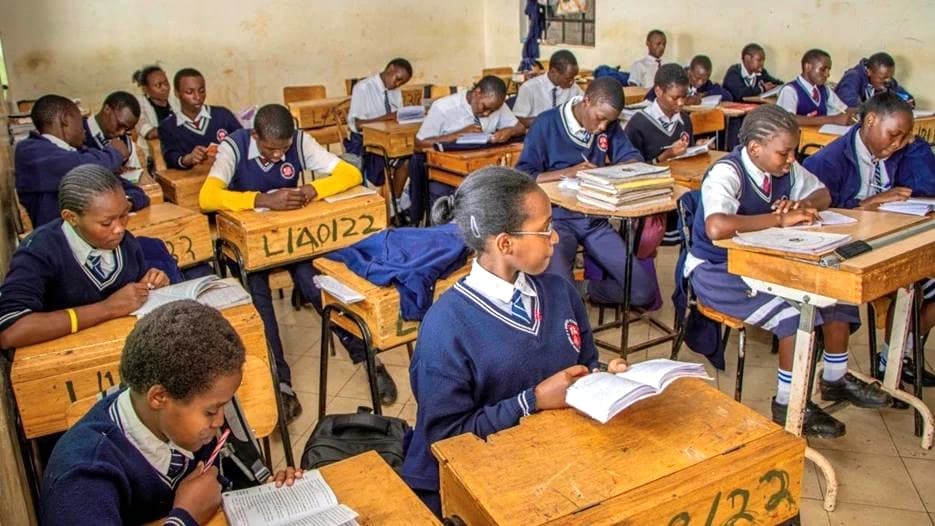
Nearby schools are overwhelmed. Institutions like Ongata Rongai Primary School host over 6,000 learners, reflecting the growing pressure on education infrastructure in Kajiado North.
According to Kajiado North Sub-County Education Officer Jane Kiremi, the sub-county has 17 primary and 18 secondary schools, yet enrollment continues to surge, with some schools accommodating more than 6,000 pupils while the smallest has 700 learners.
Despite this, the official maintains that most parents still enroll children in nearby schools, saying the schools always admit all students. She adds that some schools were started because students used to travel long distances to access education, which posed safety concerns as pupils walked for hours.
ALSO READ:
https://educationnews.co.ke/east-africa-hockey-champions-st-joseph-girls-step-up-preparations-after-regional-triumph/
In the region, only one school has a bus. The Kiserian Primary School bus was donated last year by State House Comptroller Katoo Ole Metito.
For families who can afford it, private transport or school buses provide safer options. But for many, these remain out of reach, leaving children to rely on public service vehicles or informal lifts.
PSV drivers acknowledge the risks but say economic realities leave little room for compromise.
“This is business. You have to meet your targets. If children sit, you lose paying passengers,” says John Kamau, a driver.
In Lang’ata Sub-County, a head teacher who sought anonymity said most parents hire private buses to transport their children to school. Only one school in the area has a bus. Compared to Kajiado North, Lang’ata Sub-County schools are less congested, which is why some parents prefer schools there.
In parts of Kajiado North, the dangers extend beyond transport. At Arap Moi Primary School, pupils line up daily along the busy Magadi Road, waiting for transport or walking long distances home.
ALSO READ:
https://educationnews.co.ke/bungomas-kapsokwony-boys-strike/
The road lacks basic infrastructure no pedestrian walkways, no zebra crossings forcing children to navigate speeding traffic with little protection. In some cases, school staff step in to help them cross, but such measures offer only temporary relief.
Kenya has regulations meant to protect learners using formal school transport. Under the Traffic (Amendment) Act 2017, rules enforced by the National Transport and Safety Authority. However, these safeguards do not extend to children who depend on public transport or roadside pickups.
Recent data from the National Transport and Safety Authority paints a grim picture. By December 2025, at least 4,458 people had died on Kenyan roads, surpassing the previous year’s total. Pedestrians accounted for the largest share, with 1,685 deaths a category that includes many school going children.
The lack of pedestrian infrastructure such as footpaths, footbridges, speed humps, and proper signage continues to contribute to these fatalities, particularly in rapidly growing peri urban areas like Ongata Rongai.
Education stakeholders are now calling for urgent intervention. They want road safety measures prioritized around schools and more public institutions established closer to underserved communities, reducing the need for long and risky commutes.
By Obegi Malack
You can also follow our social media pages on Twitter: Education News KE and Facebook: Education News Newspaper for timely updates.
>>> Click here to stay up-to-date with trending regional stories
>>> Click here to read more informed opinions on the country’s education landscape



Reader Discussion (0)
Sign in to comment