









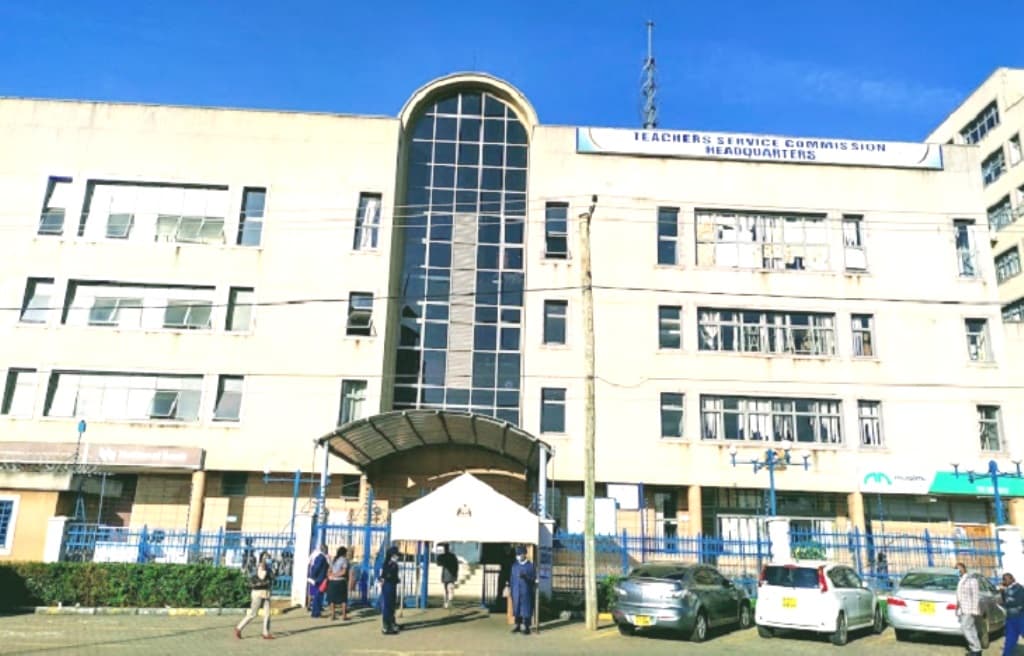
A set of official documents dating back more than a decade, now circulating widely online, has reignited public debate over how the Teachers Service Commission (TSC) handles disciplinary cases involving alleged professional misconduct by teachers, particularly where learners are concerned.
The documents, including a Letter of Interdiction, handwritten responses, internal payroll records, protest correspondence, and a recent social media petition, tell a story of a disciplinary process that began in 2007 and continued into 2008.
This raises questions about transparency, consistency, and accountability in the enforcement of professional standards within the teaching service.
The documents further indicate that the teacher was serving in Kiambu County when the disciplinary process was initiated. An official Teachers Service Commission Appointment and Casualty Return form bears a stamp reading “RECEIVED 03 APR 2008 – KIAMBU EAST,” pointing to the then Kiambu East District as the administrative jurisdiction handling the matter.
According to the social media post, the teacher is alleged to have appeared on a television programme discussing CBE, during which allegations were raised in the live comments section.
The interdiction letter further indicates that the teacher was serving at Githunguri Technical and Secondary School in Kiambu County at the time disciplinary action was initiated. The institution is listed under the “Name and Address of Institution” section of the Teachers Service Commission interdiction notice dated August 2, 2007.
At the centre of the records is a formal “LETTER OF INTERDICTION”, dated August 2, 2007, issued under the Teachers Service Commission Act, Cap 212.
In the letter, the Commission informs the teacher that disciplinary action had been initiated, saying: “The TSC directs me to say that it is alleged that you should have your name removed from the register of teachers.”
The letter points out alleged violations of ethical and professional standards, referencing statutory provisions: “You breached the Teachers Service Commission Act, Cap 212 Section 7 (3)(b) of the Laws of Kenya and Regulation 66 (2)(a) of the Code of Regulations for Teachers.”
Handwritten entries on the same document further specify the nature of the allegations. One line states: “You are of immoral behaviour.” Another allegation reads: “You had a love affair with your student.”
The document goes on to allege conduct within the learning environment itself, stating:
“You were flirting with her while she was still a student in your class.”
The interdiction letter stipulates procedural fairness, informing the teacher of the right to respond before the Commission makes a final determination:
“Before the Commission goes ahead to investigate, consider and determine your case, you are invited to make a statement to the Commission in writing.”
The letter bears an official stamp and is signed by BOG Secretary.”
Teacher’s written response
Among the documents is a handwritten response attributed to the teacher, in which he directly addresses the allegations. In a handwritten response dated July 31, 2007, the teacher admitted to having had an affair with a student, stating that the relationship ended once he realised she was still a learner.
In the response, the teacher makes a clear admission: “I admit I had a relationship with her.”
However, the same letter attempts to contextualise the admission, stating: “The same relationship ceased as soon as I realised my mistake, i.e she was a student.”
The teacher further disputes part of the allegations, writing: “At no time did I ever ask her to come to my house as she alleged.”
READ ALSO:
https://educationnews.co.ke/which-way-for-kuppet-as-labour-ministry-warns-against-elections-amid-court-case/
The response concludes with an expression of remorse and acknowledgement of professional failure: “I realised that I acted unprofessionally and am sorry and remorseful for my actions.”
Another document included in the bundle is an Appointment and Casualty Return form issued by the Teachers Service Commission. The form is officially stamped: “RECEIVED 03 APR 2008 – KIAMBU EAST.”
The document contains handwritten administrative remarks that appear to indicate financial and employment action taken following the disciplinary process. One such entry reads:
“Stop March 2008 salary.”
While the document does not explicitly state the final disciplinary outcome, it suggests that tangible administrative measures were implemented as part of the case.
Protest letter and escalation
Also included is a typed “LETTER OF PROTEST” addressed to the Teachers Service Commission, drawing attention to the earlier interdiction and questioning subsequent decisions.
The protest letter reiterates that: “He was given a letter of interdiction on immoral grounds on August 2, 2007, after he admitted to having an affair with a Form 3 student of the same school.”
The letter requests TSC to explain how the matter was concluded and whether appropriate sanctions were imposed.
The case has resurfaced publicly following a social media post that shared copies of the documents and called on TSC to revisit the matter. In the post, the author states:
“We decided to do a follow-up, and we have come up with damning evidence to confirm the allegations.”
The post further claims: “So far, we have obtained original documents through our own sources, and we want to put the employer to the task.”
The post questions institutional consistency and concludes with a strongly worded appeal:
“The scars this man caused an underage girl will forever be in her life while he keeps earning a salary.”
Unanswered question
The documents, taken together, show that formal disciplinary steps were follwed well, including interdiction, a written response, an admission, a salary action, and protest correspondence.
They do not stipulate the final resolution of the matter.
If the teacher was removed from the register, transferred, reinstated, or otherwise cleared through internal procedures.
Allegations involving learners under the law require strict adherence to due process, transparent disciplinary outcomes, and the protection of minors.
Also, accused individuals are entitled to procedural fairness and protection from trial by public opinion.
The documents show that due process mechanisms were followed but the absence of a clearly documented final determination has left lingering questions, however.
The issue is no longer just about one historical case, but about the credibility of systems designed to safeguard learners while upholding professional standards.
By Joseph Mambili
You can also follow our social media pages on Twitter: Education News KE and Facebook: Education News Newspaper for timely updates.
>>> Click here to stay up-to-date with trending regional stories
>>> Click here to read more informed opinions on the country’s education landscape




Reader Discussion (0)
Sign in to comment