







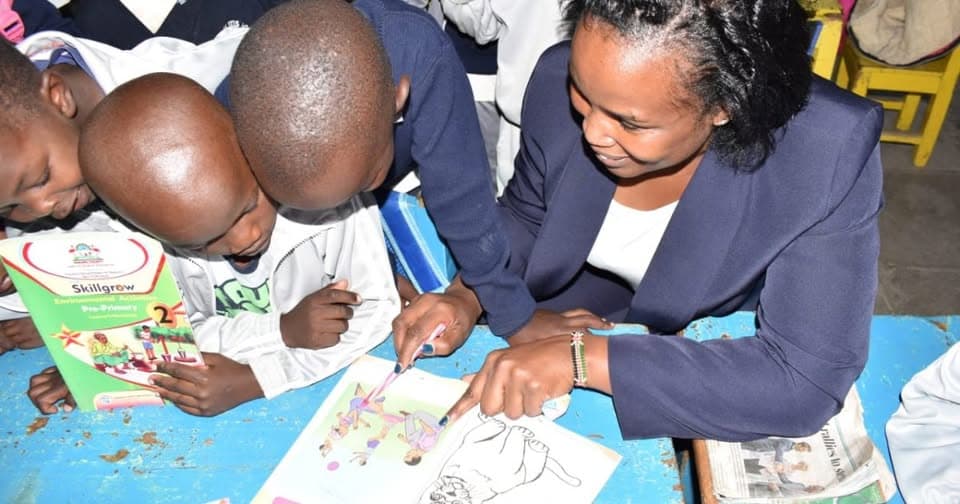
Long after the classroom doors close and the dust of chalk settles, something extraordinary remains. It is not the neat notes copied into exercise books. It is not the perfectly drawn diagrams or the marked scripts filed away in cupboards. It is not even the examination grades that once felt so urgent and defining.
What remains are impressions — quiet but powerful imprints of teachers who became more than subject instructors. They became influences. They became anchors. They became, in the truest sense, unforgettable.
Every learner passes through many hands. In the span of twelve or more years of schooling, they encounter dozens of educators, each responsible for delivering content, maintaining order, and guiding academic progress. Yet, when adulthood arrives and nostalgia gently opens the door to memory, only a few names stand out. Ask any professional, any entrepreneur, any parent, any leader to recall their teachers, and you will hear perhaps two or three names spoken with unmistakable emotion. And when those names are mentioned, they are rarely followed by discussions of lesson objectives or marking schemes. They are followed by stories.
That is because the teachers who live forever go beyond the blackboard.
Education, at its surface, appears to be about content delivery. A syllabus must be covered. Concepts must be explained. Examinations must be prepared for and passed. But beneath that structured routine lies something deeper. Education shapes identity. It molds confidence. It influences how learners see themselves and their potential. The teacher who understands this truth approaches the classroom differently. They do not merely aim to finish topics; they aim to awaken belief.
Human memory is not a cold storage system for information. It is an emotional archive. Neuroscience consistently demonstrates that experiences tied to emotion are stored more strongly and retrieved more vividly. When learners laugh during a lesson, feel proud after improvement, or experience encouragement at a moment of doubt, the brain marks that experience as significant. The emotional layer becomes glue. Without emotion, information often slips quietly away.
Consider the teacher who notices a struggling learner and says, “I can see you are trying. Let us work on this together.” That sentence may take only seconds to utter, but for the learner, it may be the first time someone acknowledged effort instead of failure. Years later, that learner may not remember the topic being discussed, but they will remember the feeling of being seen. Recognition builds identity. Identity builds memory.
ALSO READ:
https://educationnews.co.ke/bungoma-south-teachers-elect-knut-branch-officials-in-a-peaceful-poll/
The teachers who live forever are attentive to the individual behind the uniform. In a class of forty or fifty, it is easy to address the group as a collective. Yet each learner arrives with unique strengths, fears, ambitions, and insecurities. The unforgettable teacher learns names quickly. They notice patterns. They observe silent struggles. They celebrate improvement from 48 percent to 60 percent with the same sincerity as they celebrate top performance. They understand that growth is personal before it is statistical.
Authenticity further deepens memory. Students are remarkably perceptive. They detect when a teacher is merely performing a role versus when they are genuinely engaged. The teacher who admits, “I also struggled with this topic when I was in school,” instantly becomes relatable. Vulnerability does not weaken authority; it humanizes it. When learners see humanity, they connect. And connection cements remembrance.
Moments, more than minutes, define legacy. A well-prepared lesson is essential, but a transformative moment is unforgettable. It might be a spontaneous debate that ignites intellectual curiosity. It might be a practical demonstration that turns abstract theory into tangible understanding. It might be a story from real life that makes literature breathe or history pulse with relevance. These moments become mental photographs stored in vivid detail. Years later, learners may struggle to recall exact definitions, but they can clearly describe “that day” when the classroom came alive.
Relevance strengthens retention. When lessons are connected to everyday realities, they acquire meaning. Explaining economic inflation through the rising cost of basic commodities in the local market makes the concept concrete. Linking biological respiration to athletic performance makes science visible. When knowledge feels useful, it feels important. And what feels important is rarely forgotten.
Consistency also shapes memory. Learners remember teachers whose behavior was steady, whose expectations were clear, and whose discipline was fair. Predictability builds psychological safety. When students know that respect will be mutual and effort acknowledged, anxiety decreases. A secure learner engages more openly. Fear may produce silence, but safety produces participation. Participation deepens understanding. Understanding strengthens recall.
Interestingly, many adults fondly recall the teachers who challenged them the most. Not those who accepted mediocrity without question, but those who demanded improvement with conviction. The teacher who returned an essay and wrote, “You are capable of more than this,” may have seemed strict at the time. Yet that insistence often becomes a defining turning point. Growth requires discomfort. And discomfort, when guided by care, becomes a story of transformation.
ALSO READ:
https://educationnews.co.ke/understanding-the-5es-model-of-inquiry-based-learning-in-cbe/
Character may be the strongest element of all. Beyond academic instruction, teachers model behavior daily. Learners observe how they handle frustration, how they treat weaker students, how they respond when mistakes occur. They notice punctuality. They notice fairness. They notice integrity. These observations form silent lessons more powerful than any written note. Years later, former learners may say, “My teacher taught me discipline,” or “She showed me what fairness looks like.” Character transcends curriculum.
On the other hand, teachers who fade from memory are not necessarily incompetent. Many complete the syllabus faithfully and maintain order effectively. However, neutrality rarely leaves a permanent mark. Lessons delivered without emotional engagement, without personal connection, and without relevance may fulfill academic requirements but lack lasting influence. The brain prioritizes meaning over routine. Without significance, memories quietly dissolve.
To live forever in the minds of learners does not require grand gestures. It requires intentional daily actions. A word of encouragement. A moment of patience. A firm but respectful correction. A decision to protect a learner’s dignity instead of embarrassing them publicly. Small acts accumulate. Over time, they construct a legacy.
Turning points often define unforgettable teachers. It might be the day a teacher advised a learner on subject selection that later shaped a career path. It might be the moment a teacher defended a learner unfairly accused. It might be guidance offered before a major examination when anxiety threatened confidence. Turning points anchor memory because they alter direction. And direction shapes destiny.
At its core, teaching is not about producing perfect test scores alone. It is about influencing how learners perceive themselves. A shy student encouraged to speak gradually discovers confidence. A struggling learner shown consistent strategies begins to believe improvement is possible. A talented student pushed to refine their skills realizes excellence requires effort. These shifts in self-perception endure beyond school walls.
Education extends beyond textbooks and classrooms. It seeps into decision-making, career choices, relationships, and resilience in adulthood. The teacher who instilled discipline indirectly shapes professional reliability. The teacher who modeled empathy influences how former learners treat others. The teacher who insisted on ethical behavior influences future leadership. Influence multiplies quietly.
ALSO READ:
https://educationnews.co.ke/grade-10-textbook-distribution-hits-71-percent-as-moe-assures-full-delivery-by-end-of-february/
In many communities, when successful individuals are interviewed, they often attribute part of their journey to a particular teacher. They speak of someone who “saw something in me.” That phrase captures the essence of immortal teaching. To see potential before it is obvious is a rare gift. To nurture it patiently is even rarer.
Time eventually erases many details of schooling. The exact pages of notes fade. The specific dates of historical events blur. Mathematical formulas are forgotten if unused. Yet the emotional imprint remains. The teacher who made learning exciting. The teacher who corrected firmly but respectfully. The teacher who listened. The teacher who believed.
Beyond the blackboard lies the true legacy of education. It is found in confidence nurtured, in courage inspired, in dignity protected, and in potential awakened. It is measured not only by grades but by growth. It is reflected not only in certificates but in character.
Teachers who understand this truth approach their work with deeper awareness. They recognize that each day presents an opportunity to influence more than academic outcomes. Each interaction carries weight. Each word can build or bruise. Each response can inspire or discourage. The classroom becomes more than a physical space; it becomes a shaping ground for identity.
To live forever in the minds of learners is not about seeking fame or recognition. It is about leaving behind strengthened individuals. It is about ensuring that when former students face life’s challenges, they carry with them fragments of wisdom, discipline, and belief cultivated in school.
When the final bell rings for the last time and learners step into the next chapter of life, the notes may remain behind. But the influence travels with them. In boardrooms, hospitals, farms, universities, and homes, traces of teachers appear in quiet decisions and confident steps.
By Hillary Muhalya
You can also follow our social media pages on Twitter: Education News KE and Facebook: Education News Newspaper for timely updates.
>>> Click here to stay up-to-date with trending regional stories
>>> Click here to read more informed opinions on the country’s education landscape


Reader Discussion (0)
Sign in to comment