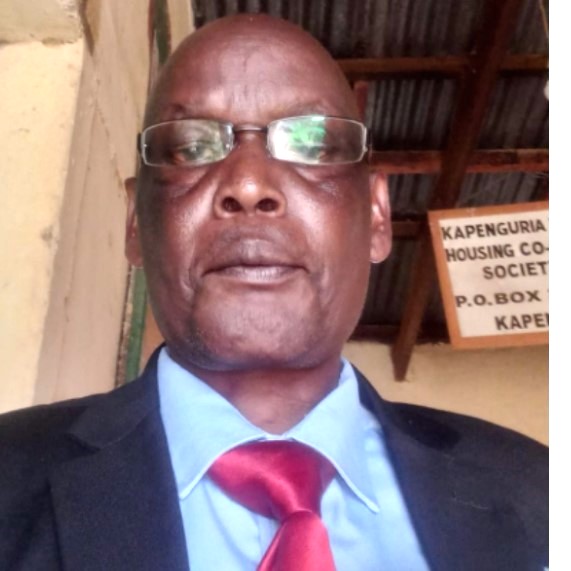
No Kenyan child should be left behind at the critical transition point from junior to senior school due to inability to pay school fees, KNUT Executive Secretary for West Pokot, Martin Sembelo, has said, stressing that financial hardship, weak policy coordination, and limited community sensitisation continue to deny many learners their constitutional right to education.
Speaking against the backdrop of the ongoing implementation of Competency Based Education (CBE), Sembelo noted that while government policy guarantees 100 per cent transition, the reality on the ground—especially in marginalised counties such as West Pokot—tells a different story. Many learners who complete junior school fail to apply to senior schools due to school fees, a lack of boarding facilities, long distances, and inadequate information on placement and career pathways.
“The transition from junior to senior school is not just a procedural step; it is a critical milestone in a child’s life,” Sembelo observed. He added that failure at this stage often has long-term consequences, affecting academic achievement, social development, and future employability. “We are talking about a child’s future. We cannot afford to let any child drop out because they cannot pay fees or because of poor coordination,” he said.
Sembelo urged stakeholders to be realistic about the system’s current stage. “We should not expect miracles from the system since it is still at its rudimentary stage. Hiccups here and there are normal; instead of pointing fingers, we should focus on practical solutions and stop the blame game,” he said. He emphasised that while challenges are inevitable during the early implementation of CBE, they should be seen as opportunities to improve, innovate, and strengthen systems rather than as grounds for assigning blame.
One of the key areas Sembelo highlighted is parents’ role in supporting their children. “Parents must actively explore different funding platforms to ensure their children continue learning,” he said. He encouraged them to consider a variety of options, from government and county bursaries to corporate scholarships and community funds. For instance, the Constituency Development Fund (CDF) bursaries allow Members of Parliament to allocate funds to needy students in their constituencies. At the same time, the National Government Affirmative Action Fund (NGAAF) targets learners from marginalised and disadvantaged regions. In addition, most county governments have their own bursary schemes designed to support local students, particularly those in secondary schools.
Equally important, Sembelo said, is the advisory role of teachers and school heads. Teachers and school heads have a duty to guide parents on available funding opportunities, advise them on proper application processes, and assist them in navigating placement procedures. Their role goes beyond the classroom; they are the bridge connecting learners, parents, and the resources they need to succeed,” he noted. He added that parents should also explore education financing options from commercial banks such as Equity Bank, KCB Bank, Co-operative Bank, Absa Bank, Standard Chartered Bank, Family Bank, and NCBA Bank, all of which offer school fee loans, scholarships, or education-friendly savings schemes.
However, Sembelo warned that many learners are losing access to support due to excessive bureaucracy. “Those supporting learners must desist from too much red tape. Bursary applications, scholarship approvals, and loan disbursements should be simple, timely, and transparent. Unnecessary bureaucracy delays help and often discourages parents and learners from applying,” he said. He stressed that streamlined processes would ensure that support reaches the intended beneficiaries quickly, reducing dropout risks.
The KNUT official warned that failure to ensure smooth transitions undermines the broader objectives of CBE. “Competency-Based Education is designed to provide learners with practical skills, critical thinking, and problem-solving abilities. If learners fail to progress to senior school because of fees, the investment in these skills at the junior level is wasted,” he explained. He added that dropouts at this stage expose children to a range of social risks, including early marriages, child labour, drug and substance abuse, and engagement in criminal activities.
Sembelo also drew attention to systemic barriers affecting learners from marginalised regions. In arid and semi-arid counties, challenges such as long distances to schools, poor infrastructure, and limited availability of boarding facilities make it difficult for learners to report to senior schools. Additionally, the lack of timely information on placement, career pathways, and financial support creates confusion and anxiety among parents and learners alike.
READ ALSO:
To address these issues, Sembelo called for multi-stakeholder collaboration. He urged the Ministry of Education, the National Treasury, county governments, development partners, and local communities to design special funding and support models for vulnerable learners jointly. According to him, these initiatives should be timely, predictable, targeted, and insulated from political interference. He argued that such a framework would not only facilitate 100 per cent transition but also ensure equity and fairness across the country.
Sembelo further highlighted the contributions of non-governmental and development partners, noting that foundations such as the Equity Group Foundation, Aga Khan Foundation, MasterCard Foundation, and various World Bank–funded education initiatives provide scholarships and bursaries to help learners from low-income backgrounds. He also emphasised the role of private companies’ corporate social responsibility (CSR) programs, citing Safaricom, Kenya Power, and the KCB Foundation as organisations that occasionally sponsor needy students. In addition, faith-based organisations and community groups, such as the Catholic Diocese Education Funds, Muslim Education Funds, and Rotary Clubs, also provide support to children who would otherwise struggle to pay school fees.
“Education is a right, not a privilege. If a child has completed junior school, the State has a duty to ensure that child proceeds to senior school without barriers,” Sembelo stressed. He called for improved data sharing between schools, education offices, and social protection programmes to track at-risk learners early and intervene before they drop out. This, he noted, would allow for timely support and counselling, preventing children from slipping through the cracks due to financial or social constraints.
Sembelo also emphasised the role of community sensitisation. He argued that parents, community leaders, and local influencers must be actively involved in promoting the importance of education, ensuring that no child is denied the opportunity to learn. “Awareness and engagement at the community level are as important as policy and funding. Parents and guardians must understand that education is a long-term investment in their children’s future,” he said.
The KNUT official highlighted the disparities between urban and marginalised areas, noting that while urban schools often have better facilities and access to funding, learners from remote regions face multiple hurdles. “The measure of success will not be how well a few urban schools perform, but whether every child—from West Pokot to the coastal and northern counties—steps into senior school with hope and dignity,” he said.
Sembelo also urged parents to play a proactive role in monitoring their children’s academic progress. He warned that gaps in foundational learning during junior school, if left unaddressed, complicate the transition to senior school and undermine the learner’s ability to thrive in advanced subjects. He encouraged parents to engage regularly with teachers, attend school meetings, and seek guidance on additional support programmes, remedial classes, or mentorship initiatives.
Furthermore, Sembelo highlighted the importance of policy-level interventions to ensure equity. He called for the development of an education equalisation framework to cushion learners in marginalised regions, arguing that public investment in education should be distributed fairly to close historical disparities. He emphasised that such a framework would guarantee that learners from low-income families are not left behind due to financial constraints or geographic disadvantage.
He stressed that no child should be excluded from the education system simply because of poverty, weak coordination, or a lack of information. “We must work collectively—government, teachers, parents, communities, and development partners—to ensure that the promise of 100 per cent transition becomes a reality, not just a policy slogan,” he said.
As Kenya continues to implement CBE, Sembelo maintained that equity, access, and inclusion must remain at the centre of all policy decisions. He encouraged stakeholders to focus on practical, actionable steps rather than finger-pointing, reminding the public that the system is still in its early stages and challenges are inevitable.
“Let us not expect miracles, but let us expect commitment, collaboration, and innovation,” he concluded. “Every child deserves the right to continue learning. If we work together—parents, teachers, government, and communities—we can ensure that no Kenyan child is left behind at the critical juncture of transitioning to senior school because of a lack of fees.”
By Hillary Muhalya
You can also follow our social media pages on Twitter: Education News KE and Facebook: Education News Newspaper for timely updates.
>>> Click here to stay up-to-date with trending regional stories
>>> Click here to read more informed opinions on the country’s education landscape