

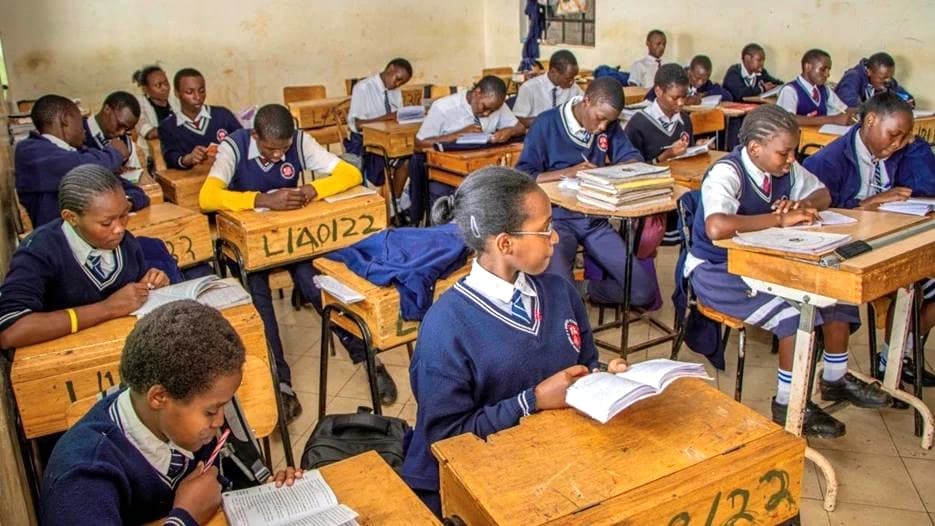

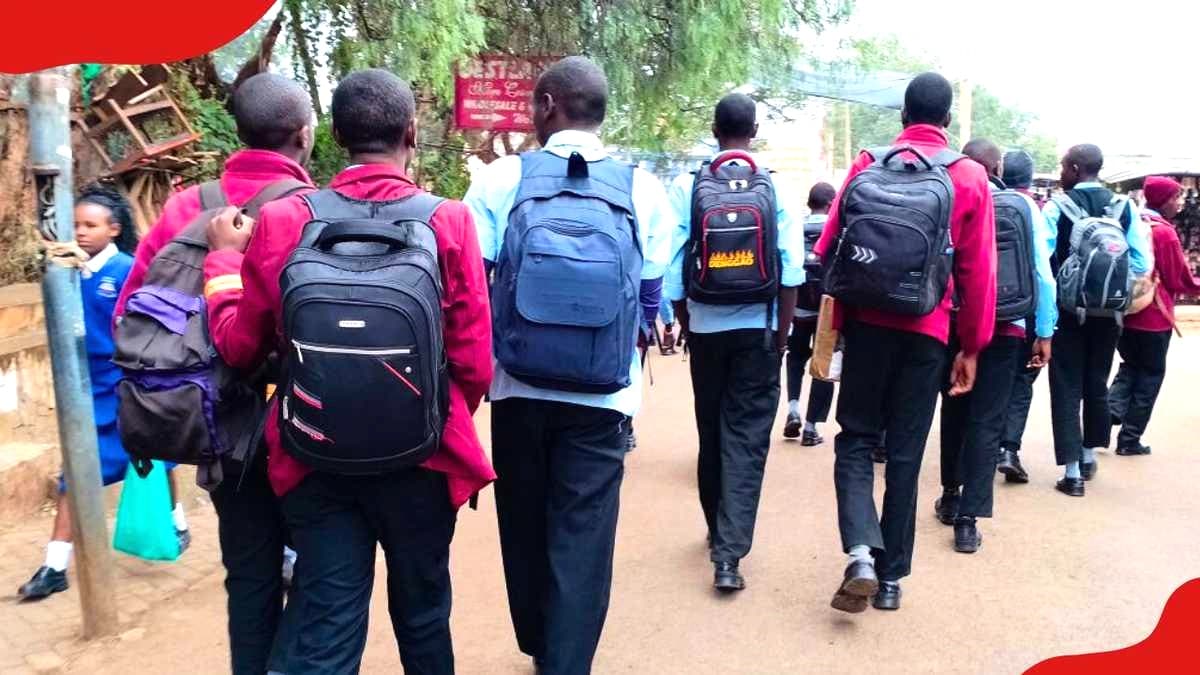


Mwalimu, may your children be taught by a teacher just like you. That sounds like a blessing. A sweet one. A noble one. A respectful one. But if we are being brutally honest, it is also one of the most uncomfortable statements a teacher can ever hear. It sounds like prayer, but in truth, it is also a mirror. And not the flattering kind. The dangerous kind.
Because before any teacher says Amen, they must first answer one deeply unsettling question: Would I genuinely want my own child to be taught by a teacher like me?
Would you want your son to sit under your patience? Would you trust your daughter with your tone? Would you be at peace if your own child met your preparation, your consistency, your fairness, your emotional control, your compassion and your professionalism every single day?
That statement is not just a compliment. It is a professional audit disguised as a blessing.
Teaching has never been just a job. It is not merely about completing schemes of work, covering the syllabus, setting exams and collecting salaries at the end of the month. Teaching is one of the holiest public responsibilities ever handed to human beings. A teacher is not simply a conveyor belt of content. A teacher is a builder of minds, a sculptor of confidence, a guardian of potential and in many cases, the first public voice that either bruises or awakens a child’s destiny.
A careless doctor may injure one patient. A careless engineer may damage one structure. But a careless teacher can quietly destroy an entire generation; one discouraged learner at a time. That is why no teacher has the luxury of mediocrity.
Children do not only remember what they were taught. They remember how they were treated while being taught. They may forget the exact notes on photosynthesis, subject verb agreement or fractions. But they rarely forget the teacher who made them feel stupid for asking a question. They never quite forget the teacher who laughed when they failed. And they definitely never forget the one who looked them in the eye and made them believe they were capable. That is the power a teacher carries every day, often without realizing it.
ALSO READ:
https://educationnews.co.ke/st-johns-kibongwa-celebrates-kcse-breakthrough-as-university-qualifiers-rise/
The most dangerous teacher is not necessarily the one who lacks knowledge. Sometimes the most dangerous teacher is the one who lacks tenderness. The one who knows the subject but has forgotten the soul. The one who can explain a topic brilliantly but cannot handle a struggling learner humanely. The one who is professionally qualified but emotionally absent.
Some children come to school carrying burdens heavier than their school bags. Some come from homes with violence, neglect, hunger, fear, instability or emotional chaos. Some arrive in class already bruised by life before the lesson even begins. Then they meet a teacher who adds humiliation to injury. A sarcastic remark. A dismissive tone. A cruel nickname. A public embarrassment. A cutting sentence spoken carelessly, but remembered for years. And just like that, the classroom becomes another place of pain instead of a place of healing.
A good teacher asks, ‘Why is this learner difficult?’ A great teacher also asks, ‘What might this learner be going through?’ That question alone can save a child.
Excellence in teaching begins long before the lesson starts. The best teachers do not just enter class. They arrive with intention. They prepare. They revise. They think ahead. They anticipate confusion. They choose methods carefully. They mark seriously. They give feedback meaningfully. They do not teach merely to survive the timetable. They teach to awaken understanding. An unprepared teacher is not just disorganized. They are dangerous.
Every lazy lesson steals from learners. Every rushed explanation robs a child of clarity. Every neglected script delays growth. Every careless remark chips away at confidence. Every wasted period is not just lost time; it is lost possibility. And the tragedy is that learners often suffer silently under adults they are expected to respect. That is why teaching demands conscience.
Discipline is necessary. Standards matter. Boundaries are important. Learners must be guided, corrected and challenged. But discipline must never become a respectable mask for cruelty. There is a huge difference between authority and intimidation.
A teacher can be firm without being frightening. A teacher can correct without crushing. A teacher can command order without draining joy out of the room. The best classrooms are not necessarily the quietest ones. Sometimes they are simply the safest ones; the places where learners know they can be challenged without being shamed.
ALSO READ:
https://educationnews.co.ke/illness-disrupt-your-childs-education/
Fear may produce silence, but it does not always produce growth. And if a learner obeys you in public but fears you in private, then something is wrong. This is where the statement becomes even more personal: Teach every learner as though you are teaching your own child.
Imagine your own child seated in that classroom. Imagine your son in that back row. Imagine your daughter struggling to answer that question. Imagine your own child handing in that imperfect assignment. Would you still use that tone? Would you still humiliate them? Would you still ignore them? Would you still dismiss their effort? Would you still weaponize your authority? If your standard changes because it is now your child, then your professionalism was never complete. It was selective. And selective humanity is not excellence.
Every learner in class is somebody’s child. Somebody’s prayer. Somebody’s sacrifice. Somebody’s hope. Somebody’s tomorrow. Some parent somewhere wakes up every morning, packs that child, prays for that child and releases that child into the hands of teachers with trust; sometimes blind trust. That trust must never be abused.School leadership and Boards of Management must also take this matter seriously. Teacher performance cannot only be measured through exam results, lesson attendance and syllabus coverage. A school can produce excellent grades and still be emotionally violent. A school can top in academics and still be quietly breaking children inside classrooms.
That is why leadership must ask harder questions. Not just, ‘Are teachers teaching?’ but also, ‘How are they teaching?’ Not just, ‘Are results improving?’ but also, ‘Are learners being handled with dignity?’ Not just, ‘Is the syllabus complete?’ but also, ‘Would we gladly place our own children under every teacher in this institution?’ That is the real test.
A truly excellent teacher is not perfect. They get tired. They get frustrated. They have bad days. They are human. But even in their humanity, they remain intentional. They remain accountable. They remain teachable. They keep improving. They keep reflecting. They keep remembering that what they hold in their classroom is not just a register of names, but a room full of futures.
So yes; Mwalimu, may your children be taught by a teacher just like you. That is a beautiful blessing. But it is also a terrifying challenge. And only the teacher who prepares well, speaks wisely, disciplines with dignity, teaches with compassion and handles learners with conscience can say Amen with a straight face. The rest should pause before responding. Because in the end, the true measure of teaching is not only what enters the learner’s notebook. It is what remains in the learner’s heart.
Amen… if you dare.
By Angel Raphael
Angel Raphael is a seasoned teacher of English, writer and passionate advocate for excellence in education.
You can also follow our social media pages on Twitter: Education News KE and Facebook: Education News Newspaper for timely updates.
>>> Click here to stay up-to-date with trending regional stories
>>> Click here to read more informed opinions on the country’s education landscape


Reader Discussion (0)
Sign in to comment