








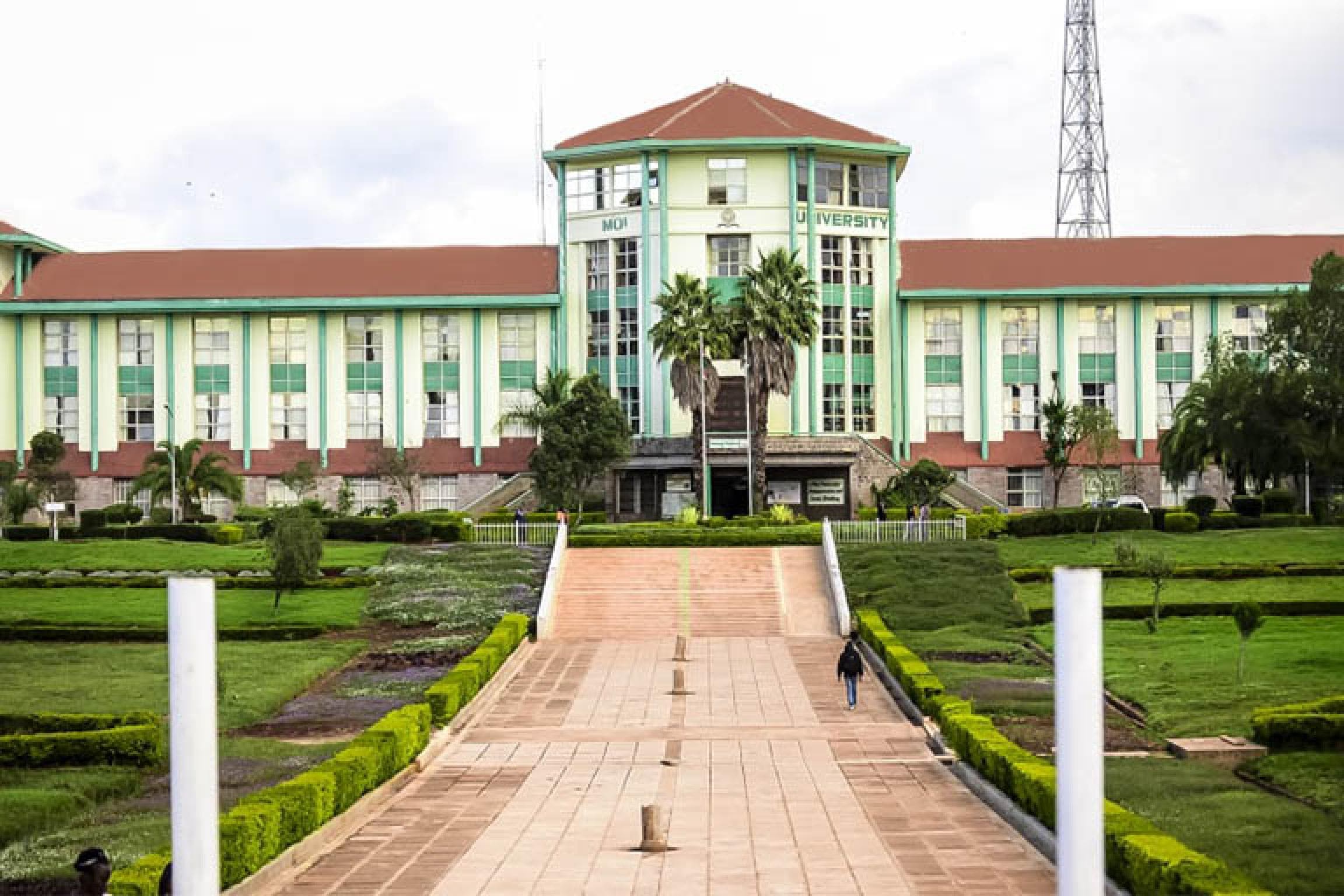
Moi University has launched the second phase of its solar power initiative in partnership with Kenyan engineering firm Afriwatt Engineering Ltd, marking a significant step toward sustainable energy and reduced electricity costs.
The project, unveiled at the university’s main campus in Kesses, Uasin Gishu County aims to expand renewable energy production, support climate action, and create new training and research opportunities for students.
Speaking during the launch, Acting Vice-Chancellor Prof. Kiplagat Kotut said the project forms a key part of the university’s recovery plan amid ongoing financial constraints.
“We fully support this initiative and are privileged to launch the second phase of a project that will scale from kilowatts to megawatts in sustainable energy production,” said Kotut.
He revealed that the university plans to develop a 30-megawatt renewable energy park that will supply clean electricity for campus operations. The facility will also have the capacity to feed excess power into the national grid, benefiting both the university and the surrounding community.
Kotut noted that the initiative will significantly lower electricity costs, promote environmental conservation, and drive sustainable development through research and innovation.
ALSO READ:
https://educationnews.co.ke/kmtc-warns-applicants-against-scammers/
“This project will help conserve the environment while strengthening our role as a hub for innovative research and sustainable development,” he said.
The acting vice-chancellor also emphasized the need for stronger partnerships with development and research institutions to accelerate the adoption of renewable energy technologies and support climate change mitigation efforts.
Kotut further appealed to Afriwatt to provide internship and practical training opportunities for engineering students at the university.
“We encourage Afriwatt to consider offering internships and hands-on training to our engineering students so they can gain practical skills in renewable energy technologies,” he added.
Afriwatt Engineering Ltd Executive Director Thomas Cheruiyot said the project has already generated 23.12 megawatts and is expected to increase power savings from 11.12 percent to 32.3 percent, while reducing reliance on the national grid by 36.9 percent.
“We are now advancing toward producing five megawatts of solar power to decarbonize every building within the institution. As a result, electricity costs are expected to significantly decrease,” Cheruiyot said.
He added that a 57.1 kilowatt solar PV grid-tie system, installed at a cost of Sh4.2 million, will fully power the university’s administration block and other buildings.
ALSO READ:
https://educationnews.co.ke/how-new-traffic-rules-could-protect-learners/
According to Cheruiyot, excess solar energy will be used to produce green hydrogen, which can be stored for future use or commercialized as an industrial feedstock.
Upon completion of the second phase, the university also plans to construct a facility for hydrogen processing and ammonia production for green fertilizer.
“These processes require substantial energy, and renewable sources such as solar power will ensure sustainable research and talent development,” Cheruiyot explained.
The solar initiative is part of a broader program launched in September 2024 known as Moi University Renewable Energy Innovation Park and Green Hydrogen, Ammonia and Fertilizer Research Hub (MUREPHAR), which seeks to promote innovation, research, and sustainable development in renewable energy technologies.
Cheruiyot added that the project will also strengthen the university’s e-learning infrastructure by ensuring a stable power supply during outages.
“The project is expected to improve e-learning systems and guarantee continuity of academic activities during power interruptions,” he said.
The solar project launch comes just days after the university administration issued redundancy notices to 892 teaching staff members due to financial challenges.
However, the layoffs were temporarily halted by the Employment and Labour Relations Court following a petition filed by the Universities Academic Staff Union (UASU).
By Kimutai Langat
You can also follow our social media pages on Twitter: Education News KE and Facebook: Education News Newspaper for timely updates.
>>> Click here to stay up-to-date with trending regional stories
>>> Click here to read more informed opinions on the country’s education landscape


Reader Discussion (0)
Sign in to comment