







Mathematics and Kenyan Sign Language have emerged as the lowest‑performing subjects in the 2025 Kenya Junior Secondary Education Assessment (KJSEA), with the Ministry of Education reporting that a significant proportion of Grade 9 learners struggled to attain the expected competency levels.
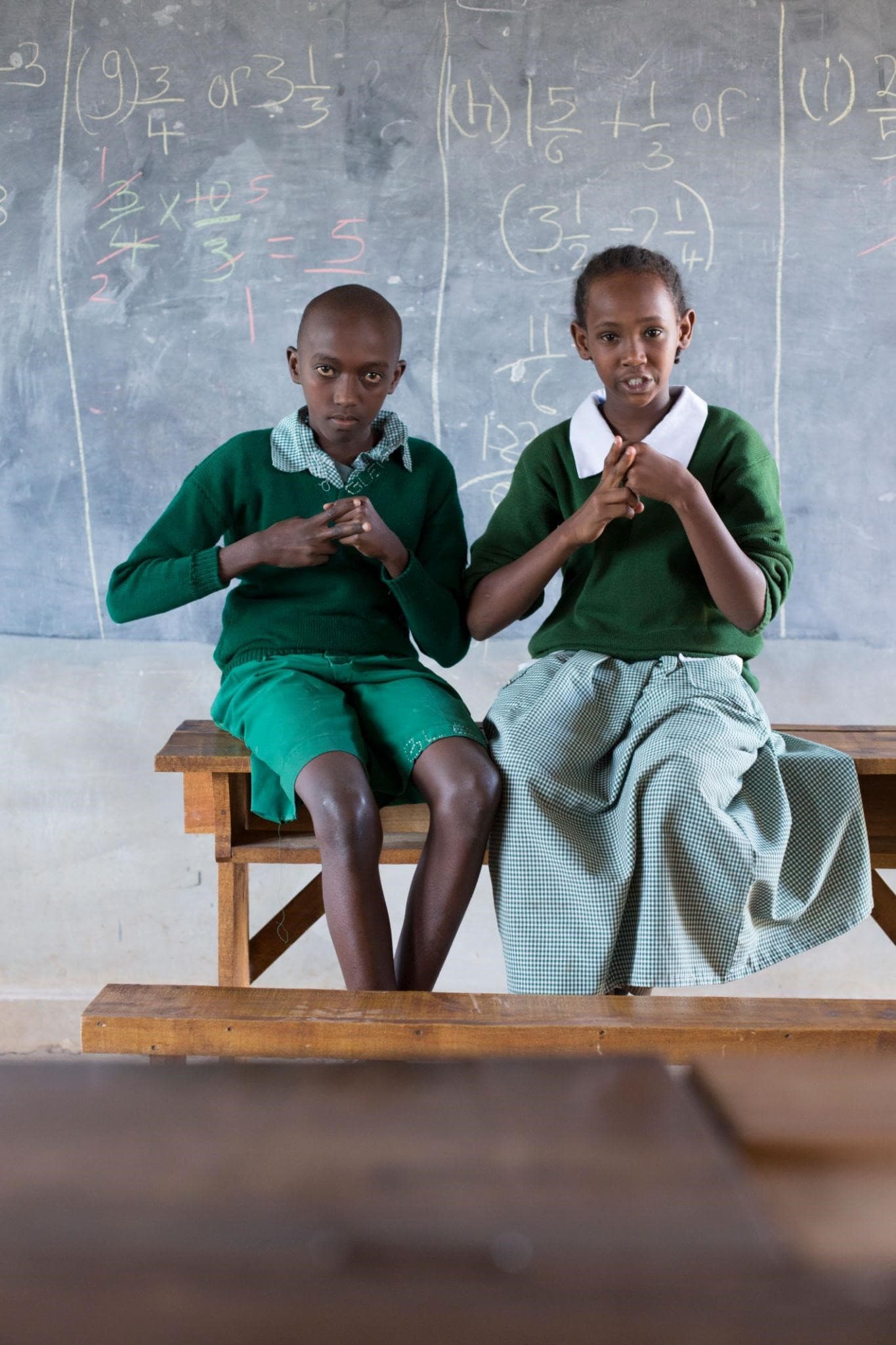
According to the national results, only 32.44 per cent of candidates met or exceeded expectations in Mathematics, while Kenyan Sign Language recorded an even lower performance at 22.14 per cent.
Education Cabinet Secretary Julius Migos Ogamba said the overall performance pattern revealed notable gender disparities, with female learners outperforming their male counterparts in 10 out of the 12 assessed subjects.
The widest gaps were recorded in Kiswahili, where 64.86 per cent of girls met or exceeded expectations compared to 51.41 per cent of boys. Similar trends were observed in Christian Religious Education (59.77 per cent for girls against 48.39 per cent for boys), English (52.86 per cent versus 48.45 per cent), and Social Studies (62.98 per cent compared to 54.35 per cent). Ogamba said the results reaffirm the need for targeted interventions to support boys, particularly in language‑based and humanities subjects.
A total of 1,130,459 learners sat for the 2025 KJSEA, marking the second national rollout of the assessment under the Competency‑Based Curriculum (CBC).
RELATED:
https://educationnews.co.ke/girls-outshine-boys-in-10-of-12-subjects-in-groundbreaking-kjsea-results/
The Ministry reported that 59.09 per cent of the candidates demonstrated potential to pursue Science, Technology, Engineering and Mathematics (STEM) pathways in senior school. Another 46.52 per cent showed aptitude for Social Sciences, while 48.73 per cent qualified for Arts and Sports pathways, reflecting a broad distribution of learner strengths across the three senior school tracks.
Seven of the twelve subjects assessed recorded a higher proportion of learners performing at Meeting and Exceeding Expectations levels. Hindu Religious Education posted the strongest results, with 84.62 per cent of learners achieving the top two bands.
Integrated Science followed at 61.77 per cent, while Social Studies, Creative Arts and Sports, Kiswahili, Christian Religious Education and Agriculture all recorded more than half of their candidates meeting the expected competencies.
The Ministry said these subjects demonstrated consistent improvement compared to the previous assessment cycle.
Ogamba noted that despite the challenges in Mathematics and Kenyan Sign Language, 75 per cent of all learners achieved Approaching Expectations and above across the entire subject range. Creative Arts and Sports recorded the highest proportion of learners in this combined category at 96.84 per cent, followed closely by Agriculture at 96.24 per cent. Kiswahili and Social Studies also posted strong results, with 93.11 per cent and 92.93 per cent respectively attaining Approaching Expectations or higher.
Ogamba emphasised that an Approaching Expectations grade is sufficient for learners to progress into senior school pathways that require only basic competencies in the subject.
To support the transition process, the Kenya National Examinations Council (KNEC) has introduced special arrangements prioritising top‑performing learners and those with special needs during senior school placement.
KNEC has also launched an online teacher capacity‑building platform to strengthen instructional delivery as the CBC continues to take root. Parents can now check their children’s selected schools and pathways through the Ministry’s online portal or via SMS, a move aimed at enhancing transparency and reducing anxiety among families.
ALSO READ:
https://educationnews.co.ke/2025-kjsea-results-officially-released-as-placement-kicks-off/
The bands include Exceeding Expectations (EE1 for 90–100 per cent and EE2 for 75–89 per cent), Meeting Expectations (ME1 for 58–74 per cent and ME2 for 41–57 per cent), Approaching Expectations (AE1 for 31–40 per cent and AE2 for 21–30 per cent), and Below Expectations (BE1 for 11–20 per cent and BE2 for 1–10 per cent).
Final senior school placements will be determined using a weighted formula: 60 per cent from KJSEA results, 20 per cent from school‑based assessments, and 20 per cent from KPSEA scores. Learners’ declared interests and KNEC‑recommended pathways will also be factored in to ensure alignment between aptitude and placement.
Ogamba reassured parents that the recent renaming of schools into clusters does not affect school fees.
Basic Education Principal Secretary Julius Bitok said all learners are expected to know their placements by next week, after which a five‑day revision window will open. He added that the government anticipates a 100 per cent transition rate, with 1.5 million available senior school slots against 1.1 million learners.
By Masaki Enock
You can also follow our social media pages on Twitter: Education News KE and Facebook: Education News Newspaper for timely updates.
>>> Click here to stay up-to-date with trending regional stories
>>> Click here to read more informed opinions on the country’s education landscape


Reader Discussion (0)
Sign in to comment