





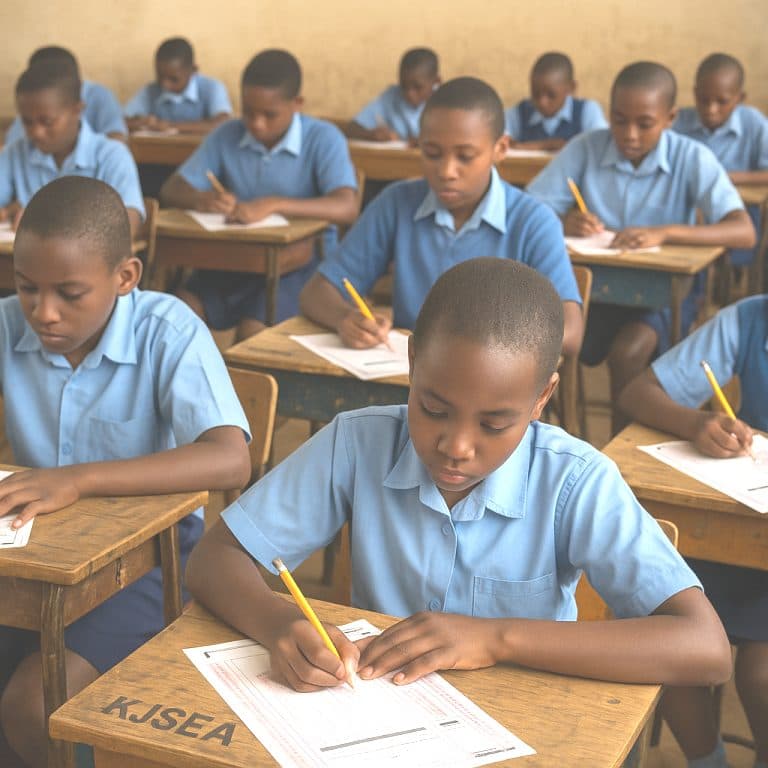
The Kenya Junior Secondary Education Assessment (KJSEA) results expected this week mark a historic moment in the country’s educational journey. This is the first cohort under the Competency-Based Curriculum (CBC) to sit a Grade 9 national assessment, and the entire nation is watching closely.
For decades, Kenya has operated under the 8-4-4 system, a structure that gradually became synonymous with high-stakes testing, memorisation and intense academic pressure. While it opened many doors in its early years, it also birthed a culture in which examinations defined learners, stratified schools and limited the ways society recognised intelligence.
CBC was introduced to correct these long-standing distortions. It promised a shift from an exam-oriented mentality to a system rooted in skills, competencies, creativity and practical engagement. Learners were to be valued for what they can do – not merely what they can remember under pressure. Yet, for many stakeholders, the forthcoming release of KJSEA results raises a simple but profound question: will this moment prove that Kenya has truly broken away from the 8-4-4 examination culture or will old habits reappear under a new name?
For parents, teachers, and learners, the anxiety surrounding national results is familiar. Generations grew up in environments where the release of KCPE or KCSE results was almost a national spectacle. Rankings, celebration of “top performers,” stigma for low scorers, and intense pressure became traditions that shaped Kenya’s educational landscape. CBC was meant to dismantle this tradition and replace it with a more humane, flexible, and learner-centred approach. But the real test of the curriculum’s spirit lies in how KJSEA results will be interpreted and used.
ALSO READ:
https://educationnews.co.ke/stakeholders-warn-tsc-officers-against-failure-to-adhere-to-teachers-recruitment-guidelines-in-interns-exercise/
The KJSEA is not meant to serve the same purpose as KCPE. Instead of acting as a final judgment, it is supposed to complement continuous assessments, teacher evaluations, and individual learner portfolios. These results should form only one part of the placement process into senior school. CBC envisions a system where learners transition into pathways that match their strengths, talents, and aspirations. The three pathways—STEM, Arts and Sports Science, and Social Sciences—recognise that diversity in human abilities is not a weakness but a national asset. A single examination cannot adequately capture this diversity, and if Kenya treats KJSEA as another KCPE, then CBC risks losing its meaning before it fully matures.
The release of the results presents an opportunity to redefine success. For years, success in Kenya has been narrowly interpreted through examination grades. Learners who scored highly were celebrated, while others were quietly dismissed as failures. This created deep psychological, social, and even economic consequences. CBC challenges the nation to see success more broadly. A learner with artistic flair may thrive in the Arts and Sports pathway; one with curiosity for machines and experimentation may excel in STEM; another with communication strength or leadership instincts may belong in the Social Sciences pathway. These talents cannot all be measured in a two-hour written paper. They require observation, participation, practice, and a nurturing environment.
For this reason, the Ministry of Education faces an important responsibility. When releasing the KJSEA results, it must avoid the temptation to publish national rankings or highlight “top schools” and “top students.” Such practices undermine the entire philosophy of CBC, encourage unhealthy competition, and incentivise exam malpractice. Instead, the results should be presented as tools for guiding learners—not tools for judging them. Parents, too, must be supported to understand the meaning of the results. Many still fear that CBC brings confusion or uncertainty, mostly because they have been socialised into a system where marks determine a child’s destiny. To build confidence, the ministry must clearly explain how competencies were assessed, how results translate into placement decisions, and what role continuous assessment plays.
The senior schools themselves carry a significant burden. For CBC to succeed, these schools must be ready to receive learners into specialised pathways. That means adequate infrastructure, well-trained teachers, functional laboratories, studios, workshops, and sports facilities. Pathway placement will fail if learners are sent to institutions that cannot support their strengths. Therefore, investment in senior schools is as crucial as the assessment process itself. The KJSEA results will test not just learners but the readiness of the entire education system.
ALSO READ:
https://educationnews.co.ke/kitui-county-partners-donate-over-200-wheelchairs-pledge-more-support-for-disabled-residents/
Ultimately, Kenya must undergo a mindset change. CBC is not only a curriculum; it is a new philosophy of education. It requires teachers to become facilitators rather than mere transmitters of content. It requires parents to value skills as much as grades. It requires learners to explore, innovate, collaborate, and think critically. Examination results should no longer be the summit of learning but a waypoint in a broader journey of discovery and growth.
As the country awaits the KJSEA results, this week becomes a defining moment. The nation stands at a crucial crossroads. Will Kenya continue with the habits of the past—ranking, glorifying top performers, judging children by a single paper? Or will it embrace the CBC vision of holistic development, skills acquisition, and flexible talent pathways? The answer will shape not only the future of the first cohort of CBC learners but also the future of education in Kenya for decades to come.
If the results are used properly, they will usher in an era where learners are celebrated for their abilities, nurtured for their strengths, and guided towards meaningful futures. If mishandled, they could pull the country back into the harsh, exam-centric world that CBC sought to escape. The choice before Kenya is therefore profound. This is not just the release of results; it is a test of national resolve, educational values and collective vision. And the future of a whole generation will hinge on what the country decides in these critical days.
By Ashford Kimani
Ashford teaches English and Literature in Gatundu North Sub-county and serves as Dean of Studies.
You can also follow our social media pages on Twitter: Education News KE and Facebook: Education News Newspaper for timely updates.
>>> Click here to stay up-to-date with trending regional stories
>>> Click here to read more informed opinions on the country’s education landscape


Reader Discussion (0)
Sign in to comment