


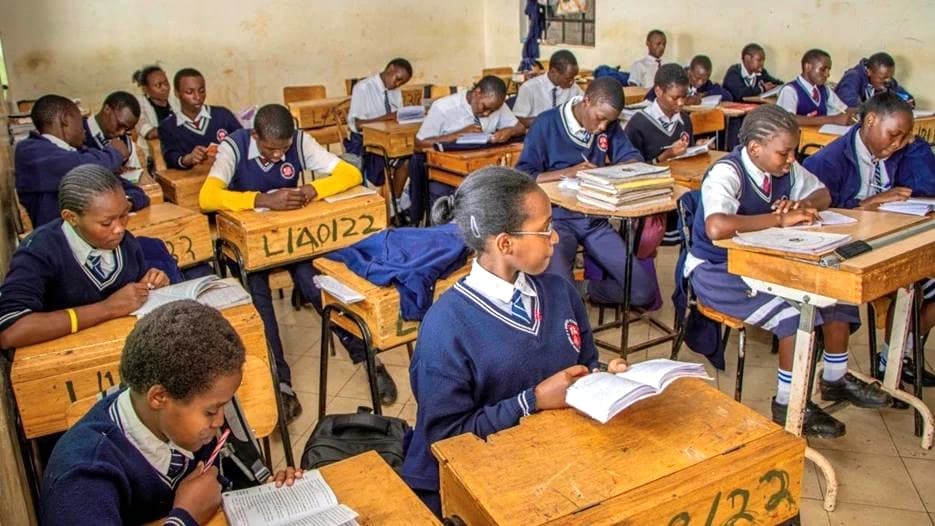

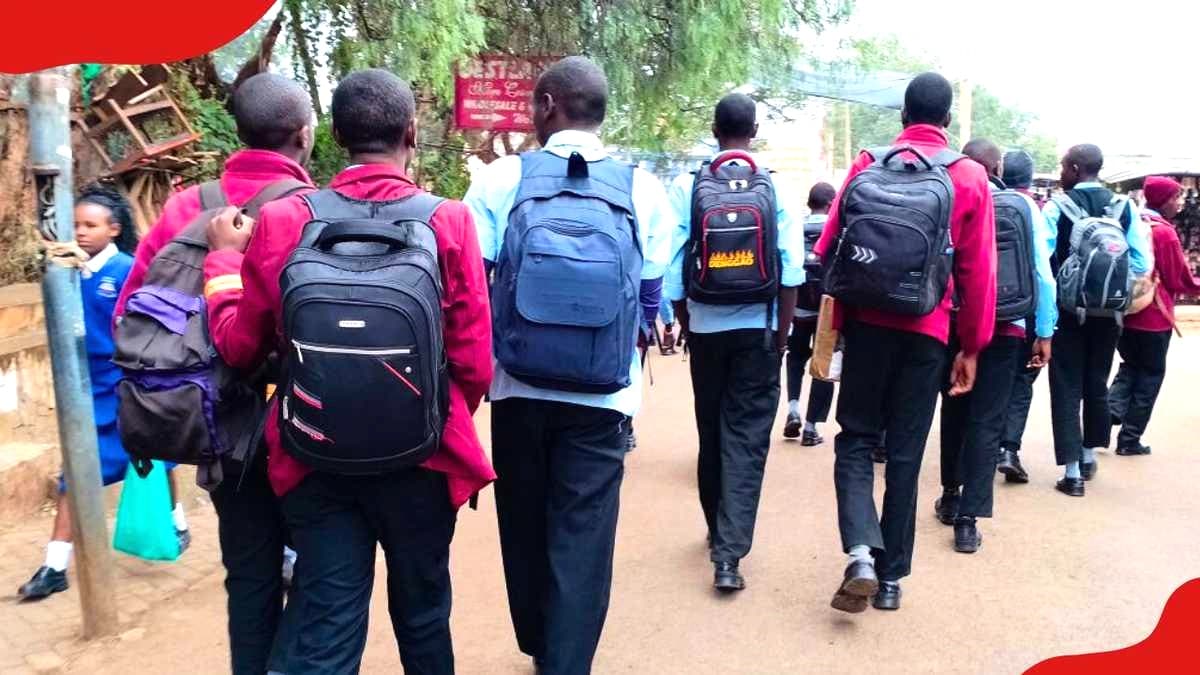
Parents across Kenya are bracing for a landmark moment this week as the Kenya National Examinations Council (KNEC) releases the 2025 Kenya Junior School Education Assessment (KJSEA) results, the first major national assessment under the Competency-Based Curriculum (CBC) that will determine placement for more than 1.13 million Grade 9 learners. As homes and schools await the big announcement, the air is thick with anticipation, questions and curiosity about what exactly these results mean and how they will shape the next stage of learning.
The KJSEA results will be accessible primarily through the official SMS code, where parents send the learner’s assessment number to 22263 at a cost of KSh 30. An online portal is also available for those who prefer to view the results and placement details digitally. The report parents receive will display subject-specific marks, overall performance and the senior school where the learner has been placed based on their chosen pathways and performance.
What makes KJSEA unique and confusing for some is that it does not operate like the traditional KCPE, where a single exam defines everything. Instead, KJSEA accounts for 60% of the final placement score, while 20% comes from the KPSEA taken at the end of primary school and another 20% from School-Based Assessments (SBAs) done during Grades 7 and 8. This blended model means that even if a learner’s exam performance is modest, strong prior assessments can still secure a good placement. It is a holistic judgment of learning; a departure from the all-or-nothing mentality that previously dominated national exams.
The grading system is structured around eight achievement levels, ranging from minimal competence to exceptional mastery. Top achievers fall within EE1 (90–100%) and EE2 (75–89%), which earn the highest placement priority. Middle performers, falling within ME1 (58–74%) and ME2 (41–57%), still have good chances of securing favourable placements if their earlier SBA and KPSEA results were strong. Lower levels, such as AE and BE, indicate areas requiring support, though learners are still eligible for placement, depending on capacity and demand. Under this system, the emphasis is not only on the last test the child sat, but on the consistency of their learning journey.
Once results are released, expected by December 11, 2025, as confirmed by basic education PS Julius Bitok, the placement process begins almost immediately. Placement decisions are based on merit, the learner’s preferences, aptitude, equity considerations and available capacity in various schools. Within a week, parents can expect senior school placement letters, with admission scheduled to begin on January 12, 2026. This tight timeline underscores how crucial it is for families to be ready once results are out.
Senior schools, now categorised as National (C1), Extra-County (C2), County (C3) and Sub-County (C4), will admit learners based on specialised CBC pathways such as STEM, Social Sciences, Arts & Sports or emerging blended pathways like STEAMS. This is where many parents will notice a significant shift from the old system: rather than simply securing ‘a good school,’ learners now move into institutions aligned with their strengths, talents and long-term interests. For a child passionate about robotics, music, sports or social studies, CBC gives room for early specialisation; a significant stride in modernising Kenya’s education system.
READ ALSO:
https://educationnews.co.ke/kenya-association-of-authors-and-agents-to-launch-bomet-chapter/
But even in this exciting transition, parents are cautioned against the pitfalls that weakened previous national exams. Experts urge the country to resist pressure to rank learners or to glamorise only the top scorers, as this contradicts CBC’s goal of nurturing a broad spectrum of competencies. KNEC has also issued warnings about fraudsters posing as ‘results fixers.’ Only official channels should be used, as no third party has the power to alter a learner’s results. The best way forward is caution, clarity and reliance on verified systems.
AAs parents await the results, this is the ideal moment to talk with children not just about marks, but also about pathways: what they enjoy, where they excel, and where they imagine themselves in the future. Preparation is key: have assessment numbers ready, ensure airtime is available and plan financially for January’s transition. This is not merely about receiving a result slip; it is about aligning a child’s next stage of education with their unique abilities and aspirations.
The release of KJSEA results represents more than the end of Grade 9. It is a test of Kenya’s commitment to a new educational philosophy. Analysts have described it as a ‘historic moment in the country’s educational journey,’ particularly because it signals a break from the obsession with high-stakes, one-off exams. For decades, learners were judged solely by how well they performed on a single day. CBC, with KJSEA at its centre, aims to widen that lens, celebrating not just academic excellence but also creativity, consistency, problem-solving and talent.
Ultimately, how parents interpret these results and support their children in the transition to senior school will define the success of this reform. If embraced well, this moment could mark the beginning of a new culture in Kenyan education; one in which learners are not just preparing for exams but for life.
By Angel Raphael
Angel Raphael is a seasoned educator and English teacher whose insightful, authoritative analysis of Kenya’s CBC reforms helps parents and teachers understand the changing education landscape with clarity and confidence.
You can also follow our social media pages on Twitter: Education News KE and Facebook: Education News Newspaper for timely updates.
>>> Click here to stay up-to-date with trending regional stories
>>> Click here to read more informed opinions on the country’s education landscape
>>> Click here to stay ahead with the latest national news.

Reader Discussion (0)
Sign in to comment