





Paralegals in Kericho County have called for intensified community sensitization on access to justice, particularly for minors and other vulnerable groups, citing widespread ignorance on children’s and family rights.
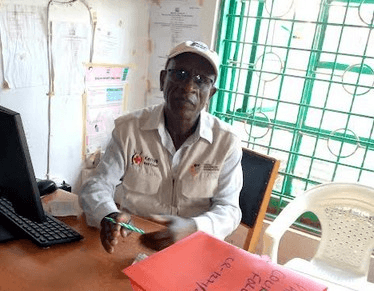
Led by Joel Kibet arap Soi, they said paralegals play a crucial role in bridging the gap between the public and the justice system, enabling marginalized communities to understand and access legal services.
“Paralegals are the link between the community and the justice system. Our work ensures that vulnerable and marginalized groups are not left behind when it comes to accessing justice,” Soi said.
Speaking in Tabaita village, Soin/Sigowet Sub-County, Soi, who oversees paralegal services in Soin/Sigowet and Belgut sub-counties, said there is an urgent need to educate communities on Kenyan laws governing children’s and family rights.
He urged citizens to seek justice through established legal and arbitration mechanisms, cautioning against resolving serious disputes through informal or so-called kangaroo courts.
“Not all disputes should be handled informally. Some matters, especially those involving children, must be reported and handled through proper legal channels,” he said.
Soi expressed concern over attitudes toward girls’ education in parts of Soin/Sigowet Sub-County, noting that early marriages and defilement cases are often normalized.
ALSO READ:
https://educationnews.co.ke/kericho-nears-full-grade-10-transition-with-96-per-cent-enrollment/
“During my engagements with communities, I have observed with concern that a section of the community does not regard the education of the girl as a priority,” he said. “As a result, girls are often married off early, and cases of defilement are rarely treated as criminal offences despite the law being very clear on sexual offences involving minors.”
He disclosed that last year his office handled defilement cases from Soin/Sigowet Sub-County where families attempted to resolve the matters informally. The cases are now pending in court, with pro bono lawyers representing the victims.
“In the current month alone, we are handling three cases involving girls rescued from early marriages,” Soi said.
According to the paralegals, Tabaita village remains a hotspot for early marriages and defilement due to limited awareness of the rights of the girl child.
“On average, four to five defilement cases from this village are reported to my office every month,” he said. “Deep-rooted cultural attitudes persist, where girls are viewed as undeserving of education and are instead expected to be married off upon reaching puberty.”
Soi also highlighted misconceptions surrounding inheritance, noting that many community members believe female children are not entitled to inherit their deceased parents’ property.
ALSO READ:
https://educationnews.co.ke/governor-ntutu-commissions-16-ecde-centers-projects-in-narok-south/
“This exposes girls to abuse and systematic discrimination and underscores the urgent need for sustained sensitization on child protection laws, the rights of the girl child and the Law of Succession Act,” he said.
A member of the Paralegal Society of Kenya (PSK), called on the national government to employ and deploy more paralegals, citing severe understaffing across Kericho County.
“There is a stark imbalance in the distribution of paralegal services. Kericho County has only nine paralegals serving six sub-counties,” he said. “Ainamoi has five paralegals, while Soin/Sigowet and Belgut are covered by a single officer.”
He noted that Londiani, Bureti and Kipkelion sub-counties each have only one paralegal, limiting effective community outreach and legal education.
Soi further raised concern over the lack of safe houses for survivors of defilement and early marriages in the county, warning that the gap exposes victims to further harm.
“There is a need to establish safe houses as entry points for medical care, trauma counseling, legal aid and police follow-up,” he said. “Without safe houses, survivors remain exposed, silenced and denied the opportunity to heal and pursue justice.”
Paralegals in Kenya play a key role in community education, legal awareness and grassroots advocacy by helping citizens understand their rights and linking survivors of rights violations to courts, police, lawyers and social support services.
By Kimutai Langat
You can also follow our social media pages on Twitter: Education News KE and Facebook: Education News Newspaper for timely updates.
>>> Click here to stay up-to-date with trending regional stories
>>> Click here to read more informed opinions on the country’s education landscape


Reader Discussion (0)
Sign in to comment