








Late reporting by Grade 10 learners is often discussed as though it were a minor administrative inconvenience, a clerical delay or a parental oversight. It is not. In reality, late reporting is one of the most dangerous and least addressed threats to Kenya’s education reforms. It is the first visible step on a trajectory that can lead to permanent dropout, a path that is quiet, incremental, and tragically predictable. Learners rarely leave school in one dramatic moment. They drift, step by step, through missed deadlines, anxiety, discouragement, and eventually, disengagement. Late reporting is often the beginning of this journey.
Kenya has encountered this pattern before. Previous education transitions, particularly from primary to secondary school, highlighted the vulnerability of learners at critical junctures. Thousands were lost, not because they lacked ability or ambition, but because the system failed to support them during change. Over time, reforms, policy adjustments, and targeted funding reduced this leakage. Today, with the introduction of Grade 10 under the Competency-Based Education (CBE) framework, a similar risk is emerging. Yet, it is being dangerously underestimated and often misunderstood.
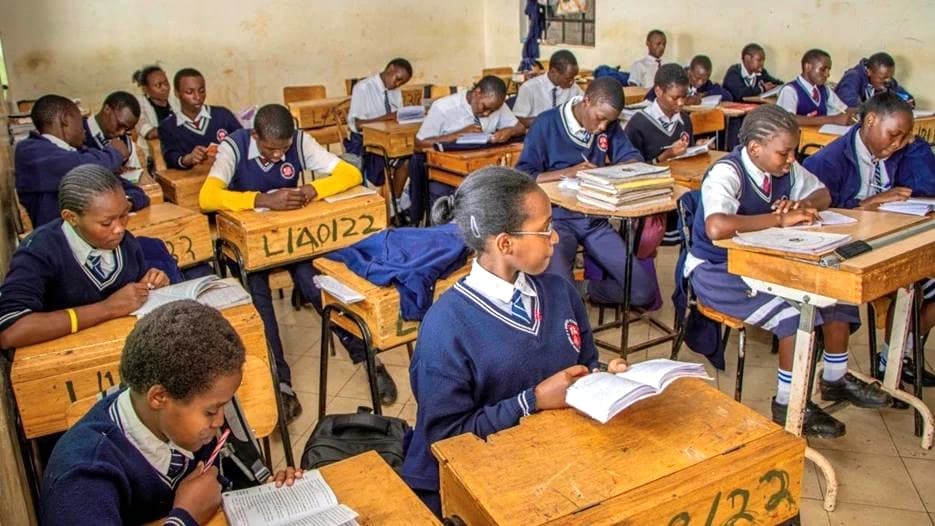
Grade 10 is not merely another academic level. It represents a structural, psychological, and social shift. Learners are expected to enter defined pathways, be they academic, technical, or applied. Parents are expected to navigate a system that they themselves have never experienced. Schools are expected to deliver new curricula while managing existing infrastructure constraints, teacher shortages, and administrative demands. In such a context, late reporting is rarely a sign of indiscipline. More often, it reflects uncertainty, financial strain, systemic confusion, and a lack of support, all of which, if left unaddressed, push learners gradually out of school.
The dropout trajectory begins with hesitation. Families delay reporting as they scramble to raise fees, secure uniforms, arrange transport, or understand their child’s placement in the appropriate pathway. Sometimes, they are negotiating for transfers to other schools or awaiting clarity from administrators who themselves may be unprepared. Days turn into weeks. At this point, learners remain attached to the idea of school, still hopeful, still intending to report. Yet the delay has begun to erode the very structures that would support their timely entry.
ALSO READ:
https://educationnews.co.ke/moe-releases-fdse-funds-for-first-term-of-2026/
The next stage is anxiety. Learners become acutely aware that classes have started without them. They see peers advancing while they remain on the sidelines. Shame begins to grow, and confidence diminishes. Adolescents, sensitive to social and academic pressures, internalize this shame rapidly. When they finally attempt to report, they may encounter rigid rules, closed registers, or a cold reception from school administrators. The message, explicit or implied, is devastating: they do not belong. At this point, delay crosses into disengagement.
This is how dropout happens, not dramatically, but silently. The learner is not formally expelled. No letters are sent. They simply stop trying to return. At home, absence from school is normalized. Girls take on more domestic responsibilities or face pressures toward early marriage. Boys are sent to work, sometimes “temporarily,” to generate income for school fees or household survival. What was intended to be a short delay becomes permanent absence. By the time the system realizes a learner is gone, intervention windows have often closed.
Late reporting is not evenly distributed. It maps onto the familiar contours of inequality. Learners from poor households, rural communities, informal settlements, and marginalized regions are disproportionately affected. These are the same learners historically most vulnerable to dropout. Treating late reporting as a disciplinary or parental failure, rather than a warning sign of systemic risk, entrenches inequality. The danger is not accidental; it is structural.
Economic pressures are central to this trajectory. Grade 10 often introduces new costs at precisely the moment households are stretched to the limit. Boarding fees, transport, uniforms, and learning materials create obstacles that strict deadlines cannot resolve. Families are forced to choose between survival and school. In such cases, the system’s insistence on punctuality does not motivate learners; it accelerates their exit.
Equally significant is the guidance and counseling gap. Competency-Based Education requires learners to make early decisions about their pathways, yet many leave Junior Secondary without meaningful career guidance. Parents, unfamiliar with the system, struggle to advise their children. Confusion leads to hesitation. Hesitation leads to late reporting. Late reporting, when unsupported, leads to disengagement and, ultimately, dropout. This is not a failure of the learner. It is a systemic failure, one that the government, schools, and policymakers must urgently address.
The systemic response to late reporting exposes deeper policy flaws. Compliance is often prioritized over continuity. Schools are pressured to enforce deadlines rather than retain learners. Education offices focus on clean data rather than the actual participation of learners. Administrative order is valued over human outcomes. In such an environment, learners at the margins are quietly filtered out of the system, and the silent dropout problem grows unnoticed.
ALSO READ:
https://educationnews.co.ke/john-mosonik-appointed-rongo-university-chancellor-for-five-years/
This is why the government has an essential, non-negotiable role. It must exhaust every available system; administrative, social, and community-based to ensure that all Grade 10 learners report to school. Active tracing of non-reporting learners, coordinated follow-up through education offices, school administrators, and local leaders, as well as the removal of financial and informational barriers, are not optional. They are a moral and professional obligation. Failure to act transforms late reporting from a temporary delay into permanent exclusion, turning a national reform into a silent dropout trap.
The consequences of inaction are stark. Learners who drop out at Grade 10 do not disappear from society. They re-emerge in unemployment statistics, social welfare rolls, early parenthood reports, and, in some cases, the criminal justice system. Society bears the cost of a preventable failure, and the government avoids accountability while claiming progress in reform. Each untracked learner represents wasted potential, not just for the individual, but for the nation.
Late reporting should therefore be treated as an early warning indicator, not a punishable offense. Every delayed report should trigger follow-up, counseling, and reintegration measures. Schools must be empowered to absorb late reporters without stigma. Education authorities should prioritize tracing and retention rather than enforcement and exclusion. Flexibility in reporting deadlines, especially during the early years of the CBE implementation, is not a weakness—it is a safeguard to ensure learners do not vanish into permanent dropout.
Grade 10 represents a critical transition point where the system’s learner-centered promise will either be realized or fail. If the government and schools respond appropriately, learners will enter the next stage of education with confidence, belonging, and clarity. If not, Grade 10 will earn the grim reputation of a gateway to exit rather than opportunity. The stakes are high, and the country cannot afford to lose another cohort quietly, without attention, intervention, or accountability.
Deadlines and compliance matter. Planning and data collection matter. But these cannot be allowed to take precedence over learners’ futures. An education system that allows late reporting to become an exit point has already failed in its most basic duty: to keep children in school. The measure of success should not be administrative neatness but the retention of learners months after reporting deadlines. Every learner retained is a success; every learner lost is a warning.
In practical terms, the government must strengthen the mechanisms that prevent late reporting from cascading into dropout. This includes:
Coordinated tracking of learners across counties and sub-counties to identify those who have not reported.
Clear communication with parents and guardians about pathways, deadlines, and support options well in advance.
Partnerships with community leaders and local authorities to support families facing financial, transport, or social barriers.
ALSO READ:
https://educationnews.co.ke/machakos-kessha-chair-raises-concern-over-low-grade-10-enrolment/
Expansion of guidance and counseling services to ensure learners understand their pathways and feel confident making informed choices.
Flexible administrative policies that allow schools to accommodate late reporters without punitive measures, ensuring continuity of learning.
These measures are not luxuries; they are necessary to protect the country’s human capital. Kenya’s reforms, including CBE, are only as effective as the system’s ability to keep learners engaged, especially at vulnerable points like Grade 10. When a learner does not report on time and is left unsupported, the system has already failed them.
The silent dropout that begins with late reporting has broader implications for national development. Learners lost at Grade 10 are likely to face limited employment prospects, increased vulnerability to social risks, and diminished capacity to contribute to society. By contrast, ensuring that every learner reports on time, and providing the support needed to maintain their engagement, strengthens human capital, reduces future social costs, and fulfills the promise of CBE: to develop competent, informed, and capable citizens.
Grade 10 must not be remembered as the point where learners slipped away unnoticed. It must be remembered as the point where the government, schools, and communities took decisive, compassionate action to hold every learner in the system. Every learner counted, every pathway clarified, every barrier removed, that is the measure of a truly learner-centered system.
The conversation about late reporting cannot continue to focus solely on blame. Parents, teachers, and learners are often unfairly held responsible for systemic failures. A delayed report is not a moral failure; it is a signal of the system’s gaps. Policy, administrative response, and community support must rise to meet that signal. Only then can Grade 10 fulfill its role as a bridge to opportunity rather than a trap that funnels learners out of school.
In conclusion, late reporting is the first sign of a dropout trajectory. Left unaddressed, it leads to permanent disengagement, loss of opportunity, and a waste of national potential. The government has a duty to exhaust every system at its disposal to ensure learners report, are supported, and remain in school. Schools must be flexible and compassionate. Communities must be engaged. Learners must be guided. Only by taking these measures can Grade 10 become a gateway to futures rather than a pathway to silent exclusion.
Deadlines, registers, and compliance are important, but they are secondary to the human and national imperative of keeping learners in school. Grade 10 must be the point where the system reaches out, not where it lets go. The reform will be judged not by policies, but by the learners retained. The true success of Grade 10 lies in ensuring that every Kenyan child, regardless of circumstance, reports on time, stays engaged, and is given the opportunity to complete their education.
By Hillary Muhalya
You can also follow our social media pages on Twitter: Education News KE and Facebook: Education News Newspaper for timely updates.
>>> Click here to stay up-to-date with trending regional stories
>>> Click here to read more informed opinions on the country’s education landscape



Reader Discussion (0)
Sign in to comment