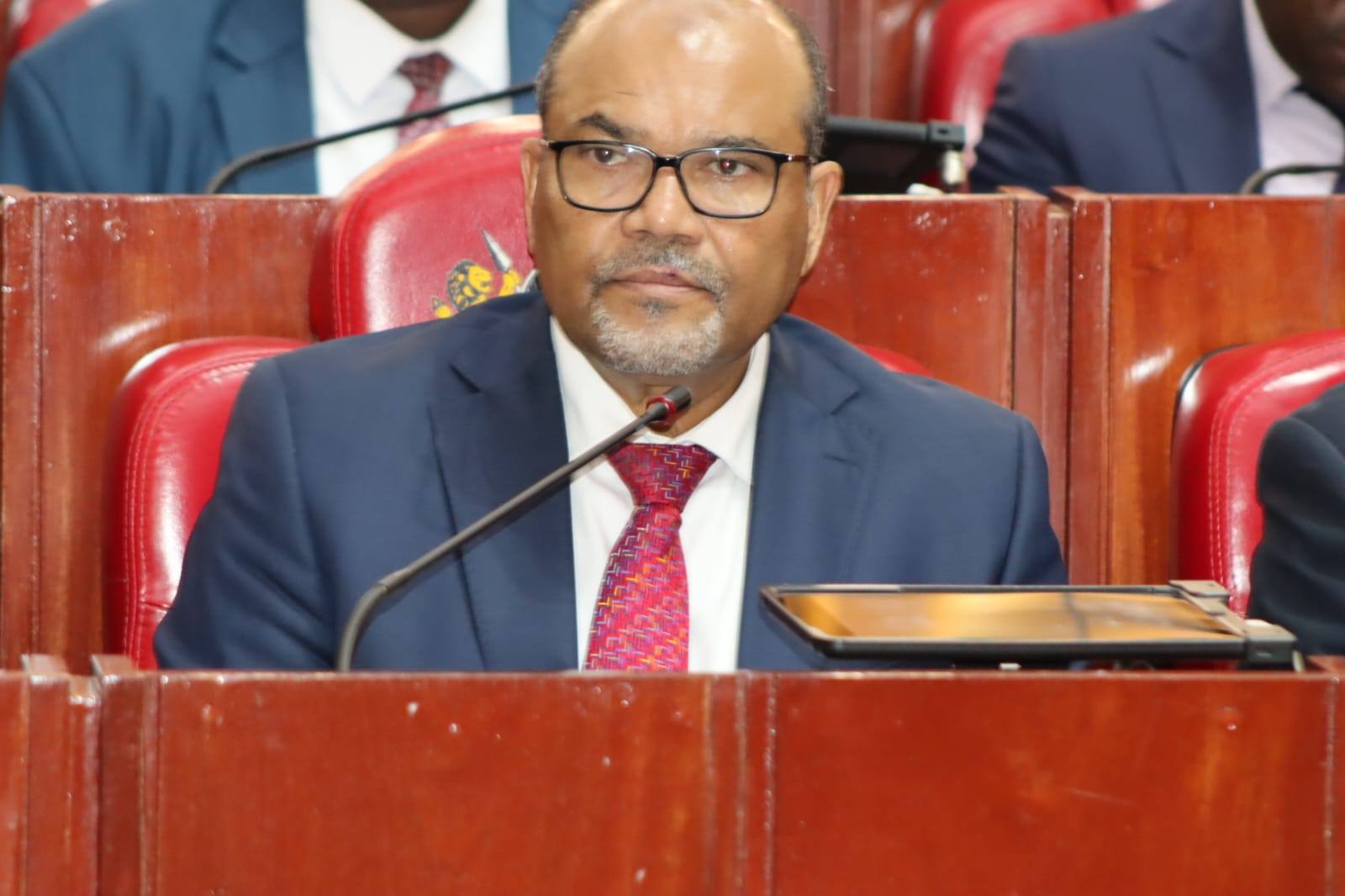
Members of the National Assembly Committee on Education have called for increased funding to the State Department for Science, Research and Innovation, warning that Kenya risks stalling its development ambitions without deliberate investment in research.
Appearing before the committee to defend supplementary budget estimates, Principal Secretary Prof. Shaukat Abdulrazak revealed that the department is operating under severe financial constraints, lacking even basic resources such as office space and operational funding.
Committee Chairperson Julius Melly underscored the urgency of the matter, noting that research remains central to national development. “We cannot develop without research. We cannot create jobs without insight. Otherwise, we will be shooting in the dark,” he said.
The State Department has requested an additional Ksh 1.9 billion, part of which will go towards securing office space. The PS disclosed that the department requires at least Ksh 100 million for rent and partitioning, as many staff currently lack adequate working space.
“We have relied heavily on goodwill and partnerships, including development partners funding key programmes and conferences. This model is not sustainable. We must walk the talk and invest in research,” said Prof. Abdulrazak.
Lawmakers expressed concern over the mismatch between the ministry’s overall allocation and the limited funding directed to research. Melly observed that despite the ministry receiving about Ksh 767 billion, the research department operates on roughly Ksh 1.4 billion.
ALSO READ:
MPs question escalating university pending bills now at Ksh98 Billion
Dick Maungu described the department as being “in dire need of support,” while Joshua Makilap emphasized that “we need to boost research and innovation if we are to grow as a country.”
Nabii Nabwera argued that Kenya must align its ambitions with investment. “In a country aspiring to join the first world, and investing heavily in TVETs, universities and agriculture, the money asked here is just one per cent of the budget to operationalise this department,” he said.
The PS told the Committee that fully operationalising the research ecosystem would require up to Ksh 30 billion, and ideally between one and two per cent of GDP—equivalent to between Ksh 154 billion and Ksh 311 billion.
Abdul Haro reminded members of Parliament’s budgetary authority, stating, “The power of the purse is in this House.”
Members also raised concerns over weak linkages between academia and industry. “One of the key canons of higher education is research, and we must allocate resources,” said Peter Orero.
The Committee is expected to make recommendations aimed at strengthening funding for research, as lawmakers increasingly position science, technology and innovation as critical drivers of economic transformation.
By Juma Ndigo
You can also follow our social media pages on Twitter: Education News KE and Facebook: Education News Newspaper for timely updates.
>>> Click here to stay up-to-date with trending regional stories
>>> Click here to read more informed opinions on the country’s education landscape