





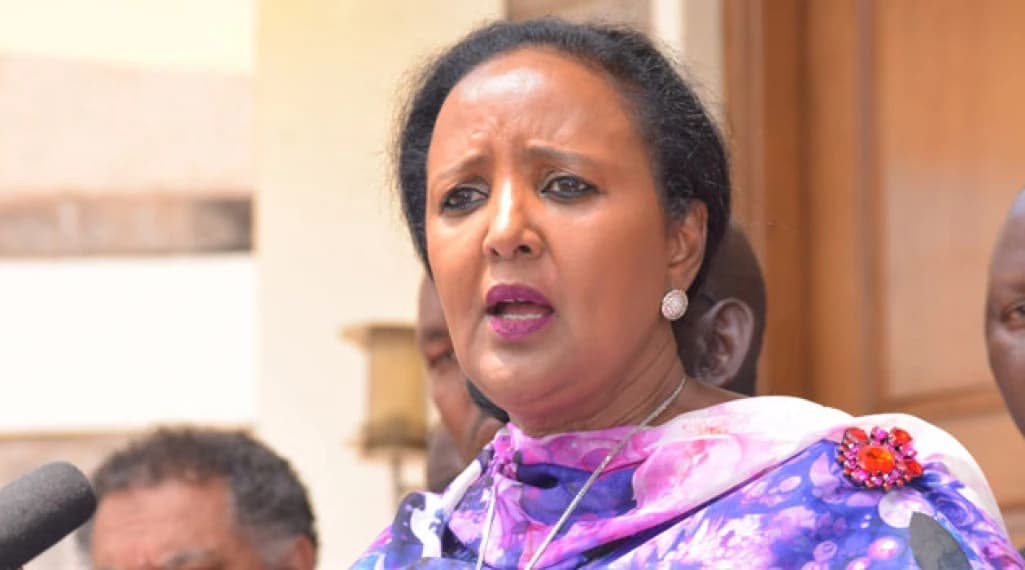
On 11th December 2018, the Ministry of Education stood at a crossroads. The country was preparing for the full rollout of the Competency-Based Curriculum (CBC), a reform that promised to revolutionize Kenyan education. But at that moment, the Education Cabinet Secretary, Amina Mohamed, delivered a message that shook the national narrative: Kenya was not ready.
Addressing President Uhuru Kenyatta, Amina Mohamed stated that the Ministry would not fully roll out the new curriculum in January 2019 as previously scheduled. She argued that extensive consultation with all stakeholders was still necessary and that the infrastructure required to support the new system was not yet in place. The warning was not mere caution; it was a reflection of realities already identified by a Multi-sectoral National Steering Committee, which had flagged serious issues such as inadequate teacher capacity development, insufficient training, and a lack of learning materials and infrastructure.
“The worst thing that can happen is for us to roll out something that we are not all comfortable with,” she told the president.
Her words were not popular. They were inconvenient. And they threatened a political agenda that had already committed the nation to a new educational direction. The CBC was no longer just a curriculum; it had become a symbol of national progress and a key legacy project for the government. In that context, admitting that the country was not ready was seen as a failure, not as a responsible act of leadership.
ALSO READ:
https://educationnews.co.ke/mp-tonkei-urges-narok-students-to-shun-drugs-and-stay-in-school/
Reports suggest that her honesty did not go down well. President Uhuru Kenyatta reportedly summoned her to a meeting on the sidelines of a Nyanza tour, where she was put on notice regarding the confusion in the ministry. The message was clear: the timeline had been set, and the government would not accept delays.
Within a short time, Amina Mohamed’s stance changed. The Ministry accelerated its rollout plans, deciding to proceed with implementation on January 1, 2019, rather than postpone it. A few months later, she was replaced by George Magoha in a surprise cabinet reshuffle. The move was widely interpreted as a political response to her honest stance, and it served as a warning to anyone else who might dare to speak uncomfortable truths.
The significance of her warning is clearer today than it was then. The CBC rollout has since been met with a series of challenges that were predicted by those who questioned the system’s readiness. Teachers have struggled to adapt to the new methodology. Schools have been forced to improvise learning materials. Parents have been confused about what the curriculum means for their children’s future. In many cases, the problems are not a result of the curriculum itself, but of the conditions under which it was introduced.
A curriculum is not a document; it is a system. It requires trained teachers, adequate learning resources, and a supportive infrastructure. Without these, the best-designed curriculum becomes a theoretical ideal, disconnected from the reality of classrooms. Amina Mohamed understood this. Her warning was not an attack on the CBC; it was a call for preparedness.
The Multi-sectoral National Steering Committee had identified key obstacles, including inadequate teacher capacity development and insufficient training. Yet the government chose to proceed. This decision was not driven by educational readiness but by political timelines and reputational considerations. The CBC had already been positioned as a flagship reform, and delaying it would have been interpreted as an admission of poor planning.
The result was predictable. When January 2019 arrived, teachers across the country were expected to implement a new curriculum with minimal training. Many were left to rely on their experience and intuition, and in some cases, they resorted to teaching the old syllabus using new terminology. Classrooms became places of confusion rather than learning. The gap between policy and practice widened, and learners became the unintended victims of a rushed process.
The problems were particularly acute in rural schools where infrastructure was already weak. Overcrowded classrooms, insufficient classrooms, and lack of learning materials made it difficult to implement a competency-based approach. In such environments, the CBC became an additional burden on an already strained system. Instead of fostering creativity and practical skills, it created stress and uncertainty for teachers and learners alike.
The CBC also introduced new expectations for parents. Many were unsure what was expected of them and how the new system would affect their children’s academic progression. Some parents feared that the new curriculum would lower academic standards. Others believed it would automatically lead to better performance, without realizing that the success of the curriculum depends on the quality of its implementation.
In many ways, the CBC rollout exposed a deeper problem in the education sector: the tendency to treat reform as a political event rather than a technical process. When reforms become tied to political legacy, they lose the flexibility needed for proper implementation. The CBC became a symbol of progress, and the pressure to deliver that symbol overshadowed the need for readiness.
Amina Mohamed’s warning was therefore not just about the CBC; it was about the culture of governance. It highlighted the dangers of rushing reforms for the sake of political timelines. Her statement was a rare act of leadership in a system where political expediency often trumps technical competence.
ALSO READ:
https://educationnews.co.ke/government-unveils-ksh20-billion-scholarships-for-12337-grade-10-learners/
Today, the country continues to grapple with the effects of that decision. The CBC is still being debated, adjusted, and restructured. Teachers are still seeking training and resources. Parents are still uncertain about the curriculum’s benefits. And learners are still experiencing a system that is struggling to catch up with its own reforms.
The question is not whether the CBC is good or bad. The question is whether the country should have been ready before it was rolled out. The answer, based on the evidence that has unfolded over the past years, is clear.
Amina Mohamed spoke the truth when she said the country was not ready. She did not speak out of fear or opposition; she spoke out of responsibility. She understood that the success of any education reform depends on preparation, consultation, and proper implementation. She understood that a curriculum cannot be imposed on a system that is not prepared to absorb it.
Her warning was ignored. The country rushed ahead, and the consequences have been felt by those who matter most, Kenyan learners. If only we had listened.
By Hillary Muhalya
You can also follow our social media pages on Twitter: Education News KE and Facebook: Education News Newspaper for timely updates.
>>> Click here to stay up-to-date with trending regional stories
>>> Click here to read more informed opinions on the country’s education landscape


Reader Discussion (0)
Sign in to comment