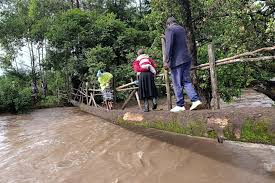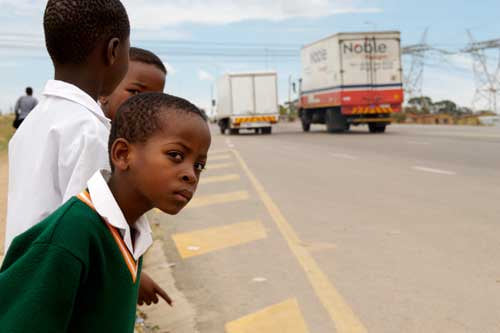
Every morning across Kenya, millions of learners leave their homes with school bags on their backs and dreams in their hearts. Their destination is the classroom, where education promises to shape their future and open doors to opportunity. Yet for many parents, the journey to school has become a source of anxiety. Roads that should safely connect homes to learning institutions have too often become scenes of tragedy where young lives are abruptly cut short.
The introduction of new automated traffic penalties by the National Transport and Safety Authority (NTSA) marks a decisive step toward restoring discipline on Kenya’s roads. For years, road accidents have claimed thousands of lives, leaving families devastated and communities grappling with preventable tragedy. Among the most vulnerable victims are learners—children and young people whose daily journeys expose them to dangerous road conditions.
The toll on learners
Statistics reveal the scale of the problem. Last year alone, 4,458 people lost their lives on Kenyan roads, with learners tragically included. Pedestrians accounted for 1,685 fatalities, many of whom were school-going children walking along busy highways or crossing roads that lack proper pedestrian infrastructure.
Passengers were not spared, with over 700 deaths recorded in buses and matatus—modes of transport heavily relied upon by students, particularly in urban centres. Meanwhile, the growing use of motorcycles has introduced another layer of risk. Hundreds of motorcyclists and pillion passengers lost their lives, and learners increasingly form part of this vulnerable group as more families turn to boda bodas for school commutes.
ALSO READ:
Court suspends operations of KUPPET Nakuru new officials over voter exclusion case
Behind every statistic is a heartbreaking story—a classroom seat left empty, a family plunged into grief, and a community mourning a young life full of promise. Each learner lost represents the disappearance of a potential teacher, engineer, doctor, or leader who might have contributed meaningfully to society.
How NTSA’s New Rules Make a Difference
The NTSA’s automated traffic enforcement system brings hope. Through smart cameras and digital monitoring, offences such as speeding, reckless overtaking, ignoring traffic signs, and operating unroadworthy vehicles are detected instantly. Offenders receive fines automatically, ensuring swift accountability and reducing opportunities for corruption or selective enforcement.
For learners, this shift could significantly reduce the daily dangers on Kenyan roads. Speeding is a leading cause of road accidents, especially near schools and residential areas. With automated monitoring and penalties, drivers are compelled to slow down and exercise caution in areas populated by young pedestrians. Vehicles transporting learners, including school buses and matatus, are now subject to strict compliance checks, ensuring they are roadworthy and safe for passengers. Matatus and motorcycles carrying students are also held to higher standards, discouraging overloading, reckless driving, and unsafe pick-up points.
Beyond Fines: Comprehensive Interventions
While penalties are critical, they cannot fully eliminate road risks. NTSA emphasizes the need for holistic interventions and strong road safety standards to protect learners:
ALSO READ:
Road infrastructure: Footbridges, zebra crossings, speed bumps, and sidewalks near schools create safe spaces for learners to walk and cross roads.
School zones and speed limits: Clearly marked reduced-speed zones, backed by monitoring cameras, compel motorists to drive cautiously near learners.
Strict vehicle standards: School buses must undergo regular mechanical inspections, have functioning seat belts, proper braking systems, and speed governors. Drivers transporting learners must receive specialized training.
Motorcycle safety: Helmets, passenger limits, and licensed riders reduce accidents involving learners using boda bodas.
Road safety education: Learners must learn to cross roads safely, read traffic signs, and remain vigilant while commuting.
Parental supervision: Safe walking routes and organized walking groups can minimize risk.
Community initiatives: Volunteer crossing guards, local advocacy, and monitoring of dangerous road sections strengthen safety.
Proper signage: “School Ahead,” “Children Crossing,” and “Reduce Speed” signs alert drivers to learners’ presence.
A Collective Responsibility
Saving learners from road carnage requires coordinated action. Government agencies, schools, parents, drivers, and communities must all embrace the responsibility of protecting children on the roads. Road safety is a collective duty grounded in the understanding that learners’ lives are priceless.
When roads are made safer, learners can focus on education, growth, and the pursuit of their dreams. Every child who reaches school safely represents hope for the future, and a society that values and protects its young generation. The new NTSA enforcement measures, combined with targeted safety interventions, have the potential to transform Kenya’s highways and streets into secure pathways where learners travel without fear and return home safely every day.
Ultimately, every learner saved from road carnage is not just a life preserved—it is the nation’s future protected.
By Hillary Muhalya
You can also follow our social media pages on Twitter: Education News KE and Facebook: Education News Newspaper for timely updates.
>>> Click here to stay up-to-date with trending regional stories
>>> Click here to read more informed opinions on the country’s education landscape