








Securing funding for learning is a crucial step in advancing education, acquiring new skills, and enhancing professional growth. In today’s competitive world, access to quality education often requires financial support, whether for tuition, research, professional development, or continuous skills upgrading.
Fortunately, there are multiple avenues through which learners, educators, and institutions can obtain funding, ranging from government programs and scholarships to grants, employer support, and online learning opportunities. Understanding these options and how to approach them effectively can make the difference between stalled ambitions and realized potential.
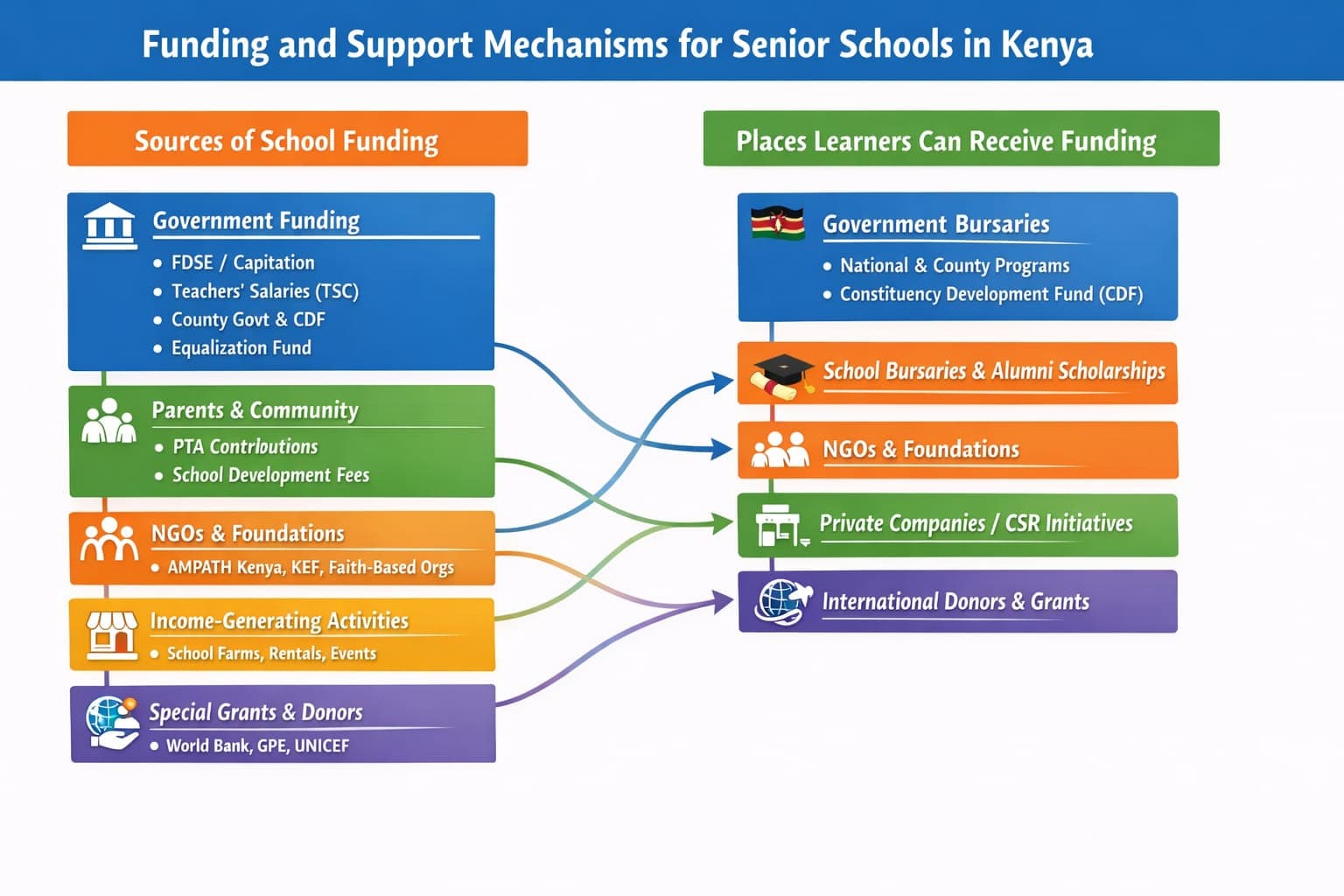
Government support remains one of the most reliable sources of funding, particularly in Kenya. The Higher Education Loans Board (HELB) provides loans for university and Technical and Vocational Education and Training (TVET) students, covering tuition fees and living expenses, and also offers postgraduate loans. These loans are particularly beneficial for students from disadvantaged backgrounds who may not otherwise afford tertiary education.
ALSO READ:
https://educationnews.co.ke/mp-joshua-oron-to-integrate-street-children-into-schools/
Additionally, county governments and the National Government Constituencies Development Fund (NG-CDF) provide bursaries for secondary and tertiary learners, often targeted at the most needy. These bursaries are accessed through local administrative offices, and applications typically require proof of academic performance, financial need, and sometimes community involvement. For teachers and educational leaders, professional development opportunities are sometimes supported through government initiatives, including programs by the Ministry of Education, the Teachers Service Commission (TSC), or specialized institutions such as the Kenya Education Management Institute (KEMI).
Scholarships and grants from foundations and international partners also play a critical role in facilitating learning. Many local foundations and non-governmental organizations (NGOs) support students, teachers, and professionals through full or partial scholarships. For instance, organizations like the Equity Group Foundation, the Mastercard Foundation Scholars Program, and the Kenya Community Development Foundation (KCDF) have programs designed to support learners from marginalized backgrounds.
On the international stage, competitive programs such as Commonwealth Scholarships, Chevening Scholarships in the UK, DAAD scholarships in Germany, Erasmus+ programs in Europe, and the Fulbright Program in the United States fund postgraduate studies, research, and leadership development initiatives. These scholarships often cover tuition, living expenses, travel, and sometimes research or project costs, making them transformative for ambitious learners. Applying for these opportunities requires careful preparation, including a strong academic record, clear career goals, and a compelling statement of purpose that illustrates the potential impact of the learning.
Institutional and employer support is another important avenue for securing funding. Schools, boards of management, employers, faith-based organizations, and alumni associations sometimes sponsor further training or grant study leave with pay. This type of support is particularly valuable for working professionals, as it allows them to enhance their skills without sacrificing income. Some employers also provide partial sponsorship for courses that directly enhance job performance or professional capacity. Additionally, SACCOs, savings groups, and education-focused loans provide alternative ways for learners to access funding, especially when bursaries or scholarships are insufficient or unavailable.
ALSO READ:
https://educationnews.co.ke/what-principals-need-to-know-about-grade-10-under-cbe/
In recent years, digital learning platforms and online education opportunities have created new pathways for funding. Platforms such as Coursera, edX, and Udemy often provide scholarships, fee waivers, or micro-grants for short courses in areas including education, leadership, technology, climate studies, and sustainability. These online options are particularly useful for continuous professional development and skills upgrading, as they allow learners to study flexibly while managing other commitments. Major technology companies and international organizations, including Google, Microsoft, and UNESCO, also offer specialized grants for online learning programs, enabling access to global knowledge resources at minimal cost.
For learners focusing on education, environmental leadership, or related fields, there are sector-specific grants that can be highly beneficial. UNESCO, UNEP, and other international agencies fund initiatives that build capacity in education, environmental conservation, and climate action. Similarly, NGOs and foundations dedicated to sustainability, green skills, and environmental research often support training, workshops, or research projects. These opportunities allow learners not only to acquire knowledge but also to contribute meaningfully to society and address global challenges.
Successful applications for funding typically require more than just academic achievement. To improve the chances of securing support, learners should develop a clear and compelling learning plan, including specific goals, a realistic budget, and evidence of admission or acceptance into the intended program.
In conclusion, funding for learning is achievable through a combination of government programs, scholarships, grants, employer support, and digital learning opportunities. Careful planning, persistence, and a clear demonstration of potential impact are key to accessing these resources. Whether one is a student, teacher, or professional, securing funding can open doors to enhanced knowledge, improved teaching, and greater leadership capacity.
By Hillary Muhalya
You can also follow our social media pages on Twitter: Education News KE and Facebook: Education News Newspaper for timely updates.
>>> Click here to stay up-to-date with trending regional stories
>>> Click here to read more informed opinions on the country’s education landscape




Reader Discussion (0)
Sign in to comment