




Kenya’s education system is standing at a threshold that may very well redefine how generations of young people discover their purpose, refine their skillsets and chart their futures. For decades, the country’s progression framework was built around a single high-stakes examination at the end of primary school. That system ranked children, labelled them and stamped their destinies on the basis of a few hours in an exam room. Today, however, the Competency-Based Education (CBE) era is steadily steering the nation away from one-off, memory-based testing and toward a model that recognizes talent, nurtures aspiration and respects the diversity of human ability.
At the centre of this new architecture stands the Kenya Junior School Evaluation Assessment (KJSEA). To many parents, it is still unfamiliar. To many teachers, it requires recalibration and renewed commitment. And to millions of learners, it is the compass guiding the next phase of their educational journey. But beyond the speculation and anxiety, KJSEA serves a clear purpose: ensuring that each learner is placed in a senior school and pathway aligned with their abilities, interests and long-term potential.
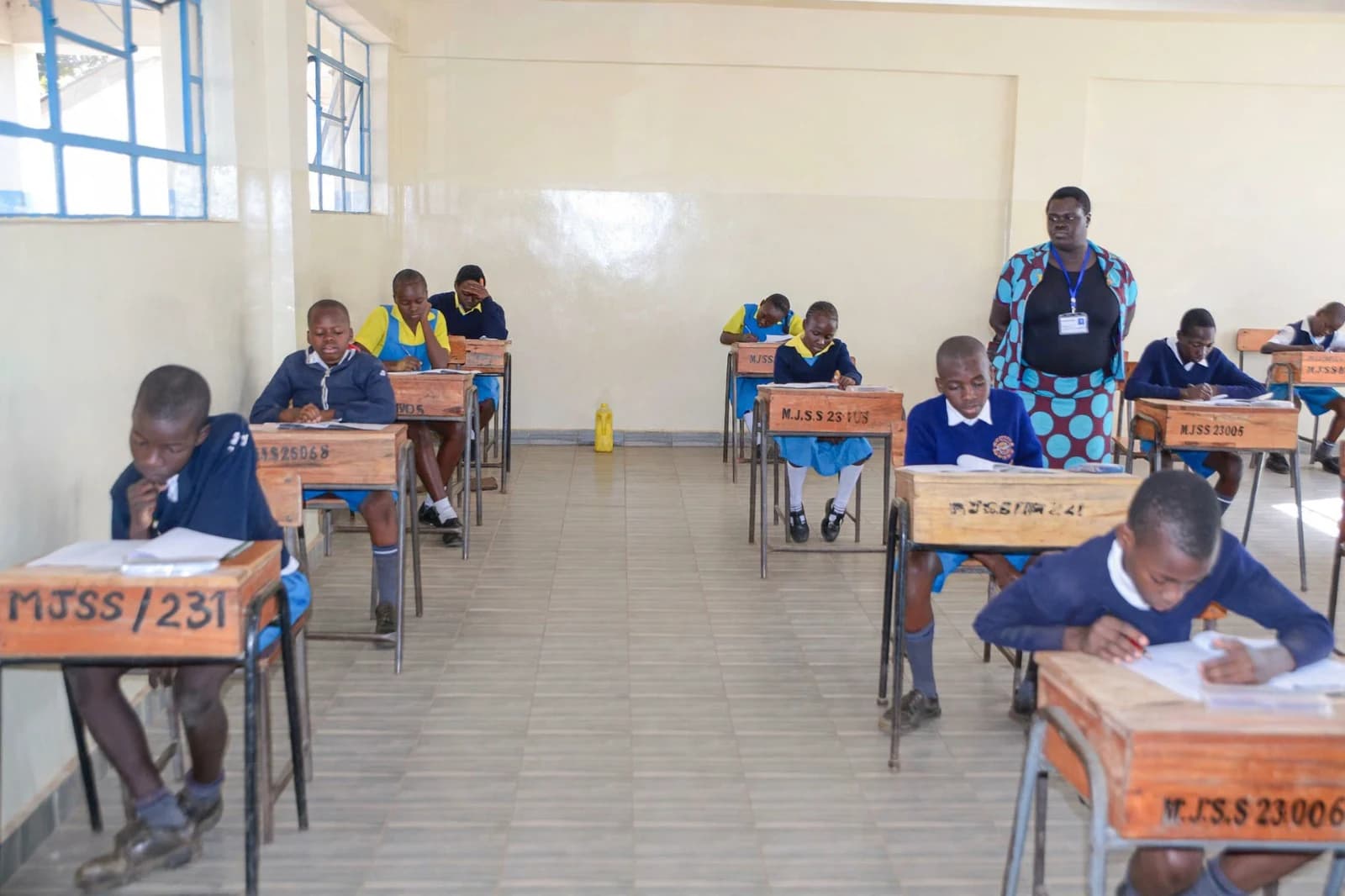
Under CBE, the assessment is not a rigid gatekeeper. Rather, it is a cumulative reflection of a three-year journey beginning in Grade 7—combining school-based assessments, project work, practical tasks, and finally a standardized summative evaluation. Together, these build a portrait of the learner that goes beyond recall, measuring depth, independence, creativity and problem-solving. In an economy where industries shift rapidly and technology evolves constantly, this holistic approach is both timely and vital.
A key element of KJSEA placement is the use of performance bands instead of national ranking. Learners are placed into categories—Excellent, Proficient, Approaching Proficient and Basic—that signal preparedness rather than comparative worth. Highly demanded schools will draw from the top bands, but without the public spectacle that once defined national ranking.
The most transformative aspect of CBE appears in the structuring of senior school, where learners transition into three major pathways, each containing specialized tracks tailored to their strengths.
ALSO READ:
https://educationnews.co.ke/mmust-council-chair-pledges-global-job-placements-for-top-graduates/
The STEM pathway absorbs learners with high aptitude in science, mathematics, engineering logic and computational thinking. Here, tracks such as Engineering Sciences, Aerospace Technology, Computer Science, Medical Sciences and Applied Physical Sciences introduce learners to advanced laboratories, robotics suites, engineering workshops and technology innovation hubs. This is Kenya’s pipeline to future scientific and industrial competitiveness.
The Social Sciences pathway nurtures learners drawn to humanities, leadership, business, civic engagement, psychology and communication. These tracks rely on debate forums, enterprise incubators, media studios and community engagement platforms to develop future administrators, social workers, researchers, economists, writers and policy thinkers.
The Arts and Sports Science pathway opens space for learners with talents in music, performance, visual arts, design, athletics and digital creativity. Theatres, galleries, recording studios, digital editing rooms, choreography halls and sports arenas define the learning environment. At last, Kenya acknowledges artistic and athletic talent as legitimate career foundations rather than extracurricular hobbies.
To support these ambitions, the senior school structure consists of career-pathway schools, general senior schools and technical/vocational senior schools, each with distinct mandates. Career-pathway schools specialize deeply in one or more pathways, general schools offer broad exposure before specialization, and technical senior schools supply the technical workforce—plumbers, designers, mechanics, electricians, hospitality workers, ICT technicians, agricultural specialists and artisans.
Where the CBE Vision Meets a Major Bottleneck: Teacher Shortage
While the architecture of CBE is sound, its implementation faces a serious challenge: a severe and widening teacher shortage across both junior and senior schools. The mismatch between curriculum requirements and staffing realities threatens to undermine the very pathways that define the new system.
ALSO READ:
https://educationnews.co.ke/cs-ogamba-commends-tvet-institutions-for-transforming-skill-education-in-the-country/
In Junior Schools, the acute shortages are most visible in:
Mathematics and Integrated Science
Demand for teachers trained to handle the broadened CBE science curriculum continues to outpace supply.
Pre-Technical and Pre-Career Studies
Many schools lack teachers with the technical competencies required to deliver foundational engineering, mechanics, drawing and technology content.
Computer Science and ICT
Digital literacy is central to CBE, yet a significant number of junior schools lack qualified ICT teachers.
Performing and Visual Arts
Music, dance, fine art and design teachers remain in short supply, limiting the growth of the Arts pathway.
Sports and Physical Education
Despite sports being a recognized career track, many institutions lack specialist PE instructors and coaches.
Foreign and Kenyan Sign Languages are essential for pathways, yet staffing for sign language and foreign language options is significantly inadequate.
ALSO READ:
https://educationnews.co.ke/kjsea-results-expected-this-week-what-parents-should-expect/
In Senior Schools, shortages are similarly widespread and more consequential because senior school education demands deeper specialization:
Physics, Chemistry and Advanced Mathematics
These subjects suffer perennial shortages, and CBE’s STEM pathway intensifies demand.
Engineering Technology and Applied Sciences
Workshops for electrical, mechanical, automotive, mechatronics and aviation studies require teachers with both academic and industrial exposure—an area with very limited staffing.
Media Studies, Journalism and Communication
Many schools lack teachers trained in modern media tools, digital publishing and communication technology.
Fine Arts, Digital Arts and Film
Demand for teachers capable of integrating art, graphics, sculpture, 3D design and digital production is rapidly rising.
Sports Science and Physical Conditioning
Establishing a professional sports pathway requires specialists in physiology, training, biomechanics and coaching—fields where schools remain heavily understaffed.
Special Needs Education Specialists
As inclusion grows, the shortage of teachers with SNE expertise continues to strain schools that must adapt their learning environments.
This shortage creates inconsistencies in curriculum delivery, slows down pathway development, and strains the teachers who are already in post. Without urgent and strategic recruitment, retraining and deployment, the vision of CBE risks distortion at the classroom level.
Equity, Choice and Honest Guidance
The placement process under KJSEA still considers equity: county quotas, support for marginalized regions, gender balancing and special needs considerations. Parents retain the right to list preferred schools, but choices must reflect learner ability, pathway alignment and realistic availability.
Teachers and school leaders carry the responsibility of guiding learners honestly. At no point should inflated marks, misleading options or pressure-driven decisions overshadow the goal: placing each learner in an environment where they can genuinely thrive.
KJSEA is thus not an obstacle but an entry point. It is a structured doorway into possibility—into careers grounded in competence rather than conformity. If implemented faithfully and supported with adequate staffing, resources and transparency, it will cultivate a generation equipped not only to face the future but to build it.
By Hillary Muhalya
You can also follow our social media pages on Twitter: Education News KE and Facebook: Education News Newspaper for timely updates.
>>> Click here to stay up-to-date with trending regional stories
>>> Click here to read more informed opinions on the country’s education landscape
Reader Discussion (0)
Sign in to comment