








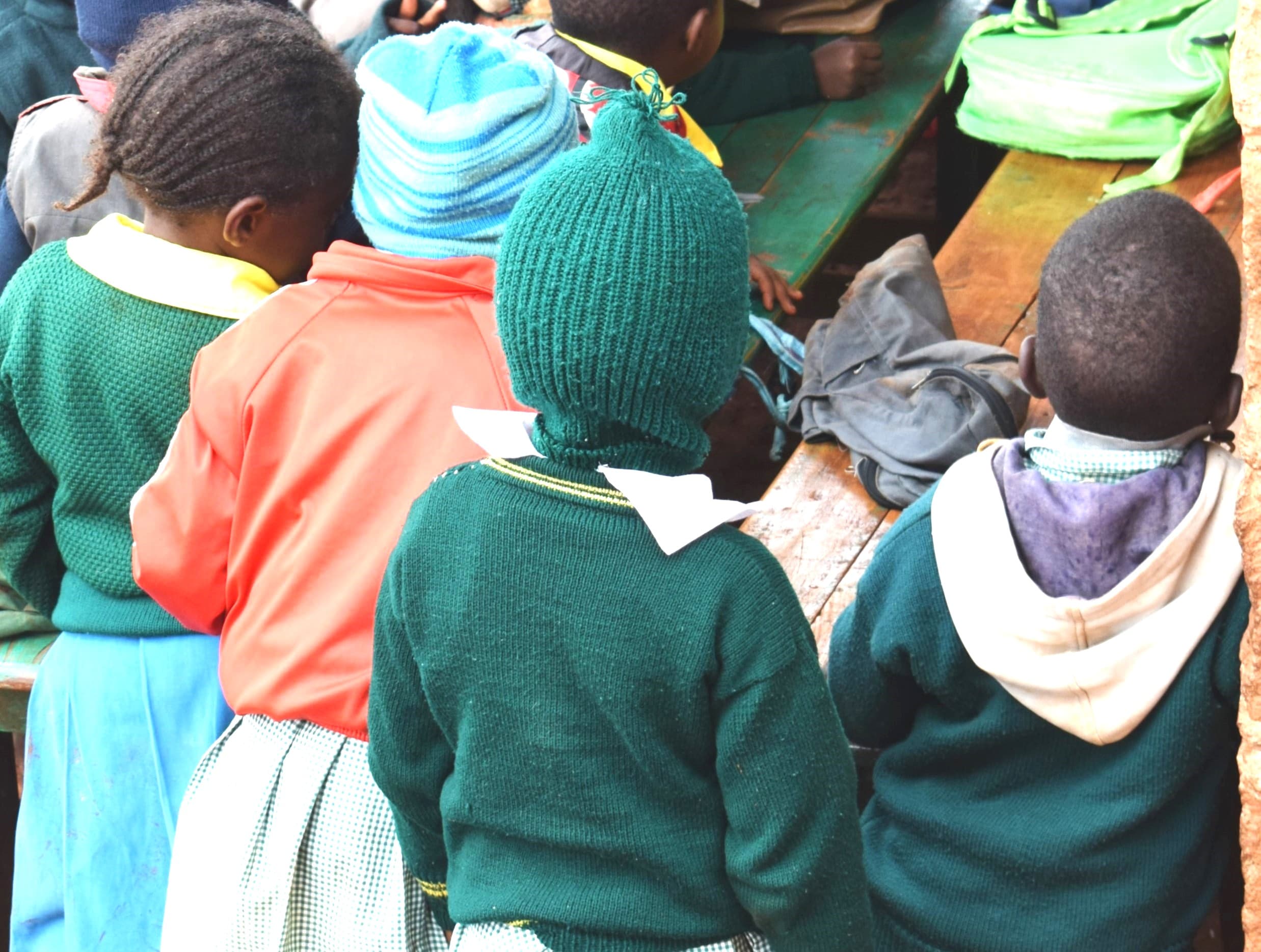
Human brain development is a marathon, not a sprint. It begins before birth and continues into early adulthood, reaching full maturity at about twenty-five years. Yet the window that truly shapes the trajectory of a child’s life is short, intense, and decisive: from birth to about eight years. This is the period when learning, behaviour, creativity, emotional regulation, and social skills are set.
How a nation handles Early Childhood Development and Education (ECDE) at this stage determines not only the quality of future schooling, but also the productivity, resilience, and character of its citizens.
Children are biologically wired to learn through play, exploration, imitation, language, and emotional connection. Curiosity is natural. Questions are endless. Learning is joyful—if the environment supports it. And here lies the paradox: the very stage designed for exploration is too often where systems suffocate children, not through ill intent but through neglect, underinvestment, poor planning, and misguided practices.
By the age of two, a child’s brain is nearly 80 per cent of adult size. By five, it reaches 90 per cent. Millions of neural connections form every second, sculpted by stimulation, care, nutrition, and emotional security. These connections are the foundation of the brain’s architecture. Well-delivered ECDE strengthens this architecture. Poorly handled ECDE damages it—often invisibly, but irreversibly.
Across the country, ECDE is treated as optional, not essential. Centres are overcrowded. Teaching materials are scarce. Supervision is weak. Pedagogy is often unsuitable for young learners. Some children are pushed prematurely into rigid academic routines, drilled on outcomes they are not developmentally ready for. Play, creativity, and social interaction are sidelined. This is not acceleration—it is suppression.
ALSO READ:
https://educationnews.co.ke/kcse-2025-results-to-be-released-tomorrow-in-eldoret-moe-confirms/
Children do not thrive under pressure and fear. They flourish under guided freedom, repetition, warmth, and joyful engagement. When these are missing, curiosity dies, confidence erodes, and imagination is silenced. By the time formal examinations arrive, children carry anxiety and self-doubt, misinterpreted by educators later as lack of ability or poor attitude. In truth, these are the consequences of a system that mishandled its most sensitive stage.
Emotional suffocation is equally destructive. Young learners need safety, warmth, and consistency. Without trained caregivers, manageable class sizes, and stable routines, children experience stress, not security. Chronic stress flips the brain from learning mode to survival mode, undermining healthy neural development. The consequences appear later: poor concentration, behavioural challenges, withdrawal, aggression, and low self-esteem.
Haphazard ECDE also produces what can be called “false readiness.” Children are promoted to primary school based on age, not competence. They arrive without strong foundations in language, numeracy, focus, or emotional regulation. Primary and secondary teachers are then forced into long-term remedial roles, attempting to fix deficits that should have been addressed early. Learners, aware of their struggles, disengage, internalise failure, and slowly lose faith in education itself.
The treatment of ECDE teachers is a major, often overlooked, part of the problem. In many counties, teachers receive poor pay, irregular or delayed salaries, insecure contracts, no pension, minimal recognition, and limited professional support. Yet these are the very professionals tasked with shaping the nation’s future. How can we expect excellence when the foundation workers are demoralised, stressed, and overburdened?
ECDE teachers shoulder an extraordinary responsibility. They nurture children at the most delicate developmental stage, requiring patience, creativity, emotional availability, and consistency. Expecting them to perform at high standards while worrying about basic survival is unrealistic. Low morale, absenteeism, and high turnover are inevitable—and the children pay the price. Continuity matters: young children form deep bonds with caregivers, and repeated teacher turnover disrupts emotional stability and learning, with consequences that ripple for years.
ALSO READ:
https://educationnews.co.ke/awange-osura-ready-for-kisumu-kuppet-top-seat-faceoff-ahead-of-polls/
Stakeholders on the ground have repeatedly highlighted this crisis. Joseph Sarich, KUNNOPET Secretary for West Pokot County, warns that neglecting ECDE teachers quietly sabotages the education system. He observes that teachers working under demoralising conditions are expected to deliver excellence at the most critical stage of development. “No education system can succeed when its foundation teachers are treated as expendable,” he argues. Counties must demonstrate commitment through structured employment, timely remuneration, continuous training, and dignified working conditions.
Not all counties have failed. Some are already proving that change is possible. Where teachers are well-paid, employed on stable terms, supported with materials, and offered professional development, the results are clear. Teacher morale improves, centres stabilise, learner outcomes strengthen, and public confidence grows. These examples confirm that ECDE challenges are not inevitable—they are choices.
Some counties are set to pull ahead in the coming years, not by luck, but by design. Deliberate investment in early childhood preparation and proper remuneration of ECDE teachers is already showing results. Learners enter primary school with stronger cognitive, social, and emotional foundations. Motivated teachers create stable, high-quality learning environments. Over time, these counties will produce learners who perform better, need less remedial work, and adapt more confidently to later curriculum demands—proving that educational advantage is built, not inherited.
Meanwhile, poorly supported ECDE systems entrench inequality from the outset. Children from affluent families access stimulating environments, trained teachers, and rich materials. Children from disadvantaged backgrounds rely on underfunded centres, overcrowded classrooms, and undertrained teachers. The performance gaps observed later are not natural differences—they are early opportunity gaps that were never addressed.
ALSO READ:
https://educationnews.co.ke/tafa-dominate-back-to-school-football-tournament-at-new-hope-ground-in-nakuru/
Brain development eventually shifts from rapid growth to refinement. Neural pathways strengthened early become efficient and resilient. Neglected pathways are pruned away. By adolescence, foundational gaps from early childhood are entrenched and difficult to reverse. Interventions at this stage are corrective rather than developmental, with limited impact.
ECDE is not “just another level” of education. It is the foundation of the entire system. Curriculum reforms, competency-based approaches, digital learning initiatives, and assessment reforms cannot succeed on weak foundations. A strong ECDE system requires deliberate planning, adequate funding, developmentally appropriate pedagogy, supervision, and—critically—dignified treatment of ECDE teachers.
To continue handling ECDE haphazardly is to quietly mortgage the nation’s future. It is like planting seeds in poor soil, denying them water and sunlight, and then blaming the plant for failing to thrive. Early childhood should be a space of nurture, not pressure; exploration, not confinement; growth, not suffocation.
Policymakers, county governments, and education leaders must act decisively. Prioritise ECDE funding. Ensure teachers are well-paid, trained, and supported. Maintain manageable class sizes. Provide appropriate materials. Promote emotional safety and continuity in learning. Support parents to engage actively with early learning. These are not optional measures—they are urgent imperatives for national development.
If societies are serious about educational equity, meaningful reform, and sustainable national growth, then ECDE must be treated with the urgency it deserves. The way we treat young children—and the teachers who guide them—at this most critical stage determines the quality of learners, workers, and citizens the nation produces. At no other point in life do small actions carry such far-reaching consequences.
By Hillary Muhalya
You can also follow our social media pages on Twitter: Education News KE and Facebook: Education News Newspaper for timely updates.
>>> Click here to stay up-to-date with trending regional stories
>>> Click here to read more informed opinions on the country’s education landscape



Reader Discussion (0)
Sign in to comment