







The decision to allow double and triple intake in senior schools under the Competency-Based Curriculum was largely driven by pressure—pressure to absorb numbers, pressure from parents, pressure from politics, and pressure to be seen as responsive. While it may have solved an immediate placement crisis on paper, its implications on resources, curriculum delivery, infrastructure, and human resources are far-reaching and deeply unsettling. What was intended as a flexible response risks mutating into a systemic strain that could compromise the very quality CBE seeks to protect.
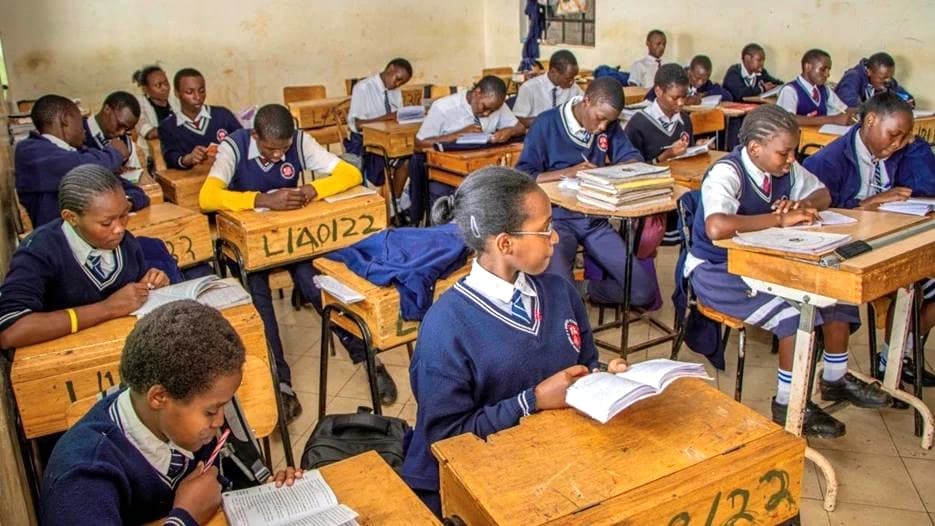
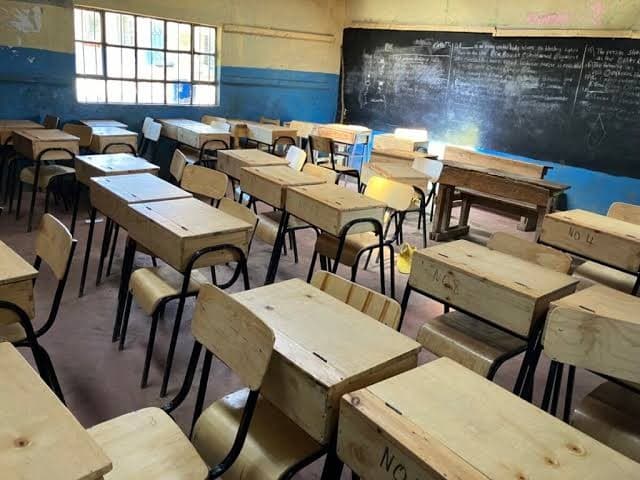
At the most basic level, double and triple intake places enormous stress on physical resources. Classrooms, laboratories, libraries, workshops, and sanitation facilities were designed for projected enrolments, not sudden population surges. When learner numbers double overnight, wear and tear accelerates, shared resources become overstretched, and access becomes competitive rather than guaranteed. Science laboratories are booked back-to-back, practical lessons are rushed or converted into demonstrations, and library use shifts from meaningful research to hurried borrowing. CBE’s emphasis on hands-on, experiential learning suffers quietly as physical space becomes a bottleneck.
Curriculum delivery under such conditions becomes a logistical exercise rather than a pedagogical one. CBE requires time—time for exploration, time for reflection, time for feedback, and time for individualized support. Double and triple intake compress this time brutally. Teachers are forced to move faster, not because learners are ready, but because timetables are unforgiving. Differentiation, a core principle of CBE, becomes almost impossible in overcrowded settings. Lessons default to whole-class instruction, undermining learner agency and voice. The curriculum may still be called competency-based, but delivery begins to resemble the content-heavy, pace-driven model CBE was meant to replace.
ALSO READ:
https://educationnews.co.ke/prime-suspect-arrested-in-killing-of-endebess-form-four-student/
Assessment practices are equally affected. Continuous assessment, portfolio development, and performance tasks demand careful observation and meaningful feedback. With ballooning class sizes, assessment risks becoming superficial. Teachers may resort to generic comments, delayed feedback, or reduced assessment frequency simply to cope. This weakens the credibility of competency tracking and reduces assessment to compliance rather than growth. Learners, in turn, receive less guidance on their strengths and gaps, turning assessment into an endpoint instead of a learning tool.
Infrastructure strain extends beyond classrooms. Boarding facilities, where applicable, face overcrowding that affects safety, health, and learner well-being. Dining halls struggle with scheduling, meals become hurried affairs, and queues replace calm routines. Sanitation facilities become overstretched, increasing the risk of hygiene-related illnesses. Recreational spaces shrink relative to demand, limiting opportunities for play, creativity, and social development—ironically, aspects CBC values highly. A congested school environment breeds fatigue, irritability, and disciplinary challenges, further diverting attention from learning.
Human resources may be the most critical pressure point. Double and triple intake without proportional teacher recruitment results in unsustainable workloads. Teachers are assigned more lessons, more learners, more assessments, and more administrative duties, often without additional support. Burnout becomes inevitable. Exhausted teachers struggle to innovate, mentor, or inspire. Instead of being facilitators of learning, they become managers of chaos. Over time, this erodes professional satisfaction and threatens retention, especially among highly skilled teachers who feel their expertise is being diluted by sheer volume.
Non-teaching staff are not spared. Housekeepers, cooks, laboratory technicians, librarians, and support staff face increased workloads without commensurate expansion. Systems that rely on behind-the-scenes efficiency begin to falter. When laboratories lack adequate technical support or libraries lack staffing to manage increased traffic, the quality of learning support declines. CBE’s integrated approach assumes a fully functioning school ecosystem; double and triple intake destabilizes that ecosystem.
ALSO READ:
https://educationnews.co.ke/matungulu-mp-urges-government-to-fund-grade-10-learners-lacking-school-fees/
Financial implications also loom large. Increased enrolment does not automatically translate into proportional funding, especially when budgets are fixed or delayed. Schools are forced to stretch limited funds thinner, postponing maintenance, delaying procurement, or improvising resources. This creates a cycle where quality declines gradually but persistently. Parents may be asked to fill gaps informally, reintroducing inequality and commercial pressures that CBC hoped to minimize.
Perhaps the most subtle but dangerous implication is cultural. Double and triple intake normalizes crisis management as standard practice. Instead of thoughtful planning, data-driven enrolment, and phased expansion, the system begins to rely on improvisation. This sends a message that standards are negotiable when numbers matter. CBE, however, cannot thrive in a culture of perpetual emergency. It requires stability, intentionality, and respect for limits.
In the long run, double and triple intake risks recreating the very problems CBE was designed to solve: overcrowded classrooms, overworked teachers, shallow learning, and inequitable access to quality experiences. Absorbing learners is important, but absorbing them well is essential. Without deliberate investment in resources, infrastructure, and human capital, double and triple intake becomes not a solution, but a slow erosion of promise. CBE’s success will ultimately be judged not by how many learners entered senior school, but by the conditions under which they were taught.
By Ashford kimani
Ashford teaches English and Literature in Gatundu North Sub-county and serves as Dean of Studies.
You can also follow our social media pages on Twitter: Education News KE and Facebook: Education News Newspaper for timely updates.
>>> Click here to stay up-to-date with trending regional stories
>>> Click here to read more informed opinions on the country’s education landscape



Reader Discussion (0)
Sign in to comment