







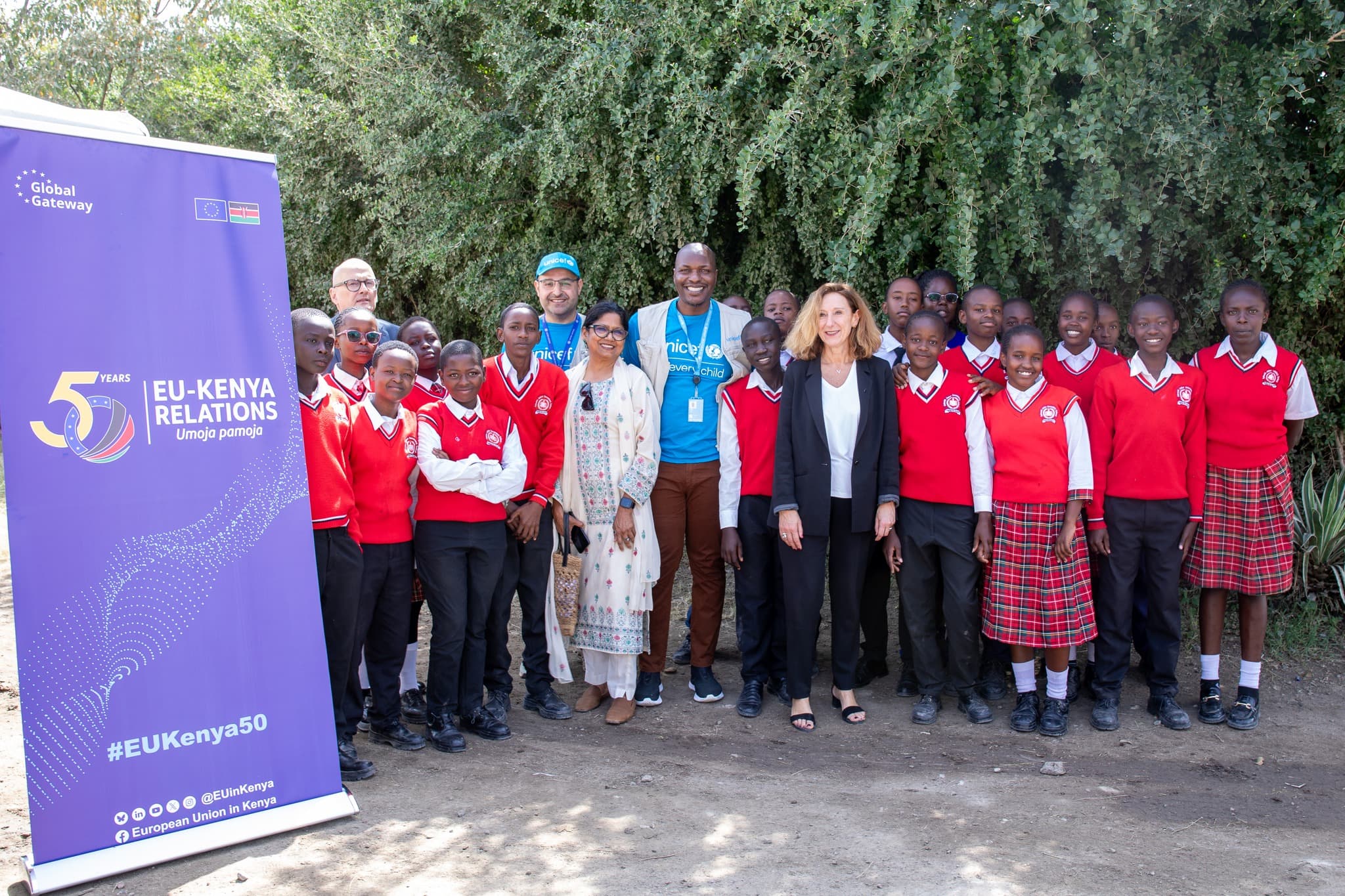
The European Union through its Last Mile Connectivity of Schools (LCMS) project has connected internet to over 363 public primary schools, an initiative aimed at boosting delivery of the competency-based education (CBE) and bridge the digital divide, which continues to hamper learning in many rural areas despite Kenya’s growing digital economy.
Among the beneficiary schools is Enkasiti Primary School in Kajiado County.
Speaking on Tuesday during a visit to the school, European Union Deputy Director-General for International Partnerships Myriam Ferran, said the project forms part of the EU’s Digital Economy Package for Kenya under the Global Gateway strategy, coinciding with preparations to mark 50 years of Kenyatta-EU diplomatic relations in 2026.
“The project aims to connect 1,000 public primary schools across 14 counties to sustainable and reliable internet, enabling learners—including children with disabilities—to access quality, digitally enabled education aligned with the competency-based curriculum,” Ferran said.
ALSO READ:
https://educationnews.co.ke/understanding-learner-repetition-procedure-under-cbe-system/
She added that connecting 363 schools marks a significant milestone, demonstrating how strong partnerships and targeted investment deliver tangible results for learners and teachers.
Launched in October 2023, the Ksh1.48 billion LCMS project has so far benefited more than 277,000 learners, providing access to online platforms, virtual laboratories and digital content. Around 2,800 children with disabilities are using inclusive digital tools, while over 4,400 teachers have begun integrating technology into classroom instruction, with hundreds trained in ICT use.
UNICEF Kenya Chief of Education Deema Jaraar said internet connectivity is key to delivering CBE, enabling access to digital content, modern assessment tools and virtual laboratories that prepare learners for a fast-changing digital world.
“We are already seeing meaningful improvements in teaching and learning, but with only about 30 per cent of Kenya’s 23,400 public primary schools online, many children in underserved areas risk being left behind,” she said.
Enkasiti junior school science teacher Joseph Kamau said connectivity has made practical science lessons easier for schools lacking fully equipped laboratories. Virtual labs have improved concept understanding and strengthened STEM learning.
The school also demonstrated the client–hub connectivity model, where a centrally connected school extends internet access to neighbouring institutions, a system already in use in Kajiado and Turkana counties.
By Juma Ndigo
You can also follow our social media pages on Twitter: Education News KE and Facebook: Education News Newspaper for timely updates.
>>> Click here to stay up-to-date with trending regional stories
>>> Click here to read more informed opinions on the country’s education landscape



Reader Discussion (0)
Sign in to comment