









Kenya’s agricultural sector—responsible for about 22 percent of the nation’s Gross Domestic Product (GDP), according to data from the Kenya National Bureau of Statistics—is at a turning point, with experts urging a shift from traditional farming to technology-driven, precision agriculture.
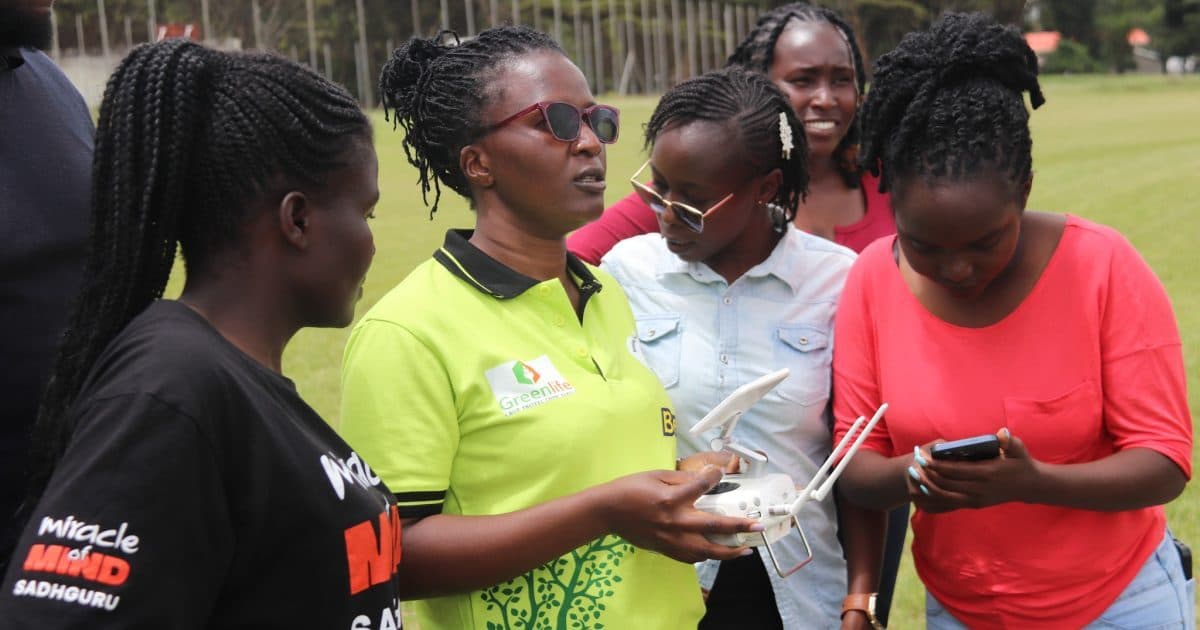
During the Agricultural Drone Pilots Training Programme at Egerton University’s Njoro Main Campus, agricultural scholars and sector leaders underscored that drones are rapidly emerging as one of the most efficient tools to boost farm productivity, reduce operational costs, and improve sustainability.
“We must encourage farmers to adopt drone technology,” said Professor Charles M’Erimba, Director of the Graduate School at Egerton University. “Precision agriculture enhances efficiency, sustainability and productivity, and drones are at the centre of this transformation.”
Prof M’Erimba said the training programme is part of Egerton University’s broader vision to modernise Kenya’s agricultural landscape. He added that empowering farmers and students with drone-operating skills will better equip them to manage pests, diseases and other threats to crop production.
“Introducing drone technology training in the university is a milestone in nurturing a new generation of farmers,” he stated. “These devices will revolutionise farming and make work easier for farmers.”
Although drones were initially associated with security surveillance, their use in agribusiness has grown significantly in Kenya. Several large-scale farmers and agribusiness firms have already adopted them.
However, drone operation in the country remains tightly regulated under the Civil Aviation (Unmanned Aircraft Systems) Regulations 2020, requiring all operators to undergo training and licensing through the Kenya Civil Aviation Authority (KCAA).
Prof M’Erimba said the institution aims to equip agriculture students, farmers and experts with modern technical skills through support from several partners, including the Agricultural Industry Association of Kenya (AAK), TAGDev, CIWAB, Hallo Tractors, Versadrones, Ogiek Peoples’ Development Programme and the KCAA.
ALSO READ:
https://educationnews.co.ke/kuppet-accused-of-illegally-using-suspended-constitution-in-2026-election-preparations/
He highlighted drones’ ability to detect pests, diseases and water stress early through aerial imaging and multispectral cameras. “Drone technology supports farmland mapping, irrigation management, and precise application of fertilisers and pesticides,” he said. “This minimises wastage and improves productivity.”
Professor Antony Kibe, an agronomy expert at Egerton University, stressed the need to integrate drone use with emerging crop management practices.
“We must apply fertiliser according to soil type, whether alkaline or acidic, to ensure crops absorb nutrients effectively,” he said. He added that foliar fertiliser applications have gained prominence and drones are proving useful in applying them efficiently.
“If you can fly a drone and apply fertiliser on crop canopies, then you will have helped make fertiliser use more efficient,” he said.
Prof Kibe noted that drones complement government fertiliser programmes and offer immense value to elderly farmers who may struggle with manual labour. Citing data from KIPPRA, he explained that drones can cut pesticide use by up to 30 percent, reduce water needs by 40 percent, and reduce spraying time from several days to just a few hours. They can also cover 10 acres in an hour—ten times faster than manual labour—and save farmers between Sh1,500 and Sh2,500 per acre on fertiliser.
However, with only 5 to 7 percent of Kenyan smallholder farmers accessing drone services, cost remains a major barrier. A single drone costs between Ksh600,000 and Ksh1.5 million.
Even so, Prof Kibe insisted that drone technology should be promoted to make agriculture more attractive to youth. “Drones make farming less laborious and more technologically advanced,” he said.
ALSO READ:
https://educationnews.co.ke/matili-tti-pulls-out-of-fkf-league-ahead-of-2025-26-seasons/
Drones Key to Tackling Climate Challenges
Dr Patrick Wamalwa, Programme Coordinator at the Centre for Integrated Water and Basin Management (CIWAB), said drones have become essential tools in combating climate change impacts, such as drought and pest outbreaks.
He said the training programme aims to empower professionals, farmers and university staff from various counties to adopt technology-driven farming systems that improve food security and environmental efficiency.
Besides boosting crop yields, drones help conserve water and reduce labour costs. “They also reduce greenhouse gas emissions, since they require far less fuel than tractors,” Dr Wamalwa said.
He added that drones capture high-resolution, timely farm images that are vital for making informed management decisions. “With drones, you can spot pests and diseases early, even on large farms,” he noted. “They are especially useful in areas with difficult terrain where traditional machinery cannot access.”
Transforming Farming With Real-Time Data
Professor Japheth Onyando, Dean of the Faculty of Engineering at Egerton University, said real-time drone data allows farmers to quickly make decisions to address threats like drought, nutrient deficiency or pest outbreaks.
“Drone adoption enables farmers to make better decisions based on spatial information,” he said. “They can easily know which crops to plant where, analyse soil health and moisture, and plan planting and harvesting more efficiently.”
He added that detailed maps generated through drones—including soil type, topography and nutrient distribution—will significantly improve precision farming in Kenya.
By KIMUTAI LANGAT
You can also follow our social media pages on Twitter: Education News KE and Facebook: Education News Newspaper for timely updates.
>>> Click here to stay up-to-date with trending regional stories
>>> Click here to read more informed opinions on the country’s education landscape




Reader Discussion (0)
Sign in to comment