Curriculum gaps under the Competency-Based Education (CBE) model have come into sharp focus at the ongoing Kenya National Drama and Film Festival, where a growing digital divide is increasingly locking out rural schools from competing on equal footing with their urban and private counterparts.
As the festival entered its second day at Kagumo Teachers Training College, performances revealed a stark contrast in production quality, with well-resourced institutions leveraging advanced technology to mount visually striking shows, while schools from marginalized regions struggled to match the same standards due to limited access to digital tools and infrastructure.
At the heart of the disparity is CBE’s emphasis on integrating technology into learning and assessment. From multimedia staging to digital storytelling and video production, the model is reshaping the festival into a platform where technical capability increasingly complements — and at times overshadows — raw creative talent.
Schools equipped with modern recording equipment, stable internet, and trained personnel dominated several categories, sparking debate over fairness in a national competition that is fast evolving into a showcase of both artistic ingenuity and technological muscle.
Yet amid these inequalities, the festival is also highlighting the transformative promise of CBE when effectively implemented. Across the stage and screen, learners are embracing innovation, blending traditional performance with digital elements such as sound engineering, projected backdrops, and film techniques to tell compelling, socially relevant stories.
Many productions tackled pressing contemporary issues, including governance, climate change, mental health, and social justice, demonstrating a heightened level of awareness and critical thinking among learners. The shift marks a departure from conventional script-based performances to more dynamic, research-driven narratives that mirror real-world challenges.
ALSO READ;
Bomet teachers to hold fundraiser today ahead of national games in Malindi
One of the standout entries came from BuruBuru 1 Comprehensive School, which took advantage of the newly introduced video category to showcase how CBE is redefining classroom learning. Their video song, “Mazingira,” featured Grade 5 and 6 learners delivering a powerful message on environmental conservation and climate change through a digitally produced performance.
According to trainer Clarkson Ochieng Okatch, the production was designed to resonate with young learners while embracing the festival’s digital direction.
“We are here with an item under the video class, which is a new genre introduced this year. Our video song ‘Mazingira’ was composed and performed by Grade 5 and 6 learners, focusing on the effects of environmental degradation and climate change,” he said.
He noted that the project goes beyond artistic expression, aiming to instill environmental responsibility among learners.
“We are trying to highlight that as human beings, we can take care of the environment in such a way that we preserve our future generations. If we destroy the environment today, then we are going to destroy the next generation. The video format allowed learners to communicate their message creatively and effectively,” he added.
Okatch further observed that the introduction of the video category aligns closely with CBE principles by encouraging learner-centered, practical approaches to education.
“This is a new genre, and we wanted to come up with something that is child-centered and relevant to the learner, especially at the upper primary level,” he said.
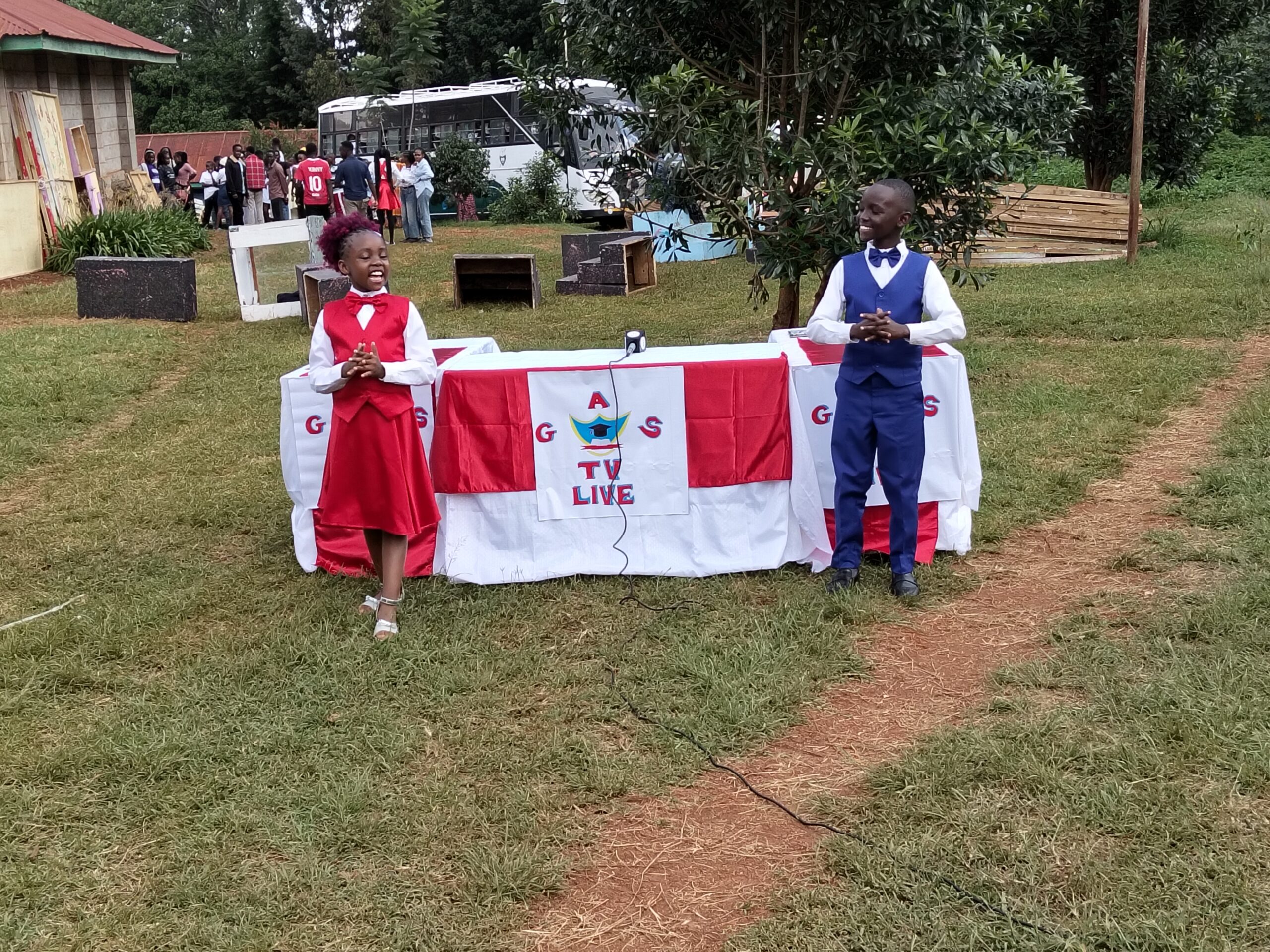
In another compelling performance, Adon Growland Schools turned the spotlight on parenting and talent development through a live TV broadcast piece titled “The Voice of a Child.” The production challenged societal norms by addressing the pressure some parents place on children to pursue predetermined career paths.
ALSO READ;
Why KMTC Physiotherapy graduates are becoming a hit in Germany, EU countries
Trainer Susan Makale said the piece was inspired by real-life experiences within the CBE framework.
“Our main aim was to let parents and the world understand that in this CBE era, they are supposed to allow children to practice their competencies,” she said.
Makale emphasized that forcing children into specific careers undermines their potential.
“Some parents try to force their children to follow in their footsteps, but through this performance, the children are advising that it is not right. Parents need to listen to their children and support them in nurturing their talents,” she noted.
She expressed optimism that embracing learners’ passions would yield long-term benefits as they transition into higher levels of education.
“When children are allowed to do what they love, they grow with it, and it becomes beneficial for them in the future. Empowering learners is key to the success of Competency-Based Education,” she added.
Adding a unique dimension to the festival was media personality Beulyn Schola, who anchored a production that blended performance with lived experience. By inviting a guest whose personal journey mirrored the play’s message, the piece underscored the importance of nurturing talent.
She recounted how the guest had once struggled against parental expectations before eventually being allowed to pursue his passion.
“His parents wanted him to pursue a different course, but he had a passion for something else. Eventually, they allowed him to follow his dream, and that is why he is where he is today,” she said.
Now based in the United States, the guest returned as a testament to the power of supporting children’s talents.
“We wanted to show that if children are given the opportunity to nurture their talent, they can succeed globally,” she added.
By Amos Kiarie
You can also follow our social media pages on Twitter: Education News KE and Facebook: Education News Newspaper for timely updates.
>>> Click here to stay up-to-date with trending regional stories
>>> Click here to read more informed opinions on the country’s education landscape