






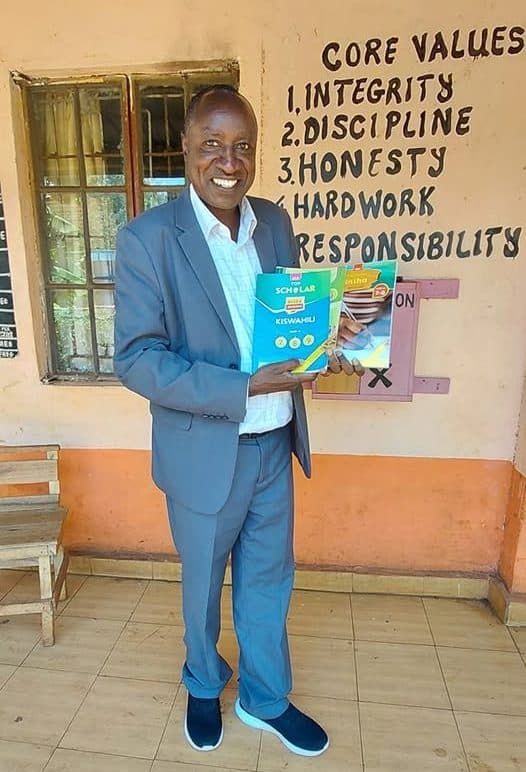
For thirty years, from 1996 to 2025, Dr. Mutahi Miricho has stood before teachers in classrooms, halls, universities and conference rooms, not merely as a facilitator, but as a steady flame in Kenya’s ever-shifting educational landscape. If resilience were a man, Dr. Mutahi Miricho would fit the bill.
His journey from facilitating seminars for primary school teachers in the mid-1990s to addressing university Kiswahili lecturers three decades later is not just a story of professional growth; it is a testament to endurance, intellectual consistency and an unshakeable belief in the power of teachers.
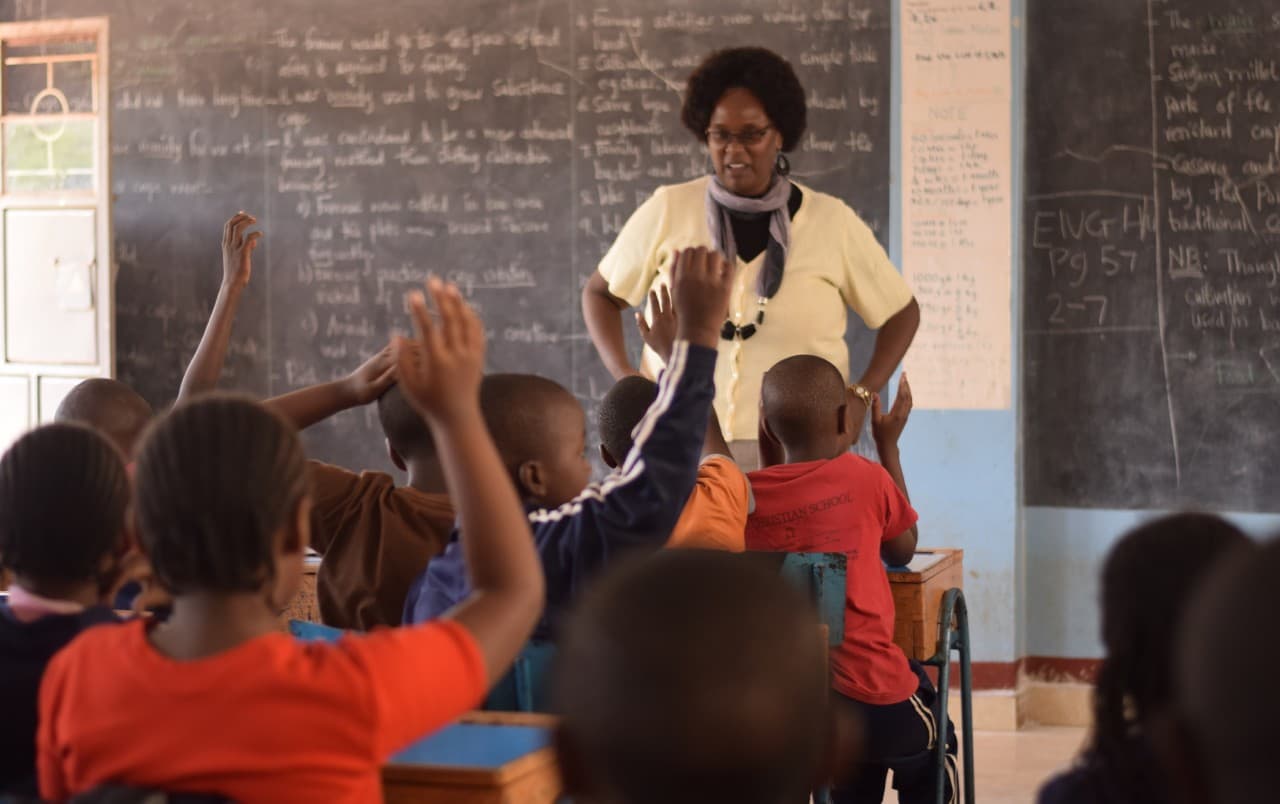
In 1996, when Kenya’s education system was firmly anchored in the 8-4-4 structure, professional development for teachers was largely limited to sporadic workshops and subject panels. It was in that context that a young, determined Miricho began facilitating seminars for primary school teachers. Those early sessions were modest, sometimes conducted in dusty classrooms with chalkboards and wooden desks, but they were rich in purpose. He understood even then that a teacher empowered with content mastery and pedagogy multiplies impact across generations of learners.
Over the years, as curricular reforms rippled through the country, Dr. Miricho remained present. He did not retreat when policies changed. He did not disappear when paradigms shifted. Instead, he adapted. From strengthening grammar instruction and composition writing in English to deepening the teaching of Fasihi and Sarufi in Kiswahili, he positioned himself as a bridge between curriculum designers and classroom practitioners. His workshops were never abstract lectures. They were practical, rooted in classroom realities, alive with examples drawn from real scripts, real learners and real schools.
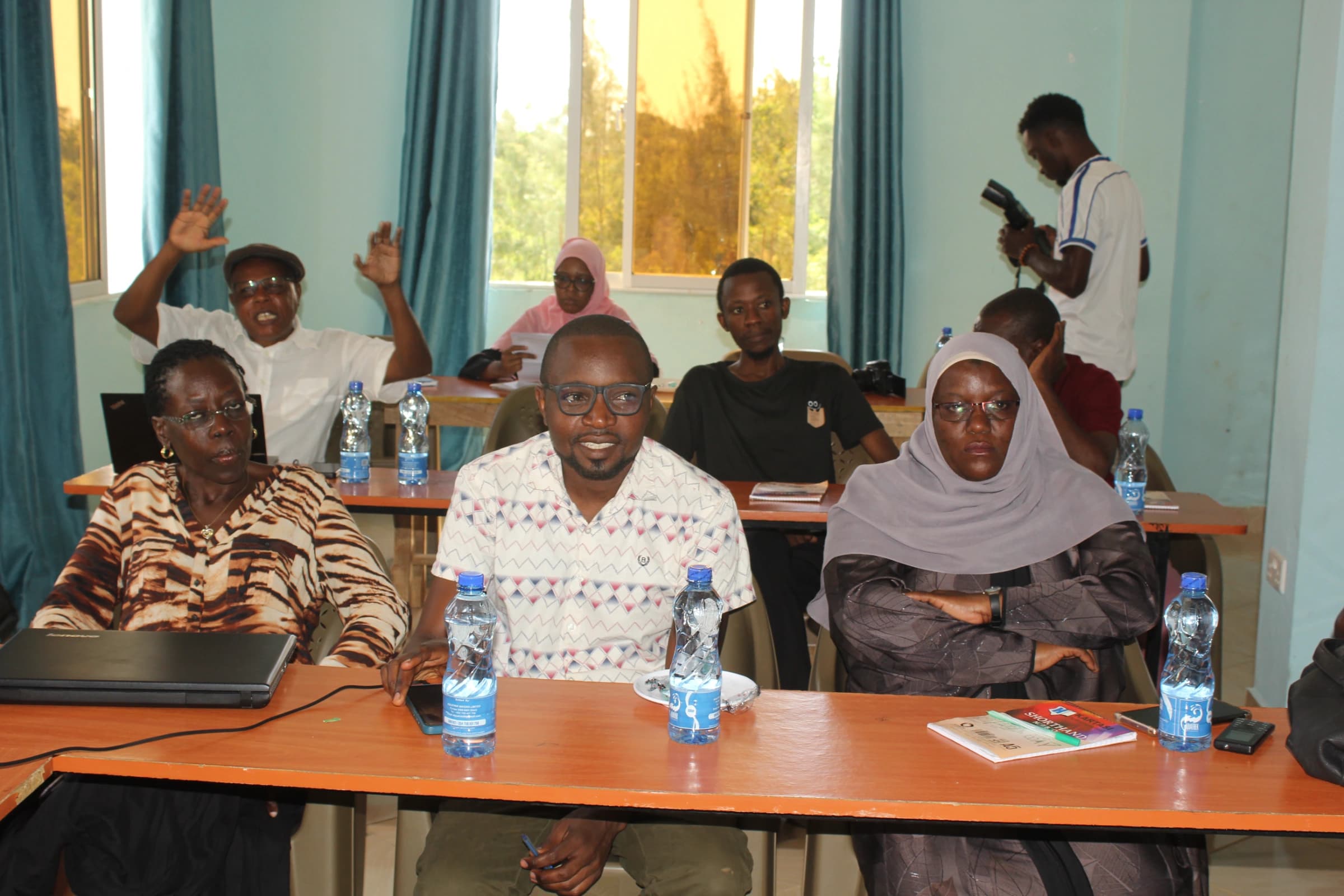
What distinguishes Dr. Miricho is not merely longevity, but evolution. Many facilitators plateau. He rose. From primary school seminars, he expanded to training secondary school teachers, mentoring subject panels and guiding examination classes. Eventually, his expertise attracted university spaces, culminating in invitations to facilitate Kiswahili lecturers’ workshops in 2025. To move from chalk-dust primary classrooms to engaging scholars in higher education is no small feat. It signals intellectual credibility earned over time, not demanded by title.
ALSO READ:
https://educationnews.co.ke/kemi-trains-school-boms-in-west-pokot-to-strengthen-governance/
Parallel to his facilitation work is his authorship of Kiswahili and English course books. Writing for learners is a discipline of its own. It demands clarity without oversimplification, rigor without intimidation. Dr. Miricho embraced that calling. His books have served as companions to students navigating grammar structures, comprehension passages, fasihi simulizi, fasihi andishi, and the demanding terrain of composition writing. In English, he has shaped learners’ understanding of functional writing, literary appreciation and language conventions. In Kiswahili, he has nurtured appreciation for lugha sanifu while honoring the cultural textures embedded in the language.
Authorship requires resilience of a different kind. Manuscripts are revised, edited, sometimes rejected. Curricula change. Syllabi are updated. What was relevant yesterday may need reworking tomorrow. Yet he has continued to write, revise and publish, ensuring his materials align with contemporary needs. Through this, he has indirectly mentored thousands of teachers who rely on structured, well-sequenced course books to guide instruction.
The introduction of the Competency Based Education framework could have unsettled many seasoned educators. For some, it signaled disruption. For Dr. Miricho, it became another frontier. Today, he facilitates seminars for Junior School and Senior School teachers, learners and parents on CBE and Kiswahili. That breadth—teachers, learners, parents—reveals his holistic understanding of education. He recognizes that reform succeeds not only through policy documents but through collective clarity. Parents must understand pathways. Teachers must internalize pedagogy. Learners must feel guided rather than confused. His sessions demystify transitions, interpret policy in accessible language and anchor reforms in classroom practice.
There is something quietly powerful about a professional who spans eras. Dr. Miricho has witnessed the anxiety of examination years, the pressure of KCSE performance debates, the tension between language policy and practice, and the politicization of curriculum reforms. Through it all, he has remained focused on substance. Those who attend his workshops often speak of his depth of content knowledge, but equally of his humility. After three decades, he still describes the experience as humbling.
Resilience, in his case, is not loud. It is consistent. It is the decision to keep preparing notes even after facilitating hundreds of sessions. It is the willingness to listen to young teachers’ concerns without dismissing them. It is the courage to step into new policy territories rather than criticize from a distance. It is the discipline to keep reading, researching and refining one’s craft.
ALSO READ:
https://educationnews.co.ke/fresh-call-to-shield-struggling-parents-from-education-costs/
In an age where professional relevance can fade quickly, Dr. Miricho’s trajectory challenges educators to think long term. Impact is not always viral. It is often cumulative. A seminar delivered in 1996 may have strengthened a teacher who shaped hundreds of learners. A course book published in the 2000s may still be shaping writing skills in remote schools. A 2025 workshop for university lecturers may influence how future teachers are trained. The ripple effect is immeasurable.
Kenya’s education story is often told through policies, ministries and examination statistics. Yet behind those narratives stand individuals who quietly sustain the system. Dr. Mutahi Miricho is one such pillar. His three decades of facilitating teacher workshops and authoring Kiswahili and English course books illuminate what it means to commit a lifetime to professional growth and service.
If resilience were a man, he would not necessarily be the loudest in the room. He would be the one who shows up year after year, adapts without losing his core, writes when others tire, and teaches teachers with the same passion he had on day one. In that sense, Dr. Mutahi Miricho does not merely fit the bill. He defines it.
By Ashford Kimani
Ashford teaches English and Literature in Gatundu North Sub-county and serves as Dean of Studies.
You can also follow our social media pages on Twitter: Education News KE and Facebook: Education News Newspaper for timely updates.
>>> Click here to stay up-to-date with trending regional stories
>>> Click here to read more informed opinions on the country’s education landscape



Reader Discussion (0)
Sign in to comment