






In many classrooms, teaching is often reduced to a race against time. The syllabus becomes the finish line, and the teacher’s success is measured by whether every topic was “covered.” Yet, this mindset, while administratively convenient, is pedagogically weak. Covering content does not guarantee learning. In fact, it often masks failure. The fastest way to increase your value as a teacher is to shift your focus from completing the syllabus to student results.
A results-oriented teacher asks a fundamentally different question. Instead of asking, “Have I taught this topic?” they ask, “Have my students understood this topic?” This distinction may appear subtle, but it transforms classroom practice entirely. It demands accountability not just for delivery, but for impact. In the Kenyan context, where examination performance heavily influences student progression and school reputation, this shift is not optional—it is essential.
Focusing on results begins with clarity of outcomes. Every lesson must have a clearly defined, observable, and measurable learning objective. For instance, instead of saying, “Students will understand imagery,” a results-driven teacher frames it as, “Students will identify and explain imagery in a passage and use it correctly in their own writing.” This clarity allows both the teacher and the learners to know what success looks like.

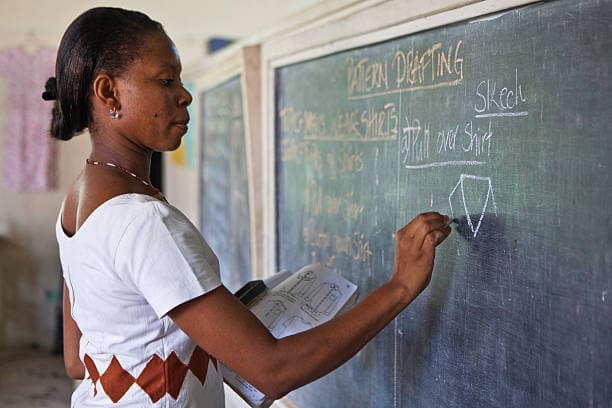
Once outcomes are clear, instruction must be aligned to achieve them. This means abandoning the assumption that exposure equals mastery. Just because a concept has been explained does not mean it has been learned. Effective teachers build in checks for understanding throughout the lesson. They ask targeted questions, use quick assessments, and observe student responses carefully. If a significant number of learners are struggling, the teacher adjusts immediately rather than pushing forward in the name of syllabus coverage.
This approach requires courage. It often means slowing down when the scheme of work says you should move on. It may even mean reteaching a concept using a different method. However, this is where true professionalism lies. A teacher who prioritises learning over pacing demonstrates instructional integrity. Over time, such a teacher produces consistently strong results, which becomes their professional signature.

Another critical dimension is differentiation. Students do not learn at the same pace or in the same way. A results-focused teacher recognises this and provides multiple entry points into the content. High-performing students are challenged further, while struggling learners receive additional support. This may involve grouping, peer teaching, or targeted interventions. The goal is simple: no learner is left behind because the syllabus must move.
Assessment also changes when results are prioritized. Instead of relying solely on end-of-term exams, the teacher uses continuous assessment to monitor progress. These assessments are not punitive but diagnostic. They reveal gaps in understanding and inform subsequent instruction. In this model, failure is not a final verdict but a signal for adjustment.
READ ALSO: Why understanding the flow of the syllabus is essential before critiquing the three school systems
Importantly, focusing on results does not mean teaching to the test in a narrow sense. It means equipping students with the skills and understanding necessary to perform well in any assessment. It is about depth rather than superficial coverage. Ironically, when teaching is done well at this level, exam performance improves naturally.
The impact of this shift extends beyond the classroom. Parents quickly notice when their children are genuinely learning. Students gain confidence as they experience success. School leadership begins to rely on such a teacher for critical classes. In a competitive education environment, value is not claimed—it is demonstrated through results.
Syllabus is a tool
For a teacher in a leadership role, such as a Dean of Students, this philosophy becomes even more powerful. It sets the tone for the entire institution. When teachers collectively prioritise results, the school’s culture changes. Conversations move from “Have we finished the syllabus?” to “Are our students improving?” This is a far more meaningful metric.
Ultimately, the syllabus is a tool, not the goal. It provides structure, but it should never dictate the pace at the expense of understanding. A teacher who masters this balance becomes indispensable. They are not just delivering content; they are producing outcomes. And in education, outcomes are everything.
By Ashford Kimani
Ashford teaches English and Literature in Gatundu North Sub-county and serves as Dean of Studies.
You can also follow our social media pages on Twitter: Education News KE and Facebook: Education News Newspaper for timely updates.
>>> Click here to stay up-to-date with trending regional stories
>>> Click here to read more informed opinions on the country’s education landscape
>>> Click here to stay ahead with the latest national news.






Reader Discussion (0)
Sign in to comment