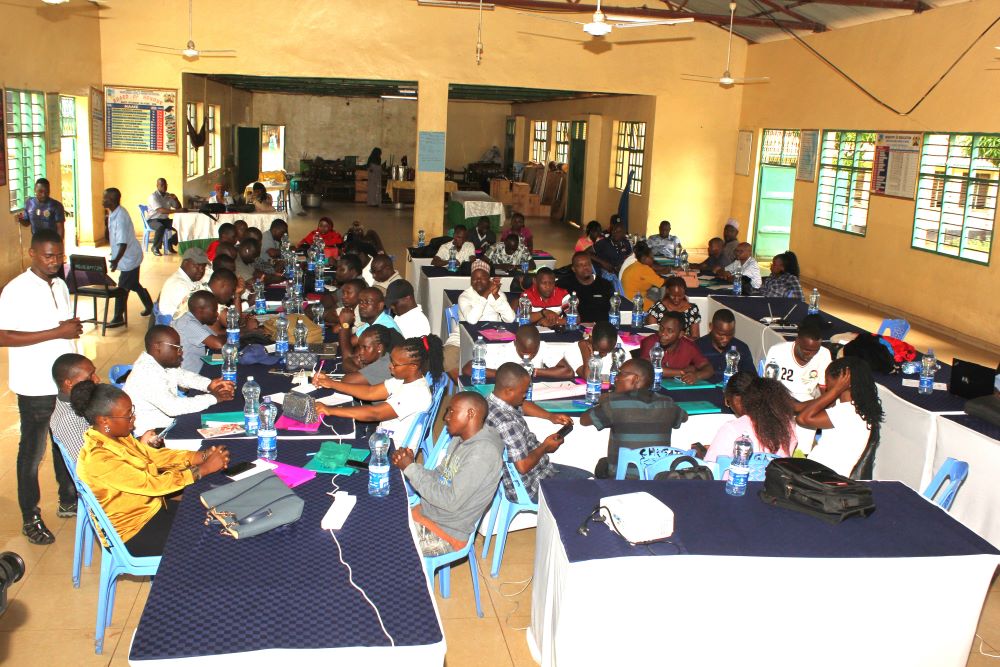
The Teachers Service Commission (TSC) is currently implementing a comprehensive senior school professional development programme that represents a key moment in Kenya’s education transformation.
Operating through a multi-agency framework, this ongoing initiative brings together master trainers from TSC, the Ministry of Education (MoE), the Kenya Institute of Curriculum Development (KICD), and the Kenya National Examinations Council (KNEC) to lead a cascading training model designed to reshape pedagogical practices across senior schools and Teacher Training Colleges (TTCs).
Strategic Training Architecture in Motion
The programme employs a Training of Trainers (TOT) methodology, where master trainers prepare selected TOTs, who will then instruct senior school teachers and TTC instructors next week. This cascading approach guarantees systematic knowledge transfer while maximising reach and resource efficiency. The TOT group comprises Curriculum Support Officers (CSOs), TSC Sub-County Directors, Ministry Quality Assurance and Standards Officers, senior school subject champions, and TTC representatives—an inter-sectoral team aimed at embedding institutional memory and maintaining momentum beyond the initial training.
As these trainers work on the curriculum this week, they are developing capacity that will ultimately influence the education system in the coming days.
Competency-Based Education (CBE) Mastery
Central to this ongoing retooling process is in-depth engagement with CBE framework fundamentals. Participants are examining curriculum design and interpretation, moving beyond superficial understanding to comprehend the philosophical foundations of competency-based education. The training emphasises assessment for learning rather than simply assessment of learning, introducing authentic assessment methods that genuinely evaluate core CBC competencies.
Furthermore, the programme emphasises pedagogic practices rooted in competency-based approaches, encouraging teachers to reconsider their instructional strategies.
ALSO READ:
TSC grapples with Ksh5 billion shortfall in teacher promotions scheme
Instead of remaining “the sage on the stage,” teachers are learning to become “the guide on the side,” fostering learner-centred discovery and skill development. This paradigm shift demands not only new techniques but also a fundamental re-evaluation of the teacher’s role within the learning ecosystem.
For senior school students, this transition leads to more engaging, participatory classrooms where they cultivate critical thinking, problem-solving, and collaboration skills—competencies essential for navigating the complexities of modern life and the evolving job market.
Community Service Learning: Bridging Classroom and Society
One of the programme’s most innovative features is its focus on community service learning, which deliberately connects classroom teaching with community needs. This approach encourages learners to apply their knowledge by addressing local issues through collaborative problem-solving. By expanding education beyond the classroom, this model promotes civic awareness while highlighting the practical value of academic learning.
Senior school students gain directly from this method as they engage in meaningful projects that link their studies to real-world challenges, while also developing technical skills, social awareness, and leadership qualities that prepare them for active citizenship and future careers.
Prioritising Teacher Wellness
Perhaps the most significant shift from earlier professional development programmes is the clear focus on teacher wellbeing, now incorporated into the training sessions. The programme acknowledges that teacher health—physical, emotional, and professional—remains vital to reaching curriculum objectives. This realisation signals a turning point, ending the traditional oversight of teachers’ welfare within the teaching and learning process.
By treating wellbeing as a core component rather than a peripheral issue of professional development, TSC demonstrates that sustainable educational progress relies on sustainable educator capacity. Ultimately, learners benefit most when their teachers are mentally and emotionally equipped to nurture positive learning environments, provide consistent support, and exhibit resilience and professional commitment.
ALSO READ:
Implementation Progress Amid Challenges
Despite unavoidable off-take challenges and complex change management processes inherent in large-scale curriculum reform, CBC implementation remains on a positive trajectory. The collaborative approach among implementing agencies is generating synergies that strengthen the reform’s foundation. More importantly, these agencies are operating within established implementation timeframes, indicating realistic planning and adequate resource allocation. This coordinated effort ensures senior school learners experience a coherent, well-supported curriculum transition rather than a fragmented or inconsistent implementation.
From Event to Process: Sustaining Professional Growth
However, this initiative’s success depends on recognizing a crucial principle: teacher retooling cannot be a singular event but must constitute an ongoing, issue-based process. As this week’s training unfolds, it represents not a conclusion but a beginning. Consequently, the TSC Teacher Professional Management directorate must establish robust feedback mechanisms to monitor emerging challenges and successes, systematically capturing classroom realities to identify gaps and adjust support accordingly.
Furthermore, the TPM directorate requires adequate resources to conduct regular needs assessments and research on best practices. In our rapidly changing environment, equipping teachers with 21st-century skills involves ongoing exploration of emerging pedagogical innovations, technological integration approaches, and evolving learner needs.
Without consistent investment in research and development, even well-designed programmes risk becoming outdated. Continuous teacher development benefits learners by ensuring their educators remain current with best practices, innovative methods, and changing content.
Embedding Change Through Supportive Assessment
To genuinely embed these changes, the TPM department should formalise classroom assessments and lesson observations—not as punitive measures but as support tools. Through interactive engagement with teachers in their professional settings, TSC can offer targeted assistance to address specific challenges while reinforcing effective practices.
ALSO READ:
The comprehensive guide to infrastructure standards every Senior School must meet
This approach promotes a broad-based development model that views professional growth as collaborative rather than evaluative, creating environments where teachers feel supported instead of scrutinised. When teachers receive constructive, ongoing professional support, learners benefit from improved instructional quality, more effective assessment techniques, and better learning outcomes.
The senior school professional development programme currently underway is a carefully crafted intervention that tackles multiple aspects of educational quality simultaneously—covering curriculum comprehension, teaching techniques, assessment literacy, community engagement, and teacher well-being. However, its ultimate success depends less on this week’s training quality and more on the systems established to sustain, monitor, and continually improve teacher capacity.
As Kenya advances through this critical curriculum implementation phase, commitment to ongoing professional development, adequate resources, and collaborative support will determine whether this initiative becomes a transformative milestone or merely another training exercise in the history of educational reform.
The framework is solid; the real challenge now is to build the infrastructure for continuous improvement. For senior school students—the main beneficiaries of this effort—the potential is clear: better-trained teachers, more relevant learning experiences, and skills that equip them for success in an increasingly complex and interconnected world.
By Ibrahim Adan
You can also follow our social media pages on Twitter: Education News KE and Facebook: Education News Newspaper for timely updates.
>>> Click here to stay up-to-date with trending regional stories
>>> Click here to read more informed opinions on the country’s education landscape