


When Hanifa Fareed received her 2025 Kenya Certificate of Secondary Education (KCSE) results, the B grade she earned carried far more weight than academic success.
For the 20-year-old South Sudanese refugee, it symbolised survival, resilience and an unfinished journey that began in exile and now hangs in the balance due to lack of university funding.
Hanifa, the second-born daughter of the late South Sudanese human rights activist Fareed Musa Fataki, is appealing for financial support to pursue university education after years of disrupted learning caused by political persecution, displacement and poverty. Her family fled South Sudan in 2021 after her father’s human rights work placed their lives at risk, forcing them to seek refuge in Kenya.
The family initially settled at the Kakuma Refugee Camp, where Hanifa’s education was almost completely derailed. In the two years they spent at the camp, she managed to attend school for only one term, a disruption that threatened to permanently shut her out of formal learning.
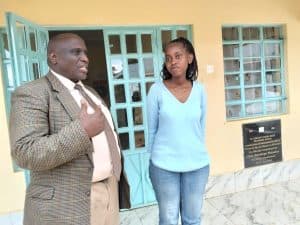
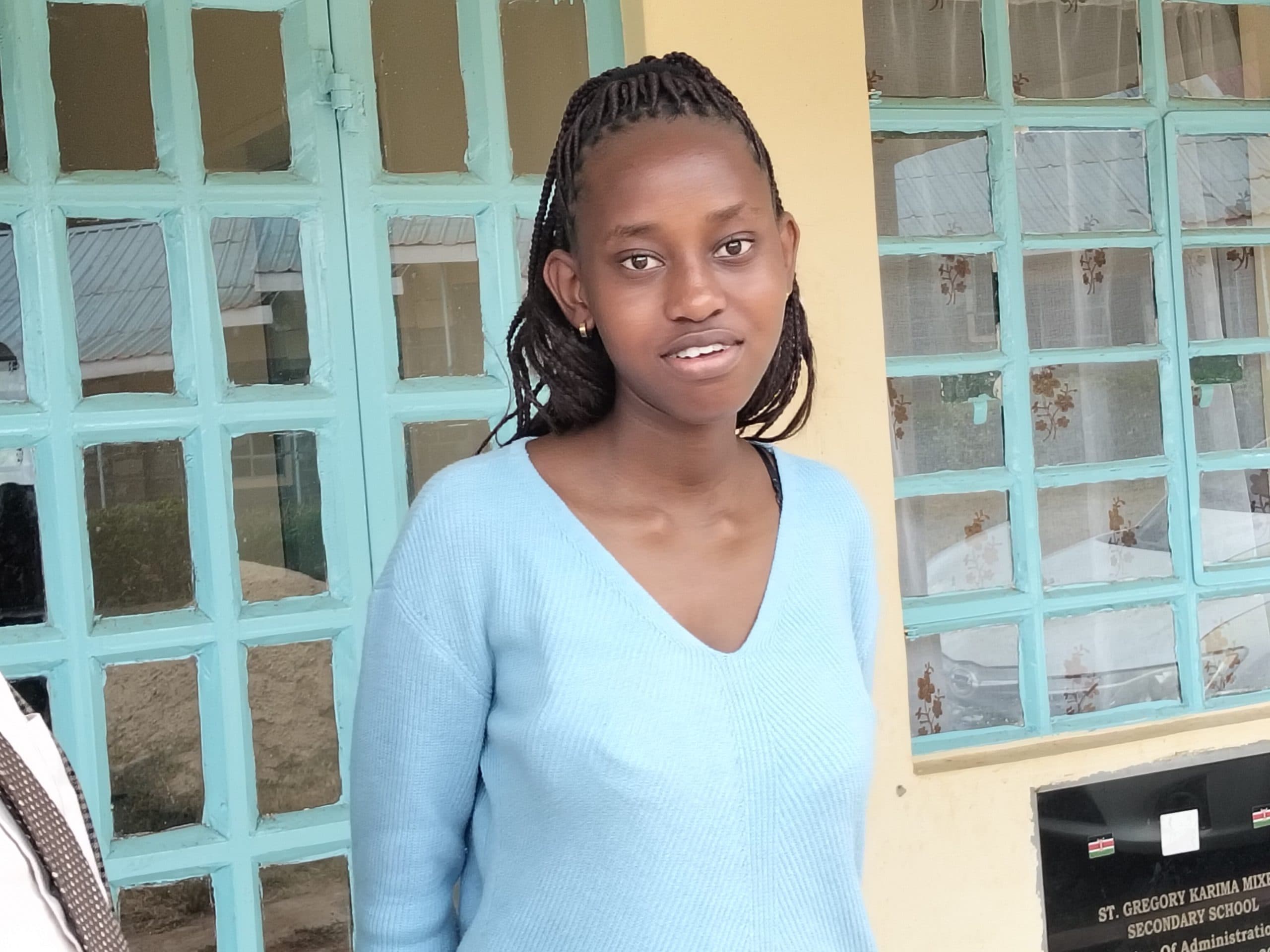
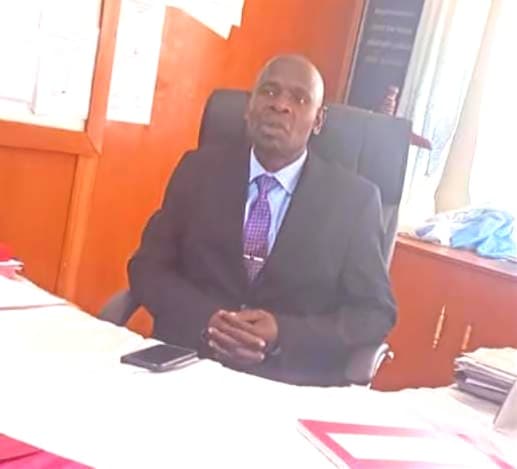
St. Gregory Karima Mixed Day Secondary School Principal Eliud Ngotho with Hanifa Fareed at the school/Photo/Amos Kiarie
“When my father was accused and faced imprisonment back in South Sudan, we were forced to flee the country and seek refuge in Kenya. We lived at the Kakuma Refugee Camp from 2021 to 2023, and during that entire period I only managed to attend school for one term. By then I was in Form Two, while my sister was in Form Four,” she said.
“Education was the only thing I believed could not be taken away from me, even when everything else was,” Hanifa added.
A lifeline came in 2023 when the family relocated from Kakuma to Gitugi in Nyeri County with the support of Joshua Kariuki, a close friend of her father. The move allowed Hanifa and her siblings to re-enter the education system after years of instability.
ALSO READ:
https://educationnews.co.ke/on-the-ground-ps-bitok-hits-back-at-ichungwahs-incompetence-claims/
“Joshua Kariuki, who was a friend of my father, reached out and told him there was a good place where we could live in Gitugi, Othaya. He made the necessary arrangements, helped us rent a house, and later, with his support and that of the director of education, we were allowed to resume schooling. That is how I joined St Gregory Karima Mixed Day Secondary School in 2023, where my sister and I were both enrolled in Form Two and studied in the same class, after we did a qualifying test since we had not done KCPE,” she said.
Despite the long gaps in her schooling and the challenge of adjusting to a new learning environment, Hanifa pressed on. With sponsorship from Windle Trust International Kenya, which covered her high school fees, she completed her secondary education and sat her KCSE examinations in 2025
“Windle Trust gave me a chance when my future was uncertain. Without that support, I would not have completed high school, and although they don’t fund college, that opportunity changed my life—it gave me confidence, opened doors I never thought possible, and laid the foundation for pursuing further education on my own,” she said.
Her academic journey, however, unfolded against deep personal challenges. When she joined Karima Mixed, she was battling arthritis and musculoskeletal pain, conditions that made it difficult for her to keep up with schoolwork and at times prevented her from walking long distances or sitting through classes without medication.
The hardships were compounded in December 2024, when her father fell critically ill and was admitted to hospital; the family never got the chance to speak to him again before he passed away. The loss left Hanifa emotionally and mentally shaken at a crucial stage in her education, testing her resilience even as she continued to pursue her studies.
“I faced challenges I had never known before. I didn’t speak Swahili, so I couldn’t communicate with my classmates. With my illness and the cold mornings in Othaya, I used to sit in class and cry, but when the sun came out, I felt a little better. My dad was my role model and the one who always motivated us. After he died, I felt like giving up,” she said.
ALSO READ:
https://educationnews.co.ke/state-to-merge-js-schools-to-address-teacher-shortage-in-senior-schools/
She traces her desire to study medicine and technology to the harsh realities she witnessed while living in the refugee camp. Experiencing illness firsthand, coupled with the lack of proper medical care, left a lasting impression on her. She often saw family members and neighbors struggle with preventable conditions, and the limited access to doctors, medicine, and medical equipment made recovery slow and uncertain. These experiences fueled her determination to pursue a career where she could combine medical knowledge with technological innovation, hoping to improve healthcare access and outcomes for communities facing similar challenges
“I was sick when we were in the camp, and medical care was very limited. At one point, I felt close to death, and that is why I want to study medicine—to help people in refugee camps and in areas affected by conflict. My best subjects were English, Business, and Chemistry, which I hope will give me a strong foundation for my future studies,” she said.
Attaining a B plain of 61 points from St. Gregory Karima Mixed Day Secondary School in Othaya, Nyeri, Hanifa Fareed now faces a new obstacle: accessing university education. She hopes to pursue higher studies through scholarships, as her family cannot afford tuition or related costs. Her mother, the sole caregiver, must provide for multiple school-going children, making university education financially impossible without external support.
“University will be a big burden for my family. My mother is struggling to take care of all of us,” she says.
Documentation challenges further complicate her situation. As a refugee family, they lack some of the papers required to access scholarships and opportunities, a barrier that continues to shut many displaced students out of higher education.
“Despite everything I have gone through, I still believe education is power. It gives girls the ability to lead, to stand up for themselves, and to speak for others who have no voice. I want to advocate for rights, especially for girls, and follow in my father’s footsteps to become a human rights advocate. I hope to pursue higher education at the University of Toronto or the University of Nairobi to gain the skills and knowledge I need to make a difference,” she said.
Eliud Ngotho, the school principal, described Hanifa as disciplined, hardworking, and determined to excel.
ALSO READ:
https://educationnews.co.ke/learning-resumes-at-magena-high-school-after-strange-dorm-fire-in-kisii/
“Hanifa has shown exceptional focus despite the obstacles she has faced. Her determination has inspired both her peers and the staff,” he said.
“Hanifa achieved a B plain, scoring 61 points in the Kenya Certificate of Secondary Education (KCSE), earning recognition as one of the school’s high achievers,” she said.
The principal added that the school’s overall performance has also improved significantly. The 2025 KCSE mean grade rose to 3.348, up from 2.657 in 2024, signaling steady progress.
Principal Ngotho attributes the improvement to committed teaching staff, student resilience, and support from programs such as Elimu Bora, which help retain students and improve learning outcomes.
“Our school has been receiving valuable support from the area MP, particularly in paying school fees for learners and in the construction of a modern administration block, this assistance has gone a long way in easing some of the challenges we face and creating a better learning environment for our students,” he said.
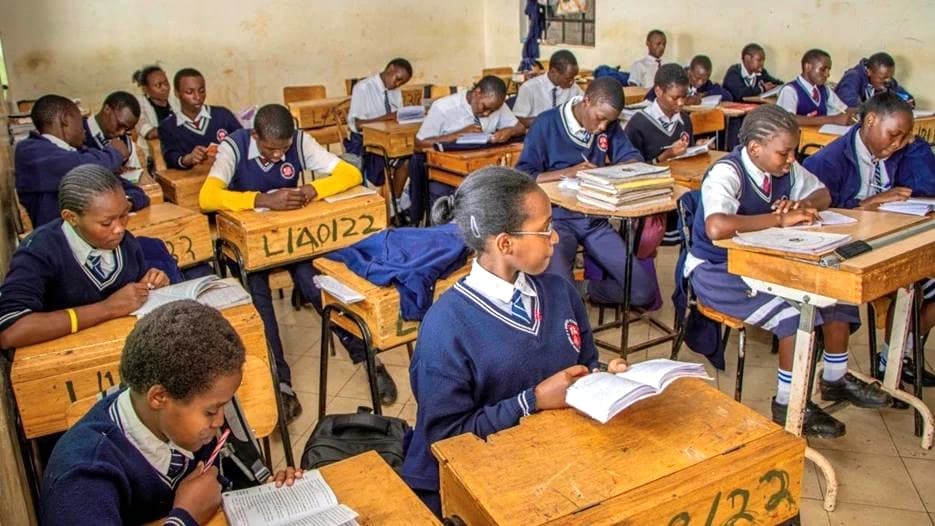
Despite these gains, the school continues to face significant challenges. Ngotho cited a shortage of classrooms, limited land, and inadequate learning resources, including computers and study materials. Students also walk long distances—sometimes up to 4 km daily—to attend lessons.
“Our school has great potential, but we need more support to ensure our students can achieve their best in a safe and conducive learning environment,” said Principal Eliud Ngotho.
“We only have one laboratory, and as a single-streamed school with no empty classrooms, our students are often forced to remain in school until around 7pm to study. We are also facing a shortage of rooms for effective Grade 10 admission, having received more than 25 students out of the expected 50. Despite our small size, we managed to send two students to university after they attained the required entry points. Since our registration in 2016, we have risen to position 13 in the sub-county, performing better than some more established schools. We are determined not only to excel in examinations but also to produce well-rounded individuals,” the principal concluded.
By Amos Kiarie
You can also follow our social media pages on Twitter: Education News KE and Facebook: Education News Newspaper for timely updates.
>>> Click here to stay up-to-date with trending regional stories
>>> Click here to read more informed opinions on the country’s education landscape

Reader Discussion (0)
Sign in to comment