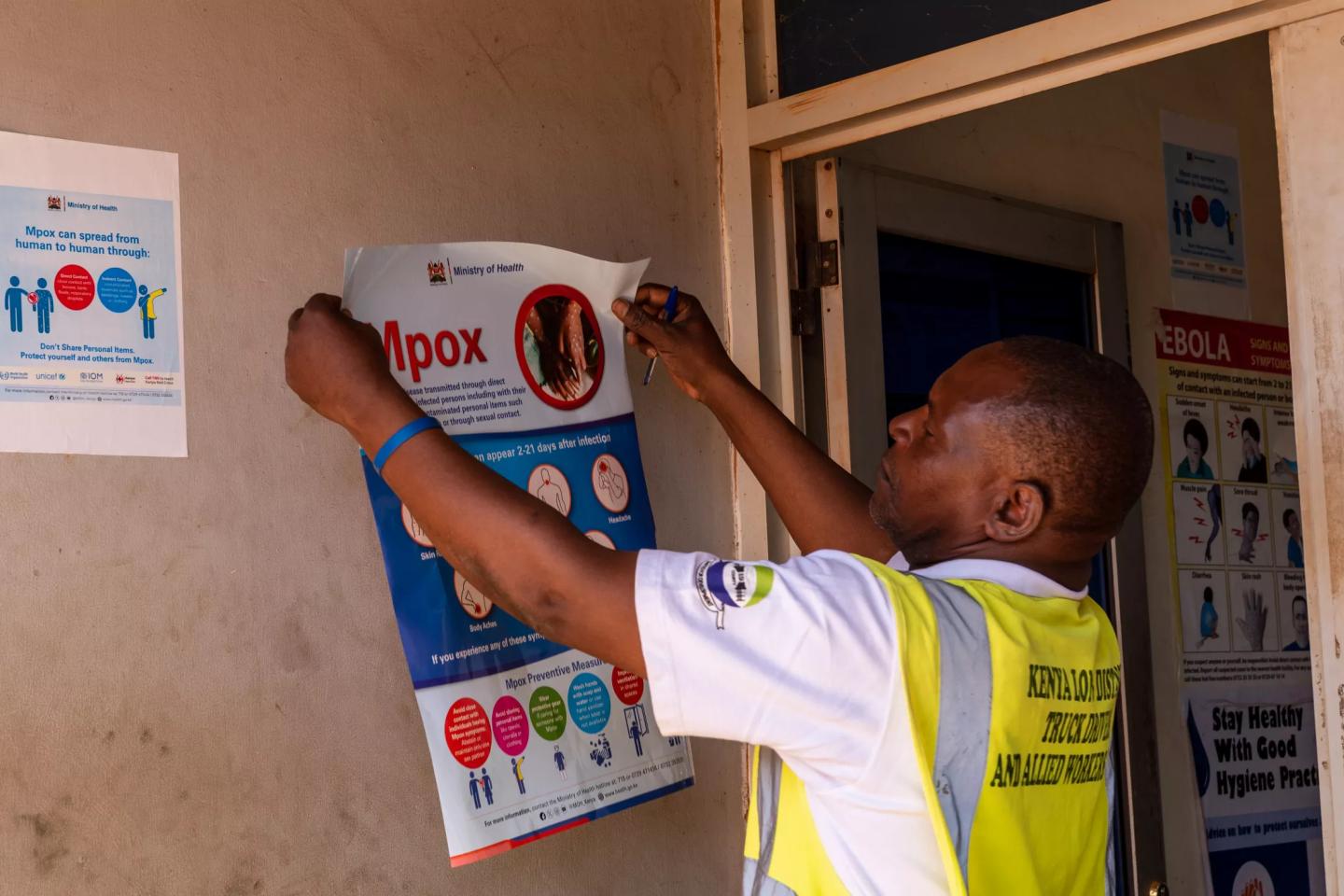
- Kenya’s growing Mpox outbreak is a warning that preparedness must replace reactive public-health responses.
- The country has recorded 1,298 confirmed cases and 19 deaths across 40 counties.
- Schools, counties and health agencies must strengthen surveillance, communication and response systems before infections spread further.
Kenya has a familiar and costly habit: waiting for a public-health crisis to become impossible to ignore before acting.
Mpox should end that habit.
With 1,298 confirmed cases, 19 reported deaths and infections detected in 40 of Kenya’s 47 counties, this is no longer an outbreak that can be dismissed as a problem confined to a few locations.
It is a national public-health warning.
The numbers matter. So does the geography. Mombasa has recorded 452 cases, Nairobi 320 and Busia 115. Seven counties — Mombasa, Nairobi, Busia, Makueni, Kiambu, Kilifi and Nakuru — have been identified as particularly vulnerable because of transport corridors and border-related movement.
This is precisely where preparedness should have started — not after transmission spreads, but before it does.
Kenya’s roads, ports, border posts, markets and public transport systems connect communities and drive the economy. They can also facilitate the movement of infections.
Yet surveillance remains too often reactive, with attention intensifying only when case numbers begin to climb.
That is poor risk management.
Outbreak preparedness must become a permanent function of government, particularly in high-risk counties and along transport corridors.
Health workers need training, laboratories need capacity and county governments need clear response plans, resources and lines of responsibility.
Schools cannot be overlooked
And there is one area Kenya cannot afford to overlook: schools.
Children spend much of their day in close-contact environments. Classrooms, dormitories, school buses, playgrounds and shared facilities can become points of transmission when an infectious disease enters a school community.
School managers therefore need practical, tested protocols — not vague instructions issued after the first case is reported.
Teachers and school staff should know how to recognise possible symptoms, isolate an unwell child safely, notify parents and health authorities, and arrange medical assessment without turning the child into a subject of fear or stigma.
Parents must receive clear information on when to keep a sick child at home and when to seek medical attention.
Most importantly, children must not be treated as the problem.
An infected child is a child who needs care, privacy and protection.
Schools should manage health risks without creating stigma, discrimination or unnecessary panic.
That requires preparation before cases appear.
Communication is equally important.
Mpox thrives in an environment of ignorance, misinformation and fear.
Government cannot communicate only through press conferences when cases rise.
Public-health information must reach people where they live and work — through community health workers, local radio, schools, public transport networks, religious and community leaders, and digital platforms.
People need simple answers: What are the symptoms? How does it spread? What should I do if I suspect infection? Where can I get help?
The government has already called for stronger surveillance, vaccination, public awareness and hygiene measures, but those messages need to reach communities consistently.
Preparedness must go beyond vaccines
The approaching rainy season makes complacency even more dangerous.
Flooding and disruption can trigger additional disease risks while placing pressure on health facilities already operating under strain.
Kenya has experienced these cycles repeatedly.
There is little excuse for treating predictable threats as surprises.
The same principle applies to vaccines.
Kenya should pursue timely access to available Mpox vaccines and ensure that doses reach communities according to epidemiological risk.
But vaccines will not rescue a weak health system.
Kenya needs functioning laboratories, reliable surveillance, adequately staffed facilities, trained health workers and strong coordination between national and county governments.
It also needs to confront weaknesses affecting the Social Health Authority.
Technical problems, claims-processing difficulties and delayed or disputed reimbursements are not harmless bureaucratic inconveniences.
Parliamentary oversight has previously identified delayed and partial SHA reimbursements and claims-processing problems affecting facilities, while the Ministry of Health has itself acknowledged technical challenges within the system.
Such weaknesses can undermine the health system’s ability to absorb a crisis.
There must also be accountability.
The government should publish regular, credible outbreak data and explain how it is directing resources.
Parliament and county assemblies should scrutinise preparedness plans and expenditure before an emergency, not launch inquiries after lives have been lost.
The real test of leadership is not how dramatically government responds when a crisis explodes.
It is how quietly and effectively it prepares before one does.
Kenya cannot prevent every infectious disease.
It can prevent many outbreaks from becoming disasters.
That requires abandoning the politics of reaction.
Mpox is not simply another health story.
It is a warning about what happens when prevention is postponed.
Kenya has the expertise.
It has the institutions.
It has the experience.
What it cannot afford is a lack of urgency before the crisis.
READ ALSO: Two dormitories destroyed by fire at Takaba Girls in Mandera
And that is a wake-up call for the leadership we can no longer ignore.
By Yabesh Onwonga
Get more stories from our website: Education News
To write to us or offer feedback, you can reach us at: editor@educationnews.co.ke
You can also follow our social media pages on Twitter: Education News KE and Facebook: Education News Newspaper for timely updates.
>> Click here to stay up-to-date with trending regional stories