- The latest dormitory fire should trigger scrutiny of both learner accountability and school management systems.
- Hillary Muhalya argues that discipline and student welfare must be addressed together, rather than treated separately.
- Kenya needs stronger mechanisms for identifying grievances before frustration escalates into destructive school unrest.
Another school has been forced to close after a dormitory went up in flames. Another group of learners has been sent home. Another investigation has begun. And once again, Kenya is likely to have the familiar debate about indiscipline, punishment, counselling and school safety.
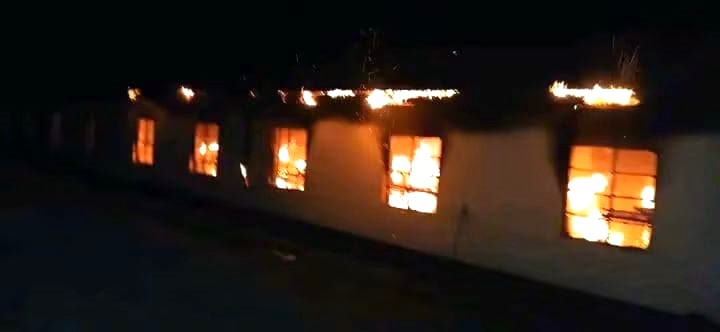
At Taita Secondary School, an alleged student rampage reportedly resulted in the burning of a dormitory and destruction of school property, forcing the institution to close indefinitely as authorities moved in to restore order and establish what happened.
The immediate response is understandable. A school cannot remain open when learners, teachers and property may be at risk. Those responsible for deliberately setting fire to a dormitory or destroying school property must face appropriate consequences once investigations establish individual responsibility.
But Kenya should not make the mistake of treating the Taita incident as simply another case of badly behaved students.
The burning dormitory is the visible damage. The bigger story is the tension that may have existed before the fire.
What made learners reach the point where destruction became an option? Were there unresolved grievances? Were complaints raised and ignored? Did communication between students and administrators break down? Were there warning signs that were missed? Or was the incident simply a calculated act of indiscipline?
These questions matter because a fire is often the final manifestation of a problem that may have been developing long before the flames appeared.
Kenya has experienced repeated episodes of student unrest, school fires and destruction of institutional property. Each time, the national conversation tends to begin after the damage has occurred. The school is closed, investigations are launched, parents are called, learners are sent home and disciplinary action is considered.
Then the attention fades.
Until the next school burns.
That cycle must end.
The problem is particularly relevant in Taita Taveta County. In June, administrators said at least 13 secondary schools in the county had experienced fires or attempted arson attacks during the second term, prompting renewed concern over school unrest and safety.
Accountability and welfare must coexist
The country needs to distinguish between two issues that are sometimes dangerously mixed together: student accountability and student welfare.
Taking learner welfare seriously does not mean excusing indiscipline. Equally, enforcing discipline does not mean ignoring legitimate grievances.
A learner can be wrong to destroy property and still have had a genuine grievance before choosing the wrong response. Both facts can exist at the same time.
This is why the Taita incident demands a deeper examination.
If investigations establish that students deliberately destroyed school property, the law and school regulations should take their course. But authorities should also investigate the circumstances that preceded the unrest.
Who knew there was tension? Who was expected to intervene? What mechanisms existed for learners to raise concerns? Were those mechanisms trusted? And why did they fail to prevent the situation from escalating?
These are not soft questions. They are questions of school management and institutional safety.
A well-run school should not wait until a dormitory is burning to discover that learners are angry.
Headteachers, principals, teachers, boarding staff and school boards need systems capable of detecting tension early. Guidance and counselling should not be activated only after a strike, fire or violent confrontation. Student leadership structures should provide legitimate channels for communication, while school administrators should be able to listen without surrendering their authority.
Listening is not weakness.
A school leader who hears a complaint early may prevent a confrontation later. Conversely, an administration that dismisses every complaint as youthful rebellion may allow frustration to accumulate until it becomes much harder to control.
Students also have responsibilities
But students also have responsibilities.
No grievance justifies arson. No disagreement with a teacher or administrator gives learners the right to endanger fellow students. No dissatisfaction with school rules permits the destruction of facilities paid for by parents, communities and taxpayers.
Dialogue must therefore operate on both sides: administrators must be prepared to listen, while learners must be prepared to follow legitimate channels for resolving disputes.
The Taita fire should consequently become more than a story about a school closure.
It should become a test of whether Kenya is prepared to address the deeper causes of student unrest rather than repeatedly treating the symptoms.
READ ALSO: Dual TVET champions honoured as Kenya advances industry-based skills training
Because rebuilding a burned dormitory is relatively straightforward.
Preventing the next fire is the real challenge.
By Hillary Muhalya
Get more stories from our website: Education News
To write to us or offer feedback, you can reach us at: editor@educationnews.co.ke
You can also follow our social media pages on Twitter: Education News KE and Facebook: Education News Newspaper for timely updates.
>> Click here to stay up-to-date with trending regional stories
A dormitory damaged during a past school fire in Kenya. Recurrent cases of student unrest and arson have renewed debate over discipline, counselling, communication and safety in learning institutions. Photo: File