- Hillary Muhalya says renewed Education Assessment Resource Centres could give families earlier access to professional assessment and educational guidance.
- He argues that functional assessment is critical to identifying learners’ needs, determining appropriate support and strengthening inclusive education.
- Muhalya says the 10 regional centres should become the foundation of a wider national assessment network reaching underserved communities.
For thousands of Kenyan families raising children with disabilities and other special educational needs, the revival of Education Assessment Resource Centres (EARCs) could mark the return of something that has been missing for years: a reliable doorway to early identification, professional assessment and the right educational placement.
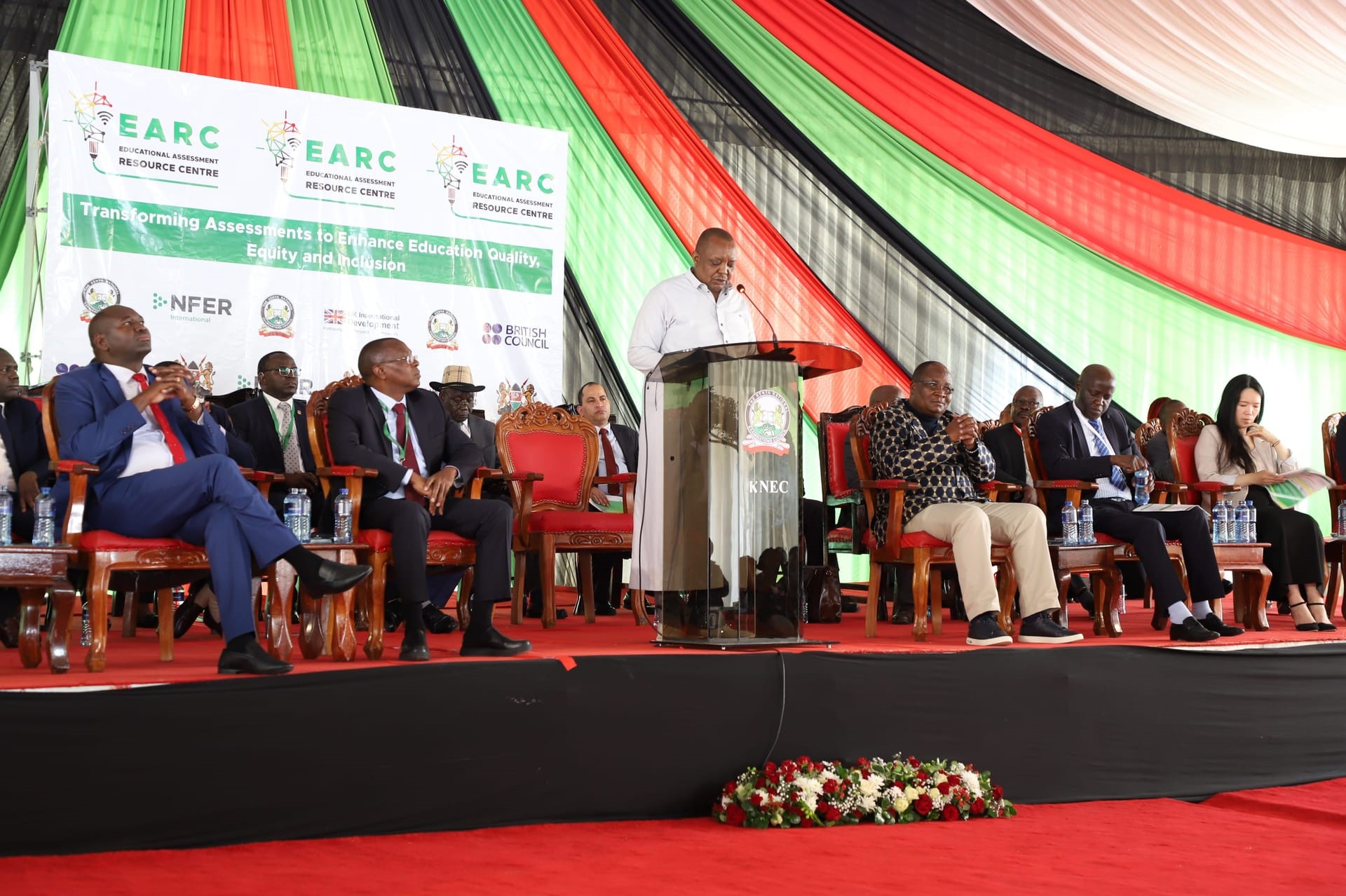
The Ministry of Education has announced plans to revive the country’s special-needs education assessment centres, beginning with 10 regional facilities.
Education Cabinet Secretary Julius Ogamba, speaking in Mombasa on September 4, 2026, said the centres had deteriorated after years of neglect, particularly from around 2019 and through the COVID-19 period. Some have been operating from schools, while others have suffered deterioration of buildings, equipment and services.
The proposed regional network is designed to restore assessment closer to families rather than forcing parents to navigate a fragmented system in search of professional help.
The 10 centres are Nairobi, Mombasa, Nakuru, Eldoret, Kakamega, Kisumu, Embu, Garissa, Nyeri and Machakos. KISE officially identifies these as EARC centres of excellence established to strengthen functional assessment.
The importance of EARCs cannot be overstated.
A child who struggles to communicate, hear, see, concentrate, move, read, write or interact socially can easily be misunderstood if there is no professional assessment.
A learning difficulty can be mistaken for laziness. A hearing problem can look like inattentiveness. A developmental condition can be interpreted as indiscipline.
A child with exceptional ability can equally be overlooked because the education system is concentrating only on what the learner cannot do.
This is where functional assessment becomes critical.
The Kenya Institute of Special Education (KISE) describes functional assessment as critical to early identification, assessment and intervention, as well as appropriate placement of learners with disabilities and special needs.
The philosophy is simple but powerful:
Don’t punish what you have failed to understand. Assess it.
And don’t place a child according to assumption. Place the learner according to evidence.
From assessment to the right classroom
EARCs have historically provided an important link between assessment and educational placement.
Professional teams can help determine the nature of a learner’s needs and recommend appropriate intervention and placement — whether in a mainstream school with support, an integrated programme or a specialised institution.
That makes the centres more than buildings containing assessment equipment.
They are potential decision-making hubs for inclusive education.
A well-functioning EARC can become the place where a parent’s uncertainty is converted into professional guidance.
It can answer questions such as:
What exactly is affecting this learner?
What support does the child require?
Can the learner thrive in a mainstream classroom?
Does the child require assistive technology?
Would specialised intervention be necessary?
What should teachers and parents do next?
Without such assessment, families can spend years moving from one institution to another without a clear explanation or intervention strategy.
Kenya’s commitment to inclusive education will remain incomplete if assessment infrastructure remains weak.
You cannot meaningfully personalise education when you do not know the learner’s needs.
You cannot effectively allocate specialised teachers and assistive devices without reliable identification of learners who require them.
And you cannot expect teachers to address complex learning needs without professional assessment and guidance.
The revival of EARCs therefore needs to be understood as part of a much larger education reform — not simply as a rehabilitation programme for old buildings.
It should be about rebuilding the assessment architecture of Kenyan education.
Ten centres are a beginning, not the destination
The 10 regional centres are an important starting point, but Kenya ultimately needs an assessment system capable of reaching communities much closer to where families live.
The country’s geographical reality makes this essential.
A parent in a remote part of West Pokot, Turkana, Marsabit or Tana River should not have to travel hundreds of kilometres to obtain an assessment that could fundamentally change the educational trajectory of a child.
The national network should therefore eventually connect regional EARCs with county and sub-county services.
Technology can also make the system more effective.
Digital records could allow assessment histories to follow learners as they transition between schools. Professional consultation could extend specialist expertise to underserved areas.
But technology should complement — not replace — professional human assessment.
The EARC revival should not be presented as a parents’ programme alone.
Teachers are among its biggest potential beneficiaries.
A teacher may spend months trying different classroom strategies for a learner whose underlying needs have never been professionally established.
With an effective assessment system, the teacher can receive practical guidance on how to support the learner.
That could transform classroom practice.
Instead of asking, “Why is this child not behaving like the others?”, the conversation becomes:
“What does this learner need in order to succeed?”
That is the mindset required by modern inclusive education.
Early intervention can change an entire life
The greatest promise of revived EARCs is early intervention.
The earlier a disability, developmental difficulty or learning need is identified, the earlier appropriate support can begin.
KISE specifically identifies early identification, intervention and appropriate placement as central purposes of functional assessment.
This matters because childhood is not a waiting room.
A learner who spends five years without appropriate support may lose crucial opportunities for language development, literacy, socialisation, independence and confidence.
Assessment is therefore not merely a bureaucratic exercise.
It can be the difference between a child being misunderstood and being understood.
Don’t forget gifted and talented learners
There is another dimension that Kenya should consider as EARCs are revived.
Assessment should not focus exclusively on disability.
A modern assessment system should also help identify exceptional abilities, gifts and talents.
The education system should be capable of answering both questions:
What barriers are preventing this learner from succeeding?
And:
What exceptional strengths could this learner develop?
Kenya cannot afford an assessment architecture that identifies only deficits.
The country also needs an education system capable of identifying potential.
A gifted child who is bored, disengaged or repeatedly placed in environments that do not challenge them can equally become an educational casualty.
Reopening centres is the easy part.
Making them functional is the real test.
The government must ensure that the revived centres have adequate specialist personnel, modern assessment equipment, reliable financing, accessible facilities and clear referral pathways.
They must not become impressive buildings with empty laboratories.
The Ministry should also establish measurable standards for turnaround time, assessment quality, follow-up, referrals and learner outcomes.
Most importantly, assessment should lead to action.
There is little value in identifying a learner’s needs if the child returns to a classroom without the necessary intervention, assistive devices, specialised teaching or teacher support.
A new national assessment culture
The revival of EARCs offers Kenya an opportunity to change how the education system thinks about learners.
Every learner is different.
Some require additional support.
Some require specialised intervention.
Some need assistive technology.
Some require alternative communication.
Some need behavioural and psychosocial support.
And others may possess extraordinary abilities that deserve deliberate cultivation.
The first step in responding to all these differences is knowing the learner.
That is what makes the EARC revival potentially transformative.
Kenya should therefore resist treating the programme as another routine government rehabilitation project.
It should be treated as a national investment in educational equity, inclusion and human potential.
The 10 regional centres can become the foundation of a modern national assessment network — one that identifies challenges early, discovers abilities early and ensures that children are placed where they have the greatest chance to thrive.
For parents who have spent years searching for answers, the reopening of EARCs could finally mean that the search is coming to an end.
For teachers, it could mean better professional support.
READ ALSO: Expelling Tata from Magadi risks diplomatic tiff, investor flight, Machakos DG warns
For learners, it could mean being understood rather than misunderstood.
And for Kenya, it could mean building an education system that stops asking children to fit the system — and begins designing the system around the child.
By Hillary Muhalya
Get more stories from our website: Education News
To write to us or offer feedback, you can reach us at: editor@educationnews.co.ke
You can also follow our social media pages on Twitter: Education News KE and Facebook: Education News Newspaper for timely updates.
>> Click here to stay up-to-date with trending regional stories