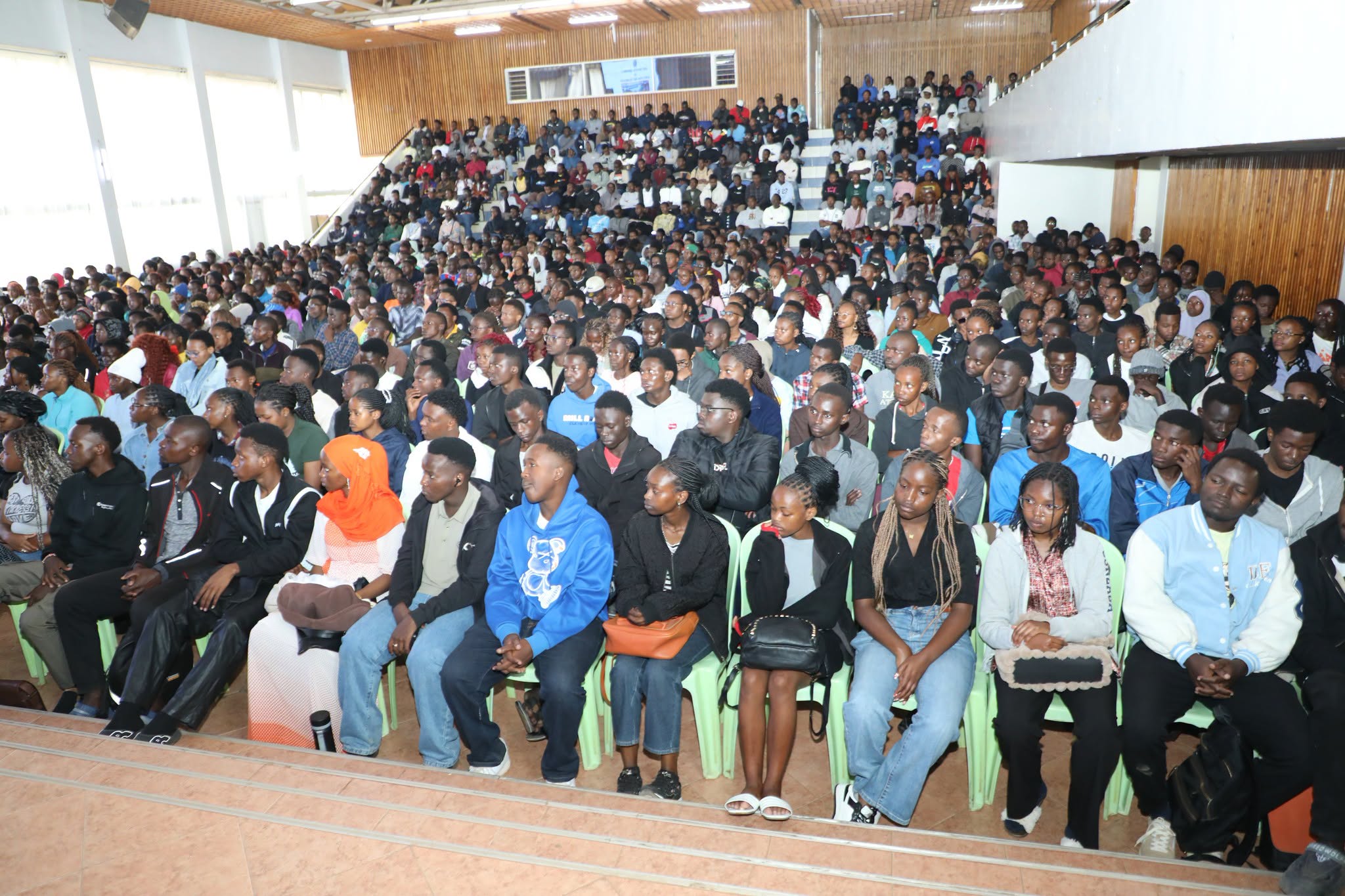
- Hillary Muhalya warns that uncertainty surrounding university funding could disproportionately hurt students from poor households.
- He argues that reforms must proceed without disrupting the education of continuing and newly admitted students.
- Clear communication and transitional support are needed to ensure vulnerable learners remain in university.
A university admission letter should be a ticket to opportunity. For thousands of Kenyan students, however, it is increasingly becoming a document that raises more questions than it answers.
They have qualified for university. They have been admitted. They are ready to begin or continue their studies. But there is one question haunting them and their parents: Who will pay?
That question has become increasingly urgent as the Government transitions to a new higher education funding framework and awaits Parliament’s consideration of the proposed Tertiary Education Placement and Funding Bill, 2026.
The legislation is still being considered by Parliament, leaving thousands of students and their families caught between an old funding arrangement and a new system whose final details are yet to be settled.
This is more than an administrative inconvenience. It is an education crisis with the potential to deepen inequality.
Students from financially secure families may survive the uncertainty. Their parents can pay accommodation, food, transport and other university expenses while waiting for Government assistance.
But what about the student from a poor household?
What happens when the parent is a casual worker, small-scale farmer, low-income trader or unemployed and cannot raise several months of university expenses at short notice?
That is where the real danger lies.
A funding system may be undergoing reform, but poverty does not wait for legislation.
Reports of financial difficulties among students at universities such as Kisii and Machakos demonstrate the human dimension of the transition. Some first-year students have reported to campus but are struggling with basic necessities, while continuing students are worried about delayed financial assistance.
For such learners, university is not simply about paying tuition.
There is rent or hostel accommodation. There is food. There are books and other learning materials. There is transport. There are communication costs. There are examination-related expenses and countless small daily necessities that collectively determine whether a student can remain in university.
A student who cannot eat properly or secure accommodation cannot concentrate effectively on lectures and examinations.
This is why the current funding uncertainty deserves urgent national attention.
Higher Education Principal Secretary Beatrice Inyangala has indicated that Government funding will resume after Parliament passes the proposed legislation. She has also urged parents to take responsibility for accommodation and upkeep costs while the Government works on the new framework.
The appeal is understandable.
But it assumes that parents have the financial capacity to fill the gap.
Many do not.
Kenya cannot design a higher education financing system around the assumption that every parent has savings available to support a university student for months.
For thousands of families, university education is affordable only because Government intervention, loans and scholarships make it possible.
If that support is delayed, the consequences can be immediate: students defer their studies, accumulate debts, miss academic activities or abandon university altogether.
And once a poor student drops out because of financial difficulties, getting back into the system is not always easy.
Reform should not interrupt education
The Government therefore needs to distinguish between reforming a funding model and interrupting education.
The two should never be allowed to become synonymous.
A funding model can be changed without putting students at risk. A new framework can be introduced while maintaining transitional arrangements that guarantee continuity for existing beneficiaries and protect newly admitted students.
That should be the immediate priority.
The Government must provide clear information on what students should expect, when funding will resume, how applications will be handled and what happens to students caught between the old and new systems.
Uncertainty is itself a financial burden.
Universities are also being placed in an unenviable position. They must collect fees, run academic programmes and maintain operations while students demand answers that institutions themselves may not yet have.
Universities should not be forced to become the shock absorbers of national policy uncertainty.
There is an urgent need for a coordinated communication strategy involving the Ministry of Education, universities, the Higher Education Loans Board and other relevant agencies.
Students should receive one clear message rather than different explanations from different institutions.
The proposed legislation also deserves careful scrutiny.
Parliament must ensure that the new framework is not only financially sustainable but also transparent, predictable and accessible to students from disadvantaged households.
Targeting assistance according to financial need can be a sensible approach. But targeting without timely disbursement can still leave vulnerable students stranded.
Equally important is the question of university emergency support.
The Government should strengthen mechanisms allowing universities to assist students facing temporary financial crises. Where an institution identifies a genuinely vulnerable learner, there should be a mechanism for providing short-term support while the student’s Government funding is processed.
Such intervention should not become a substitute for national funding. It should be a safety net.
Students must be protected during transition
Kenya’s investment in university education is ultimately an investment in its human capital.
The doctors, engineers, teachers, lawyers, scientists, entrepreneurs and other professionals who will shape the country’s future are sitting in lecture halls today.
Some are there because their parents can afford it.
Others are there because Government support gives them a chance.
The second group must not be forgotten during policy transitions.
Indeed, the success of any higher education funding model should not be measured merely by how much money the Government spends. It should also be measured by how effectively that money keeps deserving students in classrooms.
A sophisticated funding formula is meaningless if a student drops out before benefiting from it.
The Government has an opportunity to get this transition right.
First, it should communicate clearly.
Second, it should protect continuing students from disruption.
Third, it should ensure newly admitted students are not locked out because of temporary funding uncertainty.
Fourth, it should accelerate the legislative process without compromising parliamentary scrutiny.
And fifth, it should establish a reliable transitional support mechanism for the most vulnerable learners.
Parliament, the Ministry of Education and universities must remember one fundamental principle: students should never be punished for a funding system they did not design.
They have done their part. They studied, sat their examinations, earned admission and prepared to pursue higher education.
The responsibility now lies with policymakers to ensure that an administrative transition does not become an educational dead end.
Kenya needs a higher education financing model that is fair, sustainable and targeted.
But above all, it needs a model that students can trust.
Because behind every funding application is a young Kenyan with a dream.
READ ALSO: Beyond revision: Why vulnerable candidates need support, trust and kindness during examinations
And behind every delayed disbursement may be a student wondering whether that dream is still affordable.
By Hillary Muhalya
Get more stories from our website: Education News
To write to us or offer feedback, you can reach us at: editor@educationnews.co.ke
You can also follow our social media pages on Twitter: Education News KE and Facebook: Education News Newspaper for timely updates.
>>> Click here to stay up-to-date with trending regional stories