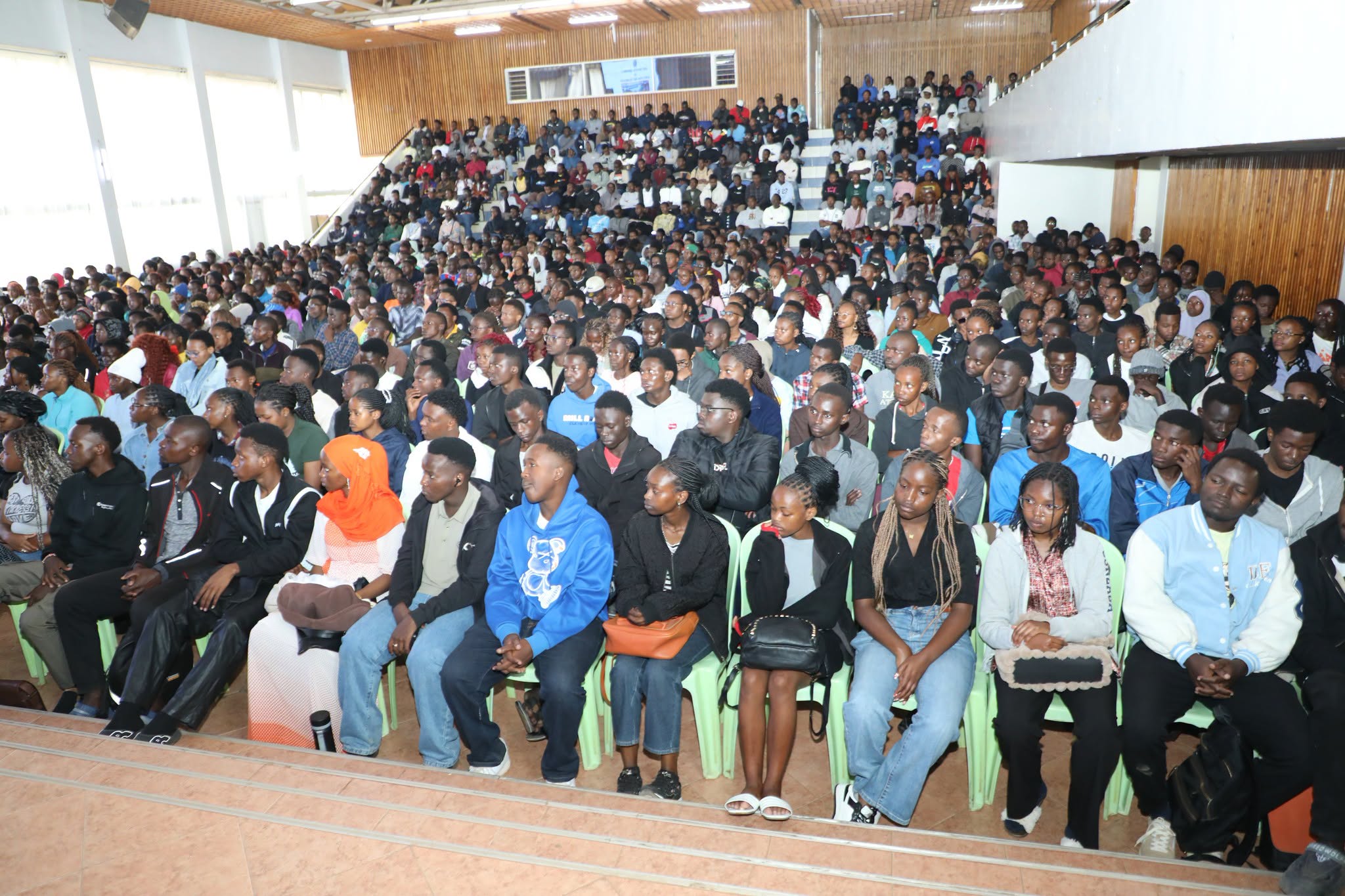
- As examination season approaches, Astiba Kebong’o urges schools to look beyond revision papers and candidates’ marks.
- She argues that vulnerable learners need academic preparation alongside emotional support, confidentiality, guidance and encouragement.
- Schools, teachers, parents and peers can help ensure difficult circumstances do not deny learners opportunities to succeed.
Little kindness can go a long way in changing a learner — and ultimately, changing society.
As the examination season approaches, schools across Kenya are sharpening their academic programmes. Revision timetables are being tightened, past papers administered, performance monitored and candidates reminded that every mark counts.
But behind every candidate number is a human being.
Some candidates enter the examination room carrying much more than books and revision notes. They carry family difficulties, financial challenges, grief, anxiety, relationship problems, peer pressure and fears about the future. Some are silently battling circumstances they may not know how to articulate.
These learners need more than academic preparation. They need assurance, support, guidance and trust.
A vulnerable candidate is not necessarily a weak candidate. Sometimes, vulnerability is simply the result of circumstances beyond a young person’s control.
Schools must recognise that academic performance is closely connected to a learner’s social and emotional well-being.
A candidate worried about a sick parent, struggling with financial hardship, experiencing bullying or dealing with unresolved grief may spend hours in a classroom without absorbing much. The challenge may not be lack of ability; it may be an overwhelmed mind.
This calls for academic support that is accompanied by humane intervention.
Every candidate should have an adult in school whom they can approach when things become difficult.
A simple question such as, “How are you doing?” can sometimes open a door that a long lecture cannot.
Trust must be protected.
One of the greatest responsibilities of a school is to create an environment in which learners can seek help without fear of humiliation or betrayal.
When a learner confides in a teacher, counsellor or another trusted adult, the information must be handled professionally and sensitively. Nothing can be more damaging than a young person sharing a deeply personal concern only to discover later that it has become the subject of gossip.
When confidentiality is carelessly handled, learners may conclude that silence is safer than seeking help.
However, confidentiality should not mean concealing situations in which a learner is at serious risk. Matters involving abuse, exploitation, self-harm or other safeguarding concerns require appropriate intervention through established child-protection and school procedures.
The guiding principle should be simple: protect the learner, preserve their dignity and involve only those who genuinely need to know.
Teachers are more than content providers
During examination preparation, teachers should not become merely distributors of revision papers.
They are also mentors, motivators and, sometimes, the first adults to notice that something has changed.
A teacher may observe a previously enthusiastic learner becoming withdrawn, a sharp decline in performance, frequent absenteeism or unusual behaviour. Such signs should prompt concern rather than immediate condemnation.
Teachers can provide structured academic support through targeted revision, remedial programmes, study groups and individual consultations.
But encouragement matters just as much.
A teacher who tells a struggling candidate, “I believe you can still make it,” may be giving that young person something more powerful than another examination paper — hope.
Candidates should also be protected from humiliating comparisons. Academic accountability is necessary, but it must never come at the expense of dignity.
Peers can become a powerful safety net.
Candidates spend considerable time with one another, and peers often notice problems before adults do.
Schools can strengthen supervised peer-support programmes in which selected learners are trained to listen, encourage and refer serious concerns to responsible adults.
Peer supporters should not be expected to investigate, diagnose or solve complex problems. Their role should be to listen responsibly, offer encouragement and seek appropriate adult assistance.
Academic peer tutoring can also be strengthened. Learners who understand particular subjects well can support colleagues who are struggling.
This creates a culture in which success is shared rather than fiercely competed for.
Parents must be partners, not prosecutors
Parents have an equally important role during examination preparation.
Candidates need a calm home environment, adequate rest, basic learning materials and emotional reassurance. Parents should avoid turning every conversation into an interrogation about marks.
Sometimes, instead of asking, “How many marks did you get?”, the better question is:
“What can I do to help you?”
Parents and schools should work together to identify learners who need additional support. Where a learner has shared a sensitive concern, adults should exercise discretion and ensure that the child’s dignity remains protected.
Kenya already has inspiring models of educational support.
The good news is that Kenya has several initiatives demonstrating what can happen when educational support goes beyond school fees.
The Ministry of Education’s Elimu Scholarship Programme provides comprehensive support to needy and vulnerable learners, including school fees and other school-related requirements. The programme has been implemented through partners including Equity Group Foundation and the Jomo Kenyatta Foundation (JKF).
The approach is important because financial assistance alone may not be enough. Learners also need mentorship and psychosocial support to navigate the challenges of adolescence and schooling.
JKF’s scholarship programme similarly combines educational assistance with mentorship and life-skills support. Its mentorship clinics address issues including educational and personal goals, relationships, careers, substance abuse and youth leadership.
Equity Group Foundation’s Wings to Fly and Elimu programmes have also supported thousands of learners through comprehensive scholarships and mentorship, demonstrating the transformative effect of sustained educational support.
KCB Foundation provides another useful example. Its Scholars Programme offers support that includes secondary-school scholarships, learning materials, mentorship and psychosocial support. Its 2026 programme targets 1,000 beneficiaries annually.
These programmes remind us of an important lesson: a learner does not simply need a place in a classroom. A learner needs an environment that makes it possible to remain, learn, thrive and transition successfully.
Can schools create their own support systems?
Not every school has the financial resources of a major foundation, but every school can establish a structured candidate-support programme.
A school could create a Candidate Care and Academic Support Team comprising the administration, guidance and counselling personnel, class teachers, selected subject teachers and carefully supervised student mentors.
The team could identify vulnerable learners, monitor academic progress, coordinate interventions and ensure that no candidate silently falls through the cracks.
Schools could also work with parents, alumni, community organisations and well-wishers to create modest assistance mechanisms for genuine cases involving essential learning materials or other urgent educational needs, subject to proper procedures.
Most importantly, learners receiving assistance should not be stigmatised.
Receiving support should never make a learner feel inferior.
Preparing candidates beyond the syllabus
As examinations draw closer, schools should also pay attention to issues that are sometimes overlooked.
Candidates need adequate sleep, nutritious meals, reasonable study schedules, physical activity and moments of relaxation. Excessive revision can become counterproductive when learners are physically and mentally exhausted.
They also need examination skills.
Teachers should guide candidates on time management, interpreting questions, tackling difficult papers, managing anxiety and recovering emotionally after a disappointing examination.
One poor paper should never be allowed to convince a candidate that the entire examination has been lost.
The message should be:
Prepare well. Do your best. Remain hopeful. Take one paper at a time.
A culture of kindness
Ultimately, supporting vulnerable candidates is not merely an examination strategy. It is a reflection of the society we want to build.
A teacher who listens may prevent a crisis.
A classmate who notices a struggling friend may restore hope.
A parent who chooses encouragement over pressure may change a child’s attitude towards education.
A school that protects confidentiality may restore trust.
A foundation that supports a needy learner may open a door that poverty had closed.
And a community that invests in its children is investing in its own future.
The success of scholarship programmes across Kenya demonstrates that circumstances do not have to determine destiny. Learners who once required assistance can eventually become professionals, mentors, employers and contributors to their communities.
This is why schools should measure examination preparation not only by the number of revision papers completed, but also by the number of learners who feel seen, supported, safe and confident enough to give their best.
As we prepare our candidates for examinations, let us therefore look beyond the marks.
Let us ask: Did we give every learner a fair opportunity to succeed? Did we protect their dignity? Did we listen when they needed someone? Did we create an environment where they could seek help without fear?
An examination certificate may open a door, but the confidence, resilience, character and values developed along the way can determine what happens after that door opens.
READ ALSO: Kenya’s Ambassador to Belgium backs Vision 2060, urges teachers to embrace affordable housing
Little kindness goes a long way. Sometimes, it does not merely improve a learner’s examination result — it changes the trajectory of an entire life.
By Astiba Kebong’o
Get more stories from our website: Education News
To write to us or offer feedback, you can reach us at: editor@educationnews.co.ke
You can also follow our social media pages on Twitter: Education News KE and Facebook: Education News Newspaper for timely updates.
>>> Click here to stay up-to-date with trending regional stories