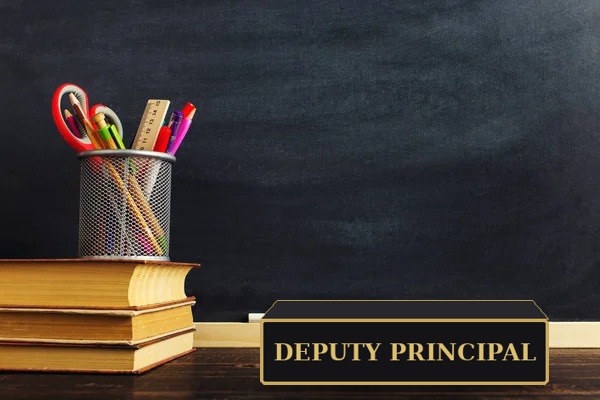
- Deputy Principals should be assigned distinct, well-defined portfolios rather than functioning as general assistants to the Principal.
- Authority should follow responsibility, with each Deputy Principal given clear decision-making powers, defined boundaries and measurable accountability within their portfolio.
- Portfolio-based leadership should free the Principal from being a bottleneck for every decision, allowing them to focus on strategic direction while Deputy Principals lead implementation within their areas.
For too long, the Deputy Principal in many schools has occupied an uncomfortable position: senior enough to carry authority, but not always empowered enough to exercise it. The title suggests leadership; the daily reality can sometimes resemble assistance. A Deputy Principal may preside over assembly, supervise students, receive visitors, represent the Principal at functions, handle routine correspondence and step in when the Principal is away, yet when it comes to the substantive management of the institution, the office may have no clearly defined portfolio, no independent area of accountability and limited authority to make decisions. This creates what can best be described as ceremonial leadership.
The problem is not necessarily that Deputy Principals lack ability. The deeper problem is that school leadership structures have not always evolved to match the growing complexity of educational institutions. A modern school has teachers, learners, support staff, parents, facilities, finances, technology, curriculum demands, welfare concerns, co-curricular programmes, safeguarding responsibilities and increasingly complex accountability requirements, and one Principal cannot effectively supervise every aspect. The answer is not simply to appoint more deputies. It is to give every Deputy Principal a substantive portfolio and the authority necessary to lead it. A Deputy Principal should not be known merely by rank; the office should be defined by responsibility.
One of the weakest descriptions of senior school leadership is the instruction that a Deputy Principal should simply “assist the Principal in the administration of the school.” Assist with what? Administration, academics, discipline, procurement, student welfare, sports, staff management, examinations, transport, everywhere? When the answer is “everything,” accountability becomes almost impossible. If a problem belongs to everybody, it often ends up belonging to nobody. This is how senior leaders become ceremonial: they are given responsibilities that are broad but authority that is narrow. A Deputy Principal can be asked to ensure a programme succeeds but have no control over the people implementing it, identify an operational problem but have no defined mandate to resolve it, and attend management meetings and record decisions but have no portfolio through which to systematically follow them up. That is not distributed leadership. It is distributed presence without distributed authority.
ALSO READ:
Keep politics out of school tendering processes; let institutional governance structures work
A fundamental change is therefore necessary. Instead of treating Deputy Principals as general assistants, heads of institutions should designate them to specific areas of responsibility. A school with a sufficiently large leadership establishment could organise its senior management around four broad portfolios: Deputy Principal – Administration and Operations, Deputy Principal – Academics and Quality Assurance, Deputy Principal – Special Programmes and Talent Development, and Deputy Principal – Student Affairs, Welfare and Inclusion. The exact number of Deputy Principals will naturally depend on the size, structure, staffing establishment and applicable regulations of each institution, but what matters is the principle of portfolio-based leadership.
The Deputy Principal for Administration and Operations should be responsible for the machinery that keeps the institution functioning, including staff administration, attendance and punctuality, duty allocation, school routines, logistics, facilities, maintenance, security, stores, transport, records and coordination of operational requirements. Procurement coordination could also fall within this portfolio, particularly in identifying needs, coordinating departmental requisitions and following up approved purchases, though this does not automatically make the Deputy Principal the institution’s procurement officer or give them unrestricted financial authority. Established procurement, financial and approval controls must remain intact, with the administrator’s role limited to ensuring legitimate institutional needs are identified, processed through correct channels and followed up. The key question becomes whether the school is functioning efficiently daily.
The Deputy Principal for Academics and Quality Assurance should own the teaching and learning agenda, including curriculum implementation, instructional supervision, assessment, examinations, curriculum coverage, departmental coordination, academic interventions and learner progress. This role should move academic management beyond the traditional practice of waiting for examination results, with a strong academic leader expected to know whether lessons are being delivered effectively, whether curriculum coverage is on track, whether assessment is being used to improve learning, and where learners require intervention. The key question here is whether learners are receiving effective teaching and making meaningful progress.
A school is more than classrooms, examinations and timetables. Learners have talents that may never appear on an examination paper, and the Deputy Principal for Special Programmes and Talent Development should coordinate sports, clubs and societies, music, drama, debate, public speaking, innovation, competitions, leadership programmes, educational trips and other enrichment activities. The purpose should not be merely to fill the school calendar, but to identify and develop learner potential, since a child who struggles in one area may excel in another. The key question should be what the school is doing to develop the talents and wider capabilities of its learners.
The fourth portfolio should focus on the learner’s broader welfare and participation in school life. The Deputy Principal for Student Affairs, Welfare and Inclusion could coordinate learner welfare, safeguarding, inclusion, attendance and retention, student leadership, student voice, orientation, mentorship and appropriate learner-support systems, working closely with teachers, parents, counsellors and relevant professionals. Student welfare should not be reduced to punishment and discipline; a learner struggling with attendance, adjustment, safety, social integration or other challenges may need support before the problem becomes a disciplinary or academic crisis. The key question should be whether learners are safe, supported, included and able to participate meaningfully in school life.
The four Deputy Principals should not become four competing centres of power. Their portfolios should be distinct but interconnected, since a sports event may be led by Special Programmes but require Administration for logistics, a learner welfare concern may require Student Affairs to lead while teachers, Administration and Academics provide support, and an educational trip may involve all four portfolios working together. The answer is therefore not to give everyone the same responsibility, but to identify who leads and who supports, the difference between shared responsibility and blurred responsibility.
Perhaps the biggest reason Deputy Principals become ceremonial is that responsibility is often delegated without corresponding authority. A leader cannot reasonably be held accountable for outcomes over which they have no meaningful influence. Every portfolio should therefore come with clearly established boundaries, so each Deputy Principal knows what they are responsible for, what they can decide, what they can approve, what must be referred to the Principal, who reports to them, what resources they can coordinate, and what results they are expected to deliver. Simply telling someone to “take charge” without defining their authority is not delegation; it is ambiguity.
A strong Principal should not become the bottleneck through which every decision must pass. When every issue must reach the Principal before action can begin, the institution becomes slow and overly centralised. Portfolio-based leadership allows appropriately delegated decisions to be made closer to where problems occur, freeing the Principal to concentrate on strategic leadership, institutional direction, policy implementation, stakeholder engagement, quality assurance, resource mobilisation and long-term development. The Principal becomes the leader of leaders.
ALSO READ: Homa Bay KNUT fundraiser raises Sh4m as union backs dialogue with government
Each Deputy Principal should be able to present a clear report on their portfolio, not merely “everything is fine,” but what happened, what was achieved, what problems emerged, what action was taken, what remains unresolved, and what support is required. This makes leadership visible and performance assessment fairer: the Deputy Principal for Administration can be assessed against operational efficiency, school routines, staff administration, facilities and logistics; the Deputy Principal for Academics against curriculum implementation, instructional supervision, assessment and academic interventions; the Deputy Principal for Special Programmes against participation, talent development, sports, clubs, innovation and enrichment; and the Deputy Principal for Student Affairs against learner-support systems, attendance, inclusion, safeguarding and student participation. The indicators should be adapted to each institution rather than reduced to simplistic numerical targets.
Many schools do not suffer from a shortage of meetings. They suffer from a shortage of follow-through. A management meeting can make dozens of decisions, but unless somebody follows up, those decisions remain words on paper. Deputy Principals should therefore become implementation monitors within their portfolios, asking whether a decision was implemented, who was responsible, what is outstanding, why it has not been completed, and what intervention is needed. This is how school management moves from talking about performance to managing performance.
Effective portfolio management also requires documentation. Administration needs operational and staff records, Academics needs curriculum, assessment and instructional records, Special Programmes needs activity, participation and programme records, and Student Affairs needs appropriate learner-welfare documentation, subject to confidentiality and safeguarding requirements. Records are the institutional memory of a school, reducing dependence on personal recollection and making continuity possible when leaders change.
There is an important caution here: creating several Deputy Principal portfolios should not produce unnecessary bureaucracy or competing power centres. The objective is not to create more bosses, but to create clear ownership of important functions. Each Deputy Principal should lead within an agreed mandate while remaining accountable to the Principal, with regular leadership meetings bringing the portfolios together so that cross-cutting issues are coordinated, while the Principal maintains the overall institutional vision.
The real test of a Deputy Principal is not how often they represent the Principal at a function. It is whether their portfolio works, whether they can identify problems before they become crises, coordinate people, follow up decisions, produce useful reports, make appropriate decisions within delegated authority, improve systems and demonstrate results. If the answer is yes, the Deputy Principal is no longer ceremonial; they have become a genuine institutional leader. This approach also creates a stronger succession pipeline, since Deputy Principals given substantive portfolios develop experience in planning, supervision, resource management, decision-making, problem-solving and strategic leadership, becoming better prepared for future headship because they have actually led something substantial.
ALSO READ: HELB outlines digital channels for students to track loan applications
The future of school leadership cannot be built around one Principal trying to personally control every aspect of the institution, nor around Deputy Principals who carry titles but lack meaningful portfolios. The stronger model is a Principal supported by a team of portfolio leaders: Administration and Operations keeping the institution functioning, Academics and Quality Assurance driving teaching and learning, Special Programmes and Talent Development expanding opportunities for learners to discover and develop their abilities, and Student Affairs, Welfare and Inclusion protecting and supporting the learner. The four portfolios reinforce one another while the Principal provides the strategic direction. This is not about reducing the authority of the Principal; it is about increasing the capacity of the entire institution.
The real question, therefore, should no longer be “How many Deputy Principals does this school have?” It should be “What is each Deputy Principal responsible for delivering?” That is the question that separates ceremonial leadership from effective leadership. A Deputy Principal should not simply occupy a chair next to the Principal. They should own a portfolio, lead a function, solve problems, develop systems and deliver results. Give Deputy Principals a mandate, appropriate authority and measurable responsibilities, then hold them accountable. That is how schools can transform Deputy Principals from ceremonial figures into genuine engines of institutional improvement.
By Hillary Muhalya
Get more stories from our website: Education News
To write to us or offer feedback, you can reach us at: editor@educationnews.co.ke
You can also follow our social media pages on Twitter: Education News KE and Facebook: Education News Newspaper for timely updates.
>>> Click here to stay up-to-date with trending regional stories