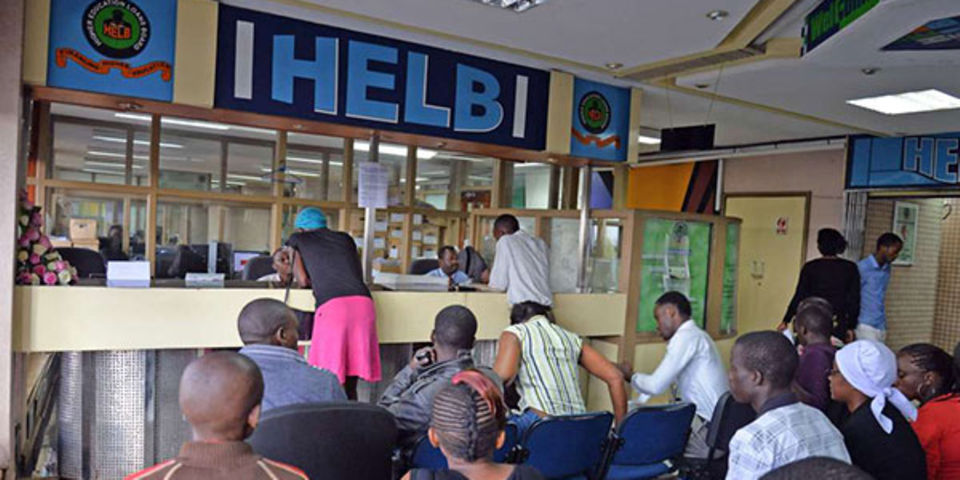
- HELB has faced scrutiny after students under the former university funding model reported delays in receiving batch numbers once they reached the standard four-year funding duration.
- HELB has advised affected students to obtain Dean’s confirmation of continued enrolment, but the commentary has proposed a formal “Final-Mile Completion Window” for students close to graduation.
- Universities and HELB have been urged to build stronger digital integration to verify academic status and provide clearer, faster communication to students awaiting funding decisions.
Kenya’s higher education financing system is confronting a difficult question: what happens when a student reaches the standard funding period but has not yet completed the academic requirements for graduation? The question has gained renewed urgency as the Higher Education Loans Board (HELB) begins processing funding for the 2026/27 academic year, with some students under the former university funding model reporting delays in receiving their expected disbursements and batch numbers.
For students who depend on government-backed financing, the absence of a batch number is not simply an administrative inconvenience. It can mean uncertainty over tuition payments, examination clearance and, ultimately, whether they will remain in university. One student recently sought clarification after waiting for more than a month without a batch number, asking whether funds were still available or whether the delay meant the expected disbursement would not be made. HELB’s response pointed to the duration of the student’s programme; according to the Board’s records, the course had a prescribed duration of four years, meaning the student had reached the period ordinarily covered by the funding arrangement. However, the Board also provided an important qualification: students who are still actively studying may confirm their university. In the case cited, HELB advised the student to obtain a letter from the Dean confirming continued studies so that the disbursement process could be initiated or considered.
That clarification opens a much bigger debate about how Kenya should finance higher education. The fundamental issue is that the prescribed duration of a programme and the actual time required by an individual student to graduate are not necessarily the same thing. A four-year degree is designed to take four years, but university education does not operate like a conveyor belt. Students fail units, repeat examinations, defer semesters, encounter financial difficulties, face disrupted academic calendars, research projects that take longer, delayed attachments, or institutional disruptions that interfere with academic progression. A student can therefore remain a legitimate, registered and academically active university student after the standard programme duration has elapsed. That is where Kenya’s financing framework needs greater flexibility without abandoning financial discipline.
ALSO READ:
TSC promotion guidelines expired on June 30: Which rules will govern the 34,016 promotions?
There is a strong argument for placing limits on public financing. HELB cannot be expected to finance individual students indefinitely; public resources are limited, and taxpayers deserve accountability for every shilling committed to higher education. A funding ceiling can therefore provide an important safeguard against abuse and unnecessary prolonged financing. But the funding ceiling should not be confused with academic completion. A student who has exhausted four years of financing is not necessarily a student who has completed four years of academic requirements. Consider two students: one has spent four years at university but has made little academic progress and repeatedly prolonged studies without a clear justification, while the other has completed nearly every requirement but needs one additional semester because of a failed unit, deferred examination, delayed research project or another documented circumstance. Treating the two students identically would be neither efficient nor necessarily fair, since the second student could be only months away from becoming a graduate. Denying that student a limited amount of additional support could leave years of previous public and family investment without the intended outcome. The policy objective should therefore be neither unlimited funding nor automatic termination, but targeted completion support.
Kenya’s higher education debate has traditionally focused heavily on access: how many students have been admitted, how many have received loans, how much money has been disbursed. These questions remain important, but another deserves equal attention: how many students actually graduate? A student who enters university but fails to complete because funding ends prematurely represents an incomplete policy outcome. The state may have invested in that student for several years, the family may have sacrificed scarce resources, and the student may have spent years preparing for a professional career, yet a relatively small funding gap at the final stage could prevent graduation. Kenya should therefore begin viewing completion as a central measure of the effectiveness of student financing. The ultimate objective of higher education financing is not simply to keep students enrolled for a specified number of years, but to enable eligible students to complete their education.
The solution does not have to be an open-ended extension of HELB loans. Kenya could establish a carefully controlled Final-Mile Completion Window for students who exceed the normal programme duration but remain genuinely active and close to graduation. Such a mechanism could operate under strict conditions: the university would confirm that the student remains enrolled, the student’s academic record would show the outstanding requirements, the institution would establish the expected completion date, the student would demonstrate academic progress, and additional funding would be restricted to a defined period. Students who repeatedly extend their programmes without academic progress would not automatically qualify. Such a system would preserve financial discipline while preventing genuine students from being stranded at the university finish line, and would give HELB a more accurate basis for determining who genuinely requires additional support.
ALSO READ: Nandi’s famous volleyball fan Jackson Ngozi Kosgey deserves national recognition
HELB cannot solve the problem alone. Universities hold much of the information required to determine whether a student remains academically active, including whether the student is registered, the units completed, the units outstanding, the expected graduation date and, in appropriate cases, the circumstances affecting progression. The requirement for students beyond the standard duration to obtain confirmation from a Dean is therefore important, but Kenya should ultimately move beyond paper-based confirmation. HELB and universities should develop stronger digital integration through which verified academic information can be securely shared, capable of distinguishing between students who have completed their studies, those who have deferred, those who have changed programmes, those repeating units and those requiring a limited completion extension. This would reduce bureaucracy while improving the accuracy of funding decisions. Most importantly, students should not have to spend weeks moving between university offices and HELB simply to prove that they are still students.
The current concerns also reveal a communication problem. For a student waiting for a batch number, silence can be devastating. A digital financing platform should provide a clear explanation of the status of every application, allowing a student to determine whether an application is approved, awaiting verification, pending university confirmation, undergoing review, held because the standard funding period has been exhausted, or requires additional documentation. That transparency would reduce anxiety and unnecessary visits to HELB offices, and would enable students to take corrective action before delays become academic crises. No student should have to guess why their funding has stopped.
Students should also receive clear information about financing limits before and during their studies. If a programme is ordinarily funded for four years, students should understand that fact from the beginning, along with what happens if their studies extend beyond the prescribed duration. The circumstances under which additional consideration may be granted should be clearly explained, the documentation required should be published in simple language, and the decision-making process should have predictable timelines. Such clarity would prevent students from reaching their fifth year only to discover that their financing position has fundamentally changed.
The issue is particularly significant because Kenya is transforming its approach to higher education financing, increasingly seeking to direct public support toward students according to financial need and other relevant factors. But whichever financing framework Kenya ultimately adopts, it must learn from the realities exposed by the old model. A financing system can be financially efficient on paper while producing poor outcomes if it fails to account for legitimate variations in academic progression. The objective should be to build a system that is targeted, transparent, accountable and responsive to genuine need, meaning funding should follow the student’s verified circumstances rather than relying exclusively on an inflexible calendar.
There is also a powerful economic argument for a completion-focused approach. Every student entering higher education represents an investment: families contribute, the government contributes, universities provide infrastructure and teaching, and students invest years of their lives. If a student fails to graduate because financing stops shortly before completion, the country risks losing part of the return on that investment. A graduate can enter the labour market, create employment, pay taxes, provide professional services and contribute to national development, while a student stranded with outstanding university requirements cannot deliver the same economic return. Completion is therefore not merely an individual benefit; it is a public-interest objective.
A completion-oriented system must not become an excuse for students to remain in university indefinitely, as that would undermine the sustainability of the financing programme. Additional funding should therefore be conditional: the student must demonstrate academic progress, the university must verify the academic status, outstanding requirements must be identifiable, the expected completion date must be realistic, and the extension should have a defined financial ceiling. This would create a sensible middle ground between two extremes, unlimited funding on one side and rigid exclusion on the other. Kenya does not need a blank cheque. It needs a smart safety net.
The current HELB controversy should trigger a broader national conversation about what success means in higher education financing. Is success simply the number of loans disbursed, the number of students admitted, or the number of eligible students who complete their programmes and graduate? The answer should be obvious: the purpose of financing higher education is ultimately to produce graduates. Policymakers should begin asking a different set of questions: how close is the student to graduation, how many academic requirements remain, why did the student exceed the standard programme duration, is the student still making reasonable academic progress, what limited amount of additional support would enable completion, and what safeguards are necessary to prevent abuse? Those questions would produce better policy decisions than a simple calculation of elapsed years.
ALSO READ: School in Narok shut for a week as water tankers fail to navigate 15km dilapidated road
HELB’s current guidance offers an important starting point. Students who have reached the standard duration but remain actively enrolled should establish their academic status with their institutions and provide the documentation required by the Board, and universities should ensure that such confirmations are issued promptly and accurately. But the country should not stop there. Kenya needs a permanent and transparent mechanism for handling legitimate cases that fall outside standard programme timelines, one that protects public resources while ensuring genuine students are not pushed out of higher education merely because their academic journey took longer than initially anticipated. The four-year rule can remain, the funding ceiling can remain, and the accountability requirements can remain, but alongside them should be a carefully regulated completion pathway for students who are demonstrably close to graduation. That would represent a more mature approach to higher education financing, because the real measure of a student financing system is not how efficiently it can stop paying after a prescribed number of years, but how effectively it can use limited public resources to produce successful graduates while maintaining accountability.
Kenya should therefore stop asking only “How many years have we funded this student?” It should also ask, “How close is this student to graduation, and what targeted support is required to get them across the finish line?” That is the policy conversation the HELB funding debate should now trigger. Stop counting years alone. Start counting completions.
By Hillary Muhalya
Get more stories from our website: Education News
To write to us or offer feedback, you can reach us at: editor@educationnews.co.ke
You can also follow our social media pages on Twitter: Education News KE and Facebook: Education News Newspaper for timely updates.
>>> Click here to stay up-to-date with trending regional stories