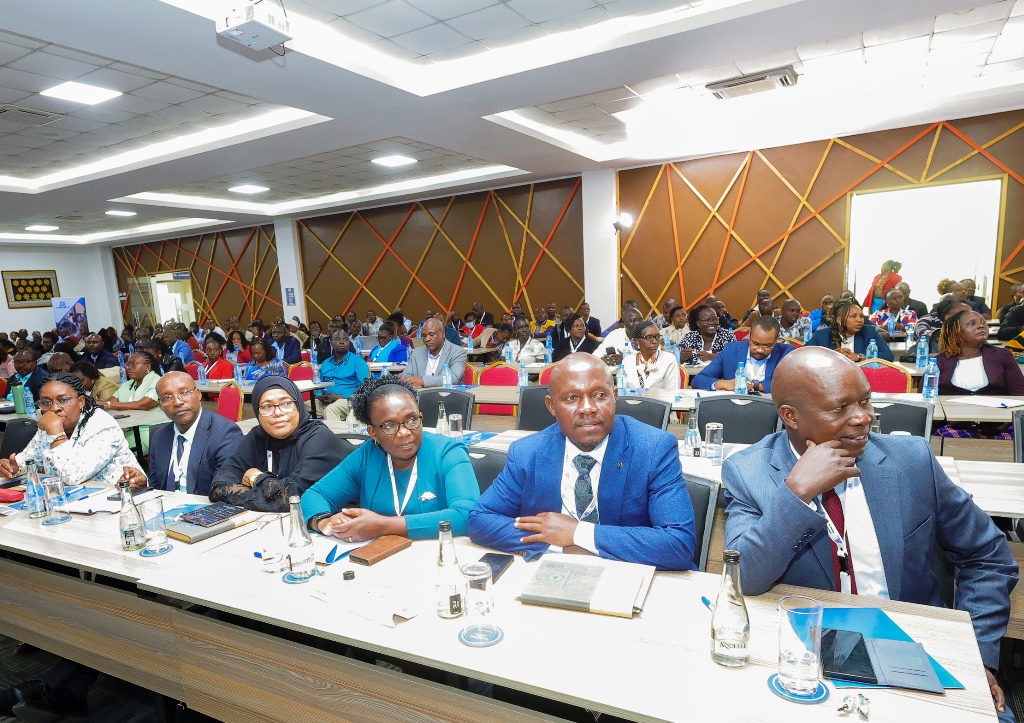
- Kenya has deepened its TVET partnership with Australia’s Signet Institute, with Australian assessors evaluating the first cohort of trainees admitted in October 2025 at Kabete National Poly.
- PS Muoria has said about 90 per cent of trainees met required competencies, with plans to expand the next assessment round to up to 1,000 candidates from the initial cohort.
- The government has confirmed parallel TVET-industry partnerships covering agriculture and automotive/mechanical engineering as part of its wider industrialisation strategy.
Kenya is positioning its technical and vocational education and training (TVET) institutions to produce globally competitive workers, stepping up collaboration with Australia on skills development, assessment and industrialisation following the successful completion of an international assessment exercise at Kabete National Polytechnic.
The exercise, conducted under a partnership between Kenyan TVET institutions and the Signet Institute of Australia, involved the first cohort of trainees admitted in October 2025 and marked a new phase in the collaboration. Speaking at the closing dinner of the August 2026 Signet assessment programme, Technical and Vocational Education and Training Principal Secretary Esther Thaara Muoria described the positive assessment by Australian trainers as a significant milestone for Kenya’s quest to align its technical training with international standards.
Muoria said Kenya must move beyond training young people solely for the domestic labour market. “We are not training our students just for locality. We want them internationalised because that is how they will be able to go out there, get even more experience, get upskilled and come back here,” she said, adding that the assessment had given trainers and policymakers an important external benchmark to see how Kenyan programmes compare internationally. After assessors gave positive feedback on the trainees’ performance, she told the gathering, “Let us give ourselves a clap.”
Linking the internationalisation drive to Kenya’s broader industrialisation ambitions, Muoria argued the country could not rely on foreign expertise to transform its economy. “This country is not going to be industrialised by anybody coming from out there. Anybody coming from out there is coming here to do business and go back. It is our business to industrialise this country,” she said, adding that developing the right technical skills and manpower would be essential to achieving that transformation. She said government efforts were focused on connecting TVET institutions more closely to industry so students gain practical skills relevant to the jobs and enterprises they will eventually join.
ALSO READ:
Over 450 TVET staff trained on governance, financial management and student welfare
The State Department for TVET is pursuing a wider strategy linking training institutions with industry, Muoria said, citing ongoing work to bring the mechanical and automotive sector into TVET training following similar initiatives in apparel and agriculture. A team from the State Department, working with university experts, has been assessing what is needed to strengthen training in automotive and mechanical engineering, aiming to ensure students train on modern equipment and gain practical industry exposure. She said the government was also building closer partnerships between agricultural training institutions and industry, creating pathways for trainees to participate in production, marketing and export of agricultural products, with about 150 industries involved in the agricultural initiative and five institutions currently participating. In the automotive and mechanical initiative, about 30 institutions are being brought on board. “These institutions are what we may call pilot institutions, as others come on board,” she said, urging institutions yet to join to move quickly: “Let nobody be left too far behind.”
The Signet partnership originated from a Kenya-Australia engagement that culminated in a memorandum of understanding signed in Adelaide, Australia. Muoria said the agreement was deliberately designed to produce practical results rather than remain a ceremonial international partnership, and thanked Australia’s representatives in Kenya, including High Commissioner Dr Wilson Kogo, and Signet officials for their commitment to the Kenyan TVET sector.
Kabete National Polytechnic principal Patrick Muchemi said the next phase of the programme could see the number of candidates assessed rise tenfold, challenging Kenyan institutions and trainers to prepare for an assessment involving up to 1,000 trainees. “I am happy that these three speakers have joined. The message is going that in the next round of this assessment, we will not assess 100. Be ready to assess 1,000 in the next round,” he said. The first assessment exercise brought together trainees and trainers from five Kenyan institutions, with Kabete National Polytechnic hosting assessments in areas including individual support, community services and bricklaying, Nairobi National Polytechnic hosting the Certificate III automotive and diesel engine assessment, and other institutions providing centres for wall and floor tiling and related qualifications. Muchemi praised trainers from participating institutions for relocating to the designated assessment centres, saying the experience had strengthened cooperation among Kenyan TVET institutions and demonstrated the sector’s capacity to conduct internationally benchmarked assessments.
Australian master trainers who took part in the exercise said it had exceeded their expectations. One assessor, with 25 years of experience in the trade sector, described the week-long exercise as one of the most rewarding of his career, while another said the programme offered an opportunity to discover the talent and potential of Kenyan trainees, adding that he had travelled to Kenya to assess trainers but returned with a deeper appreciation of the relationship between the two countries. The assessors also praised the hospitality extended by Kenyan institutions and communities. One assessor noted that about 90 per cent of trainees met the required competencies, demonstrating both technical ability and qualities such as empathy and rapport-building important in service-oriented professions, though the assessor encouraged trainees to become more confident in asking questions when they encounter areas they do not understand.
President Ruto lauded as Kazi Majuu programme opens overseas jobs for 583,000 Kenyans
Signet Institute operations manager Mohit said the partnership had moved beyond an MOU to become a practical collaboration with real results on the ground. He recalled that when the idea of delivering Australian qualifications in Kenya was first discussed in Adelaide, there were questions about how the programme would work given the geographical distance, different systems, processes and time zones separating the two countries, and noted that international partnerships sometimes generate elaborate signing ceremonies without translating into meaningful programmes. “What makes the moment special is that we are not discussing whether it can be done, because we are doing it,” he said, describing the programme as bringing together Australian training expertise, Kenyan TVET institutions, master trainers, local trainers and Kenyan students, with potential to become a model for international TVET collaboration beyond Kenya and Australia. “We are not at the end of the journey. We are only at the beginning,” he said.
Muoria said international benchmarking would remain critical as Kenya seeks to develop a workforce capable of working both locally and abroad, with trainees who gain international exposure able to acquire additional experience and skills before returning to contribute to Kenya’s economic transformation. She said the government’s strategy is to make TVET institutions centres of production, innovation and industrial development rather than institutions that merely issue certificates. With plans to expand assessment from the initial cohort to as many as 1,000 candidates, the Australia-Kenya partnership is set to become a more significant component of Kenya’s drive to build a highly skilled workforce.
By Felix Wanderi
Get more stories from our website: Education News
To write to us or offer feedback, you can reach us at: editor@educationnews.co.ke
You can also follow our social media pages on Twitter: Education News KE and Facebook: Education News Newspaper for timely updates.
>>> Click here to stay up-to-date with trending regional stories