- The government is tightening payroll controls to eliminate irregularities and strengthen accountability across public institutions.
- State agencies will migrate to a revamped human-resource and payroll system alongside extensive verification of employee records.
- The reforms will strengthen cybersecurity, payroll oversight and integration with other public financial-management platforms.
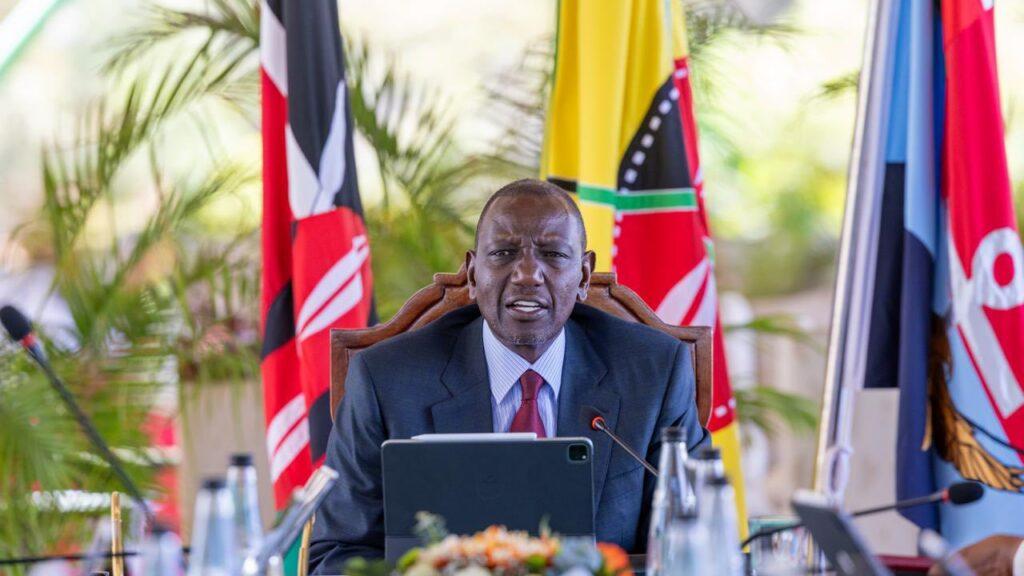
President William Ruto has directed the government to establish and roll out a new government payroll system, signalling a major overhaul of how public servants’ salaries and related government transactions are processed.
The directive is part of a broader government effort to strengthen public financial management, tighten payroll controls and close loopholes that have allowed irregular payments and weaknesses in government payroll systems to persist.
Under the proposed reforms, Ministries, Departments and Agencies, as well as State corporations and other public institutions, will be required to migrate to a revamped Integrated Human Resource and Payroll System.
The government also plans to conduct a comprehensive audit of State Departments and public institutions that have not yet undergone the required payroll and human-resource verification processes.
The reforms are expected to bring payroll management under tighter central oversight while improving the accuracy of employee records and ensuring that public servants are paid through properly verified systems.
Payroll data cleansing and validation
A major component of the exercise will be payroll data cleansing and validation. This is intended to identify and eliminate inaccurate records, duplicate entries, unauthorised changes and other anomalies that can expose the public purse to losses.
The government is also prioritising cybersecurity as part of the transformation. A disaster recovery site is expected to be established to protect payroll and financial information against system failures, cyberattacks and other disruptions.
The new system will further be integrated with other public financial management platforms, creating a more interconnected framework for managing government expenditure and payments.
The move follows concerns raised through payroll audits over weaknesses in governance and internal controls in some State Departments. The audits reportedly identified irregular alterations of employee records and gaps that could facilitate unauthorised payments.
The government has consequently taken a harder position on institutions that fail to comply with the migration programme. Earlier warnings indicated that salary payments could be frozen for agencies that failed to onboard onto the designated payroll platform.
Such a measure would represent a significant shift in government payroll management because institutions would no longer be able to operate independently outside the centralised framework.
Tighter oversight of public payroll
For the government, the objective goes beyond introducing another digital platform. It is about creating a single, verifiable and accountable chain from human-resource records to payroll processing and ultimately to government expenditure.
The reforms could also make it easier for the National Treasury and other oversight institutions to detect anomalies before they translate into financial losses.
Centralisation is particularly significant given the size of Kenya’s public service wage bill. With hundreds of thousands of public employees spread across different institutions, maintaining accurate and up-to-date payroll information remains a major administrative challenge.
A properly integrated system could help establish a clearer link between an employee’s identity, employment status, salary, institution and actual payment.
The reforms therefore place pressure on government institutions that have yet to complete the transition. They will have to ensure that their payroll information is accurate, their systems are compatible and their personnel records have undergone the required verification.
Questions over scope of reforms
However, questions remain about the precise scope of the new payroll system. It is yet to be established whether the platform will eventually incorporate wider government transactions such as e-Citizen revenue collections, external debt payments or county government financial systems.
The cost of developing, securing and maintaining the platform will also be closely watched, particularly as the government continues to pursue expenditure controls and fiscal consolidation.
For ordinary Kenyans, the significance of the reforms will ultimately be measured by whether they reduce wastage, improve accountability and ensure that public money reaches its intended destination.
If successfully implemented, the new system could become one of the most important digital reforms in Kenya’s public financial management architecture. But its success will depend not only on technology, but also on accurate data, institutional compliance, strong cybersecurity and consistent enforcement of financial controls.
READ ALSO: BoM workers: Some schools lead with dignity while others leave staff struggling
The reforms could therefore mark the beginning of a new era in government payroll and payment administration—one in which every public payment is expected to have a verifiable employee, institution, authorisation and financial trail.
By Hillary Muhalya
Get more stories from our website: Education News
To write to us or offer feedback, you can reach us at: editor@educationnews.co.ke
You can also follow our social media pages on Twitter: Education News KE and Facebook: Education News Newspaper for timely updates.
>>> Click here to stay up-to-date with trending regional stories