- A 2026 study in Ndhiwa has highlighted areas requiring greater attention in English language learning and assessment.
- More than 400 Grade 8 learners participated alongside teachers, headteachers and a Sub-County Director of Education.
- The findings strengthen calls for diagnostic assessment, remediation and stronger foundational learning as learners progress through school.
Kenya’s Junior Secondary School (JSS) system is facing growing concern over learning outcomes, with emerging evidence indicating that some learners are progressing to higher grades without fully mastering the expected reading, writing and communication competencies.
A renewed debate on the quality of learning within Junior Secondary Schools has placed Kenya’s Competency-Based Education (CBE) system under increased scrutiny, following findings that point to persistent gaps in learners’ foundational literacy and language skills.
The issue has also attracted media attention amid concerns that some JSS learners still struggle with basic reading and writing abilities.
This development raises a critical question for the education sector: Are learners advancing through grade levels faster than they are acquiring the competencies required for success at the next stage?
The concern extends beyond examination performance. It speaks to the core of learning progression—whether a learner transitioning from primary school to Junior Secondary School can read with comprehension, express ideas clearly, write coherently and independently use language as a tool for learning.
Recent research offers important insight into this issue.
A 2026 study conducted in public Junior Secondary Schools in Ndhiwa Sub-County involved 432 respondents, comprising 404 Grade 8 learners, English language teachers, headteachers and a Sub-County Director of Education. Fourteen schools were selected from the sub-county.
The study examined teachers’ efficacy in applying diverse assessment methods across English language skills, including reading, writing, listening and speaking.
Researchers found that teachers demonstrated high overall efficacy in applying different assessment methods, recording an overall mean score of 3.53. They nevertheless recommended greater emphasis on translating teachers’ assessment competence into skill-specific and practice-oriented assessment, alongside continuous professional development and improved assessment literacy.
These challenges become more pronounced as learners progress through secondary education.
Senior School education is designed to expose learners to more specialised academic, technical and creative pathways. At this level, students are expected to read complex materials, interpret instructions, conduct research, write structured reports, communicate ideas effectively and solve problems independently.
A learner entering this stage without strong literacy and numeracy foundations is likely to experience difficulties across nearly all learning areas.
Literacy, therefore, is not simply an English subject—it is the foundation of the entire curriculum.
A learner who struggles to comprehend a science question may fail to demonstrate scientific understanding—not due to lack of knowledge, but because of limited reading comprehension.
Similarly, a student who cannot organise ideas in writing may face challenges in subjects such as history, social studies, agriculture, business studies and technical disciplines.
Even practical subjects require the ability to interpret instructions, communicate processes and document learning outcomes.
Progression must reflect learning
The emerging concerns therefore challenge the assumption that grade progression automatically reflects learning progression.
Kenya’s education system has made significant investments in access, enrolment, curriculum reform and assessment. However, growing concerns now focus on whether sufficient attention is being given to learning quality within classrooms.
Previous assessments have already identified foundational learning as a persistent national challenge. The latest concerns at the JSS level suggest that early learning gaps may persist if they are not systematically identified and addressed.
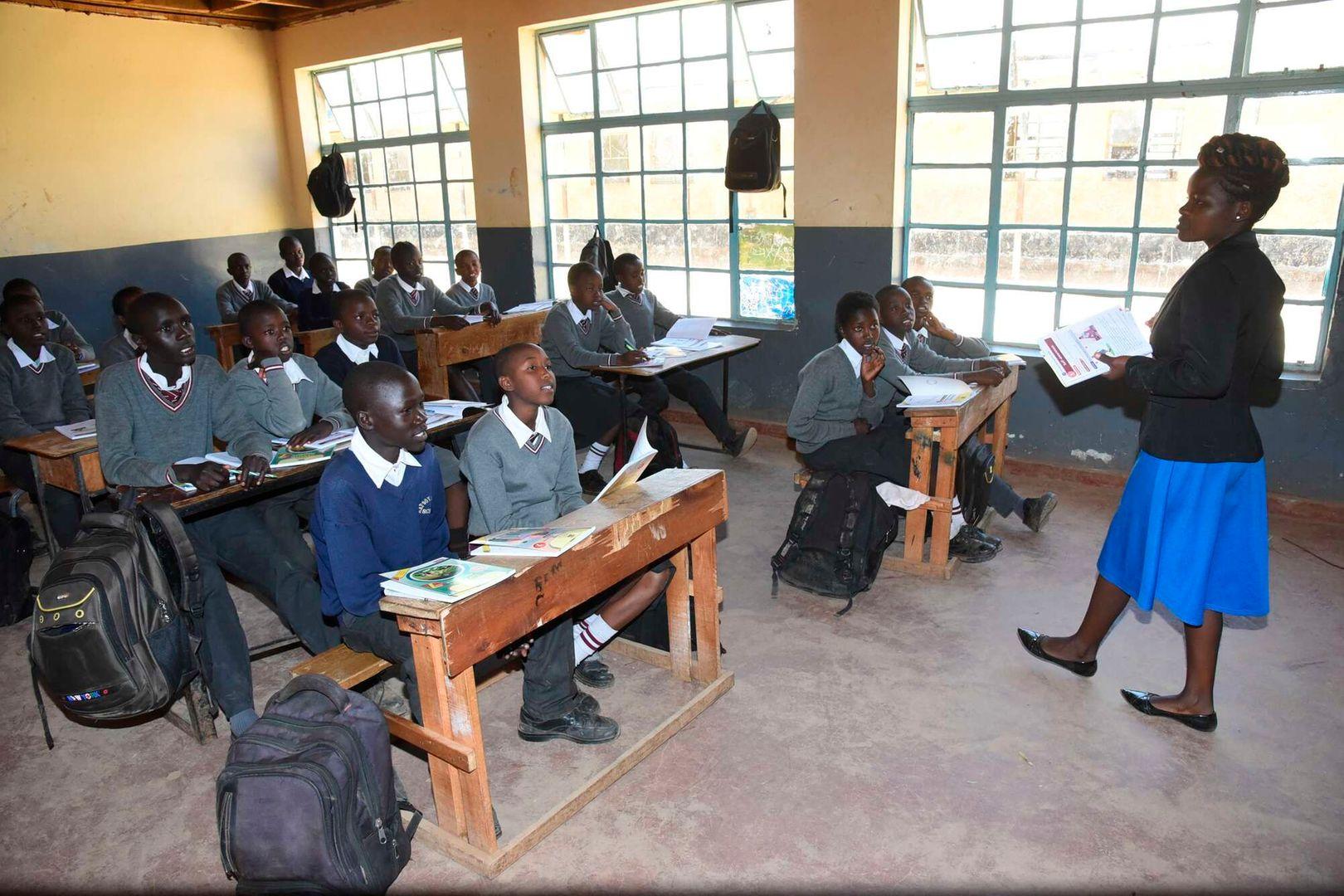
This situation presents a significant challenge for JSS teachers.
Rather than focusing solely on grade-level competencies, teachers may increasingly find themselves addressing learning gaps carried over from earlier stages of education.
This creates an additional remedial burden within JSS classrooms.
Teachers are often required to simultaneously deliver the curriculum, prepare learners for assessments, develop competencies and support learners who are still struggling with basic literacy and numeracy skills.
This underscores the need for a stronger transition framework between primary school and Junior Secondary School.
The transition should not be viewed merely as movement from Grade 6 to Grade 7, but as a shift in learning readiness and academic capacity.
Before learners enter more complex academic environments, education authorities must ensure there is reliable evidence that foundational competencies have been achieved.
This is where assessment plays a critical role.
Kenya’s Competency-Based Education framework aims to shift learning away from rote memorisation towards the development and application of competencies.
However, competency-based learning cannot be effective where foundational literacy and numeracy remain weak.
A learner cannot meaningfully demonstrate creativity, critical thinking, communication or problem-solving skills without first mastering the basic ability to understand and express information.
Strengthening foundational learning
It is therefore essential that foundational learning remains central to ongoing education reforms.
Schools require stronger diagnostic assessments, targeted remedial interventions, structured reading programmes, adequate learning resources, active parental engagement and continuous teacher support.
In addition, foundational learning must remain a priority even as schools adopt digital learning tools, artificial intelligence, technical subjects and specialised Senior School pathways.
Technology, on its own, cannot compensate for weak literacy skills.
A learner with access to digital devices but limited comprehension skills remains at a significant educational disadvantage.
The emerging concerns around JSS literacy should therefore be viewed as a warning signal—not as an indictment of teachers or learners.
Multiple factors influence learning outcomes, including early childhood education quality, access to learning materials, class sizes, teacher preparedness, home learning environments, socioeconomic conditions, attendance patterns, language exposure and assessment practices.
As such, the response must be comprehensive and system-wide.
Kenya must strengthen the learning continuum from ECDE to primary school, from primary to JSS, and from JSS to Senior School.
Each stage should adequately prepare learners for the next level of education.
The greatest risk is not poor performance in a single examination, but the silent progression of learners through the system while foundational gaps remain unaddressed.
By the time these gaps become visible, remediation becomes significantly more difficult and costly.
The concerns over JSS literacy therefore present an opportunity for Kenya to reassess how educational success is defined.
Success should not be measured solely by progression to the next grade.
It should be measured by the extent to which learners are prepared to learn at the next level.
Kenya cannot build a strong Senior School system on weak foundational skills.
It is essential to ensure that every learner can read with comprehension, write with clarity, communicate effectively and apply basic numeracy before advancing into more complex academic, technical and vocational pathways.
READ ALSO: St Joseph’s Girls Kitale, Ng’iya storm semifinals as Kenyan schools shine at FEASSA Games
A meaningful education transformation will not be achieved simply by advancing learners through the system, but by ensuring that learning advances with them.
By Our Reporter
Get more stories from our website: Education News
To write to us or offer feedback, you can reach us at: editor@educationnews.co.ke
You can also follow our social media pages on Twitter: Education News KE and Facebook: Education News Newspaper for timely updates.
>>> Click here to stay up-to-date with trending regional stories