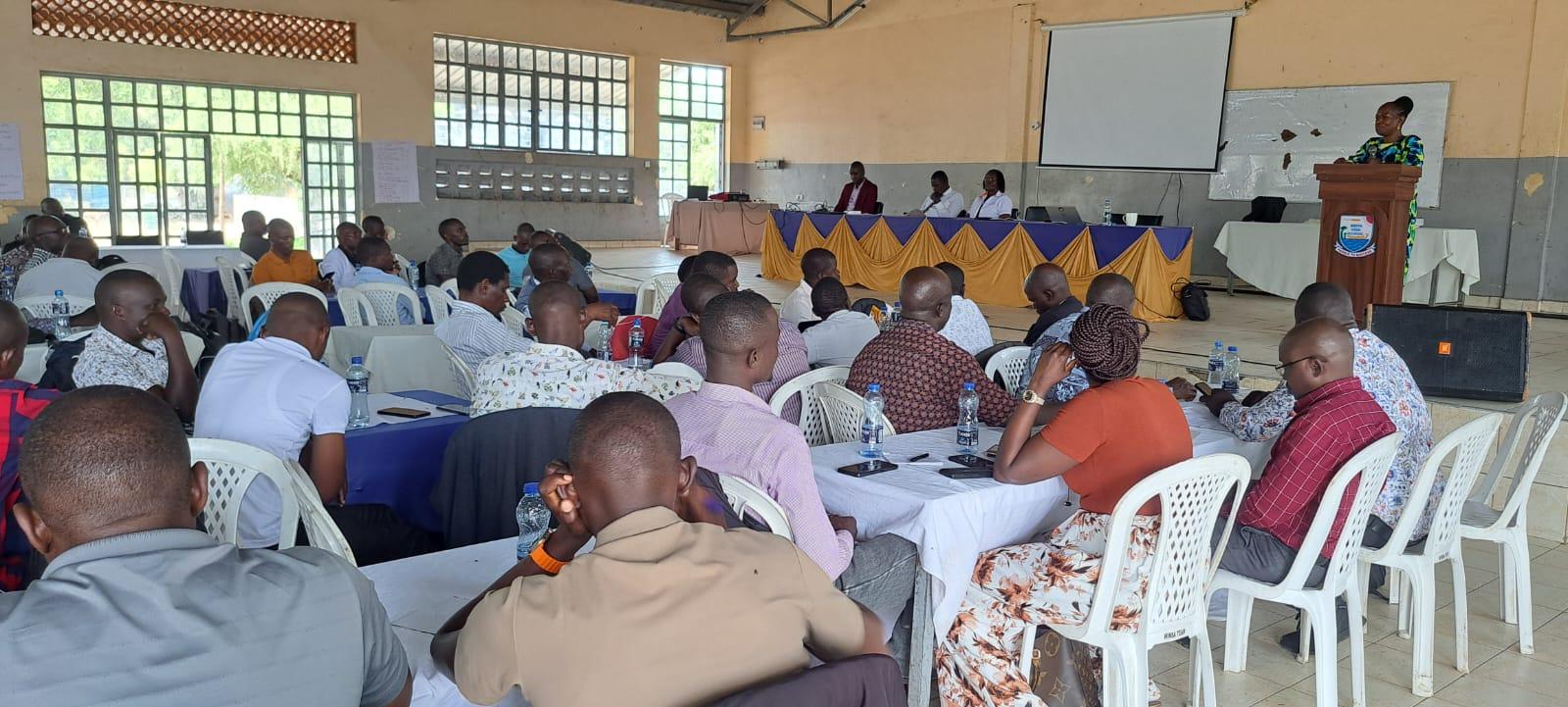
Proposed reforms seek to introduce a more structured system of professional development and in-service teacher training.- The Kenya School of Education would coordinate training, research and professional development under the proposed framework.
- Questions remain over certification, career progression, training costs and how new qualifications would be recognised by TSC.
Kenya is considering a major overhaul of how teachers undertake professional development, with a proposed legal framework that could introduce structured assessment and formal certification for teachers pursuing in-service training.
The proposal is contained in the Pre-Service Education and In-Service Training Bill, 2026, which seeks to establish the Kenya School of Education (KSE) as a central institution for teacher education, professional development, research and training.
If enacted, the framework could reshape the way serving teachers upgrade their knowledge and professional qualifications throughout their careers.
Under the proposed system, in-service training would become more structured, with teachers undertaking programmes that may include formal assessment.
Teachers who successfully complete designated programmes could be awarded certificates or diplomas, depending on the level and nature of training undertaken.
The proposal is significant because professional development has traditionally involved a mixture of workshops, seminars, capacity-building programmes and other forms of continuous professional development.
The new model could place greater emphasis on measurable learning outcomes, assessment and recognised qualifications.
However, the proposal should not be interpreted to mean that every teacher currently employed by the Teachers Service Commission will automatically be required to sit a new examination.
The Bill would first have to go through the legislative process, and the precise requirements would depend on the final framework if the legislation becomes law.
Kenya School of Education at the centre
The proposed Kenya School of Education would become a key institution in coordinating in-service teacher education.
Its responsibilities would extend beyond routine classroom training.
The School is envisaged as a centre for professional development, research, consultancy and specialised training for teachers and education managers.
It would also provide advisory services to the Cabinet Secretary for Education on matters relating to teacher education and in-service training.
The proposed institution would work with education sector stakeholders to strengthen the professional development of educators.
What about JSS teachers?
For Junior School teachers, the proposal could become particularly important as Kenya continues implementing Competency-Based Education.
Junior School has created new demands for teachers, including competency-based assessment, learner-centred pedagogy, digital learning, career guidance and specialised subject teaching.
A more formalised in-service training system could provide teachers with opportunities to acquire additional skills and qualifications while remaining in employment.
For teachers who entered service through different academic and professional pathways, such training could also become an important avenue for professional growth.
However, whether a particular certificate or diploma would automatically translate into promotion, salary advancement or a change of grade would depend on the rules governing teacher management and career progression.
A certificate obtained through the proposed system should therefore not automatically be equated with a TSC promotion unless the Commission formally recognises it for that purpose.
Potential impact on teacher promotions
One of the key questions likely to emerge among teachers is whether successful completion of the proposed training and assessments could influence career progression.
The answer will depend on the final law and policies governing teacher career progression.
If recognised as part of the professional development framework, qualifications obtained through the Kenya School of Education could potentially strengthen teachers’ professional portfolios.
However, the proposed framework should not yet be presented as a guaranteed new promotion route.
The proposed reforms point towards a broader philosophy: teacher development would become a continuous professional journey rather than something that ends when a teacher obtains an initial teaching qualification.
Teachers could periodically return to formal learning, acquire new competencies, undergo assessment and receive recognised qualifications.
Such a system could help address emerging challenges in Kenyan schools, including digital education, inclusive learning, competency-based assessment, artificial intelligence, leadership, learner protection and evolving classroom needs.
Who will pay?
Another issue likely to attract attention is financing.
If teachers are required to undertake formal programmes and assessments, questions will arise over tuition, examination fees, training materials, travel and other associated costs.
Teachers’ unions and education stakeholders are therefore likely to scrutinise the final framework to determine whether the financial burden will fall on individual teachers, the employer or the government.
This will be particularly important for teachers serving in hardship areas and schools with limited resources.
The proposed Kenya School of Education represents an attempt to give teacher development a more coordinated institutional structure.
If Parliament approves the Bill and the system is implemented effectively, teachers could have a clearer pathway for continuous professional learning, assessment and certification.
For thousands of teachers, the most important issue will not simply be whether they will sit examinations.
It will be what those examinations will mean for their careers.
Will a new certificate count towards promotion?
Will it attract additional professional recognition?
Will teachers receive study support?
Will the qualifications be incorporated into TSC career progression?
And will the system improve classroom outcomes rather than simply add another layer of examinations?
Those questions will ultimately determine whether the proposed reforms become a meaningful investment in Kenya’s teaching profession or another administrative requirement for already overstretched educators.
For now, the proposal signals a potentially significant shift: teacher professional development could increasingly become a structured cycle of training, assessment, certification and continuous career development.
READ ALSO: School reopening: Parents must prepare more than school fees
The final impact will depend on what Parliament approves and how the resulting framework is implemented.
By Hillary Muhalya
You can also follow our social media pages on Twitter: Education News KE and Facebook: Education News Newspaper for timely updates.
>>> Click here to stay up-to-date with trending regional stories
>>> Click here to read more informed opinions on the country’s education landscape
>> Click here to stay ahead with the latest national news.