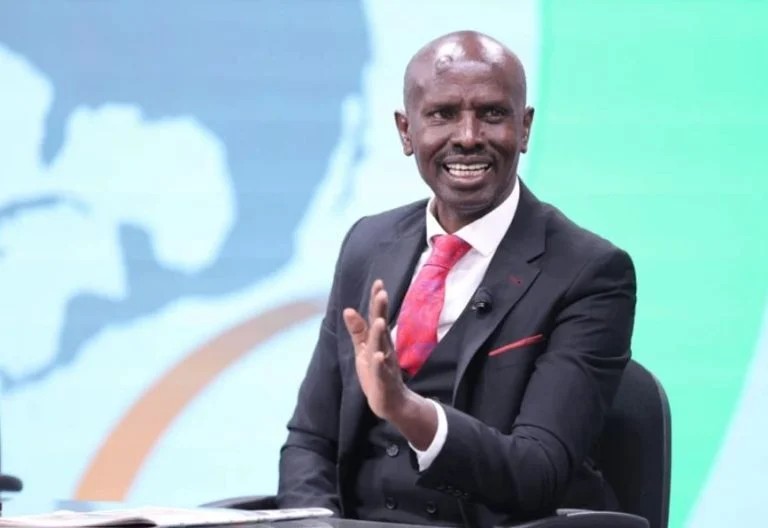
- Wilson Sossion led KNUT from 2013 to 2021 and spent more than a decade in senior union office, building a record in collective bargaining, remuneration and labour relations rather than in curriculum design.
- His objection to the competency-based rollout was procedural before it was political: he argued that piloting and evaluation had been compressed, a concern the sector has since worked through.
- He is the first prospective commissioner able to tell the board when a union position is a bargaining posture and when it is a constraint the union’s own membership has imposed, a reading its lawyers cannot supply.
The objection to Wilson Sossion’s nomination to the Teachers Service Commission is easy to state, and it has been stated often since his name went forward: the man who spent eight years arguing with the Commission from the outside should not now help govern it from within. That objection mistakes the nomination’s chief merit for its defect.
Every teacher’s strike over the past two decades has been paid for in the same currency: term time that learners do not get back, and parents rearranging their lives around a calendar nobody can rely on. Sossion comes to this nomination with something the Commission has needed throughout that period and has never had at its table: a member who understands, from the inside, how a teachers’ dispute begins, escalates and ends.
Sossion came to the sector through the classroom. He did his diploma at Egerton University between 1989 and 1992, specialising in Agriculture and Chemistry. He began teaching at St Teresa Girls’ High School in Marakwet in 1993, before transferring in 1994 to Tenwek High School in Bomet, the school he had attended, where he taught until 2001.
He pursued undergraduate studies at Kenyatta University between 1998 and 2001, and later undertook a Master’s degree in Education and Leadership at Moi University between 2010 and 2012. He is currently completing his PhD in Education Management and Leadership at Moi University and is set to graduate this year.
That grounding in the classroom left a lasting mark. Sossion’s teaching career was defined by exceptional performance among his students, a record that underscores his instructional ability. Former students recall a passionate teacher who pushed them to score straight ‘A’s in his subjects, and he was equally known as a skilled drama coach, guiding his students to national-level competitions on several occasions.
Sossion was elected to represent Bomet within KNUT in 2001; he rose through the national executive council to the chairmanship, and served as Secretary-General from 2013 until his resignation in 2021. Across that span, he negotiated with five education ministers and with successive Commission secretariats.
That is not the record of a curriculum theorist, and the case for him is stronger for not pretending otherwise. It is the record of a negotiator, and negotiation is the competence the Commission most conspicuously lacks in its own boardroom.
TVET institutions urged to align training with global skills standards
What the record actually contains
Sossion’s working life has been spent on the industrial side of the sector: collective bargaining agreements, remuneration structures, terms of service, and the machinery through which teachers’ grievances reach the employer. He represented teachers before the Ministry and the Commission on precisely these questions during the period when the sector’s largest collective agreements were negotiated and contested.
He has also engaged the Commission and the Ministry on questions affecting heads of institution, whose position is structurally awkward: they are both union members and employer representatives, carrying management responsibility while remaining subject to the same terms of service as the staff they supervise. Anyone who has had to negotiate on both sides of that line understands the tension the Commission manages daily.
The curriculum argument, fairly stated
The file on which Sossion is best remembered, and most contested, is his opposition to the competency-based rollout. Here a distinction is worth insisting upon, because his case was made in two registers and only one of them has worn well.
The polemical register produced the claims that circulated most widely: that the curriculum was fraudulent, that it had been imposed by outside interests, that it would hollow out public schooling. Those formulations were the language of a union leader mobilising members, and they should be read as such rather than adopted.
Beneath them, however, sat a procedural argument that was harder to dismiss. He contended that the pilot had been compressed into a matter of months, that no summative evaluation of the outgoing system had been completed to establish what the new one was meant to remedy, and that the change had never been put to Parliament for adoption, as its predecessor had been. Whatever one concludes about the curriculum itself, those are questions about process, and process is exactly what a commissioner is required to interrogate.
The wider point is that the sector has since travelled through this argument rather than around it. A presidential working party was constituted to review the reform, the transition has proceeded, and the design questions that remain are now questions of teacher preparation, assessment and financing rather than of whether the change should have happened. A man whose objection has been overtaken by events, and who is now heard discussing quality assurance frameworks rather than reversal, is a man who has moved with the sector.
ALSO READ:
Fresh Produce Consortium of Kenya partners with TVETA to strengthen workforce
Unionism as an instrument of governance
The strongest argument for this nomination is the one least likely to be made out loud. The Commission is not troubled by a shortage of legal advice on labour matters. It is troubled by the recurrence of industrial disputes that arrive as crises and are settled as crises, at cost to learners and to the Commission’s own standing.
Union agitation is not a weather event. It has causes, sequences and off-ramps, and those are legible to people who have run the process from the other side. A board member who knows when a union position is a bargaining posture and when it is a genuine constraint imposed by the union’s own membership can tell the Commission something its lawyers cannot. Equally, he can tell it when its own conduct is manufacturing the dispute it is about to complain of.
This is what it means to harness unionism rather than merely to survive it. It is also why the nomination is more interesting than the reversal narrative allows.
The objection, and what answers it
The case against deserves a fair statement rather than a caricature. An employer that seats a former adversary at its board, it runs, imports the adversary’s interests along with his knowledge. A man who spent his working life representing teachers will represent them still, only now from the other side of the table, where somebody is supposed to be representing the employer.
The answer is that the Commission’s board is not short of members who see the question from the employer’s side. That is the one perspective it is guaranteed to have. What it lacks, and has always lacked, is a member who can say what the other side is likely to do next, and why. A board that can anticipate a dispute is in a stronger position than one that can only respond to it, and anticipation is not sympathy.
Temperament, and what the office now asks
The qualities that made him effective in the union are real: tenacity under pressure, and a command of public argument that few in the sector match. He is a genuinely capable communicator, and the Commission has an evident need for policy instruments that can be explained to the people expected to implement them, and for engagement with stakeholders that begins before positions harden.
Social media boundaries for teachers: What you need to know to stay out of trouble
But those qualities were exercised in an office whose purpose was advocacy, and he is being asked to take one whose purpose is decision. A commissioner speaks through resolutions and reasoned determinations, not through the microphone, and speaks after deliberation rather than in place of it. Collective responsibility means carrying decisions he argued against. Years spent on the other side of the table will have taught him what the adversarial mode costs when it meets an institution with the power to answer.
Parliament’s vetting will test his fitness for the office. The sector should hold him to a simpler standard once he is in it. If his fluency in labour relations shortens a dispute that would otherwise have closed schools, the nomination will have justified itself. If it merely relocates the argument from the press conference to the boardroom, it will not.
By Ibrahim Adan
Mr Adan is an education policy consultant working on teacher policy development in the Horn of Africa. ihishadan@gmail.com
You can also follow our social media pages on Twitter: Education News KE and Facebook: Education News Newspaper for timely updates.
>>> Click here to stay up-to-date with trending regional stories
>>> Click here to read more informed opinions on the country’s education landscape