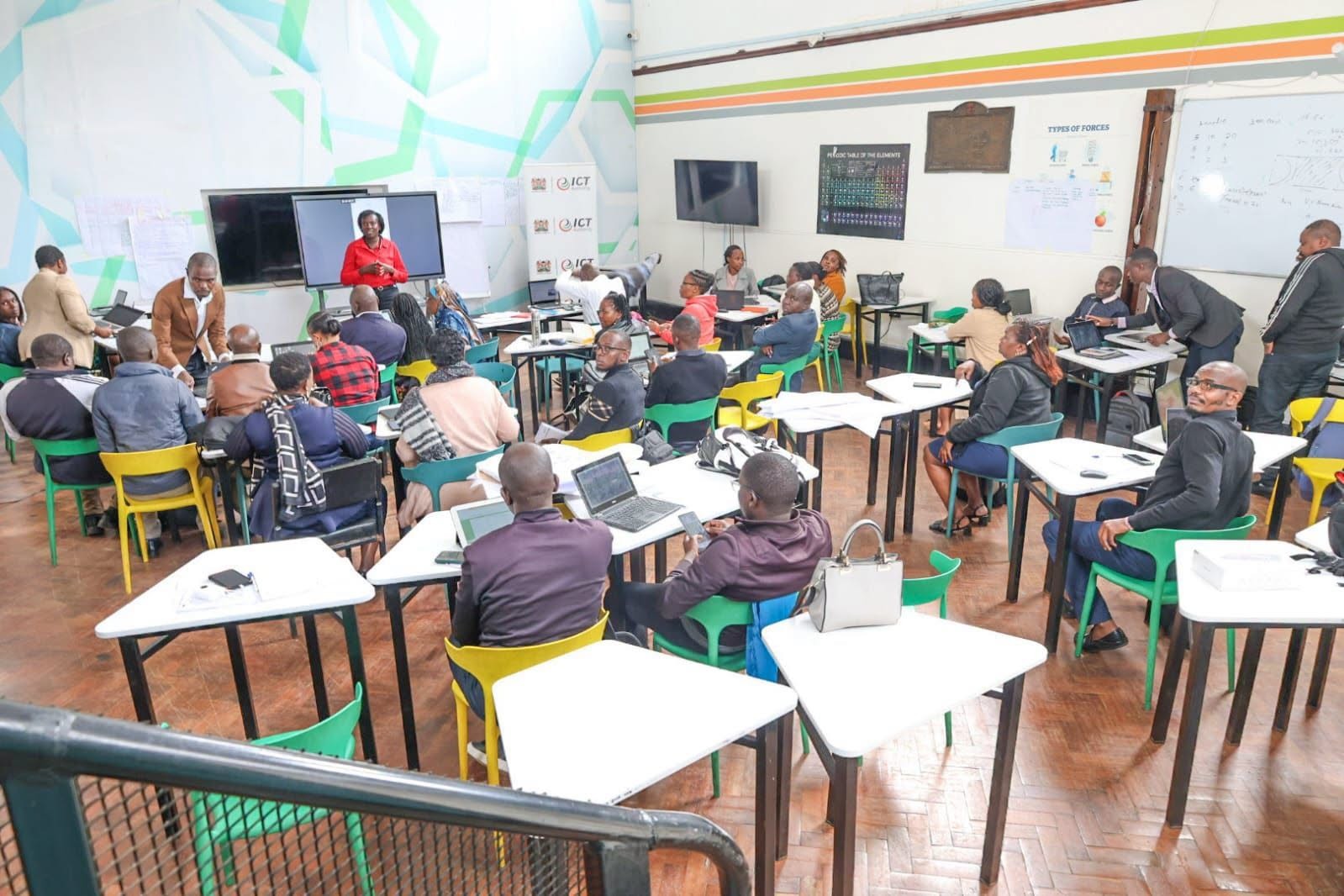
- More than 62,000 JSS teachers from all 47 counties have completed a nationwide June ICT training but have not received their allowances.
- Teachers have made repeated attempts to obtain a clear figure and payment date from TSC and the ICT Authority without success.
- The teachers have called on TSC and the ICT Authority to issue an official statement on the payment amount, process and disbursement date.
More than 62,000 Junior Secondary School (JSS) teachers who took part in a nationwide Information and Communication Technology (ICT) training in June are demanding clarity over allowances that remain unpaid weeks after the programme ended, with participants saying repeated attempts to establish when and how much they will be paid have gone unanswered. Drawn from all 47 counties, the teachers say they have received no definite communication on either the amount payable or the expected payment date, leaving many uncertain about what to expect.
The June programme was conducted through a smart cascade model, under which trainers equip a selected group of educators with skills and knowledge who then pass that instruction on to the wider teacher population. The approach is intended to make large-scale training more practical and cost-effective while ensuring that teachers across the country receive similar instruction, and forms part of broader efforts to equip teachers with digital competencies as schools increasingly incorporate technology into classroom instruction and learning resources.
Teachers who participated say they were informed that training allowances would be paid, with the Teachers Service Commission (TSC) and the ICT Authority expected to facilitate the payments. Unlike some previous training programmes where participants were given clear details on the applicable allowances, teachers involved in the June ICT training say the amount payable was never clearly specified to them, and repeated attempts to obtain clarification have yielded no definitive figure.
TSC to factor co-curricular activities into teacher career progression guidelines
Uncertainty over amount and payment channel
The lack of clarity has left many participants uncertain about whether payments are being processed centrally or through county-level structures. “We have made several attempts to find out how much we are supposed to receive and when the money will be paid, but there has been no definite communication,” one teacher said. The concerns have also been amplified through teachers’ online forums, where participants have continued seeking clarification from colleagues and officials on the status of the payments.
The teachers argue that participants incurred expenses during the training, including transport and other personal costs, and say they should be given clear information on the reimbursement process. They are now calling on TSC and the ICT Authority to issue an official statement outlining the payment arrangements, the amount payable and the expected disbursement date, arguing that participants should not have to repeatedly seek information after completing an official government training programme.
ALSO READ: Parliament tables six sweeping education Bills overhauling governance, curriculum, teacher training and university funding
For the teachers, the focus has now shifted from the training itself to the outstanding allowances. They want the authorities to explain whether funds have already been released, what process is being used to identify beneficiaries, and when the payments will reach individual teachers. Teachers say timely communication from TSC and the ICT Authority, the two institutions expected to handle the allowances, would help end the speculation and uncertainty currently surrounding the payments.
As of the time of this report, TSC and the ICT Authority had yet to provide a publicly confirmed figure for the allowances or a definitive payment timeline. The teachers maintain that the delay could also raise broader questions about how allowances for large-scale teacher training programmes are planned and communicated in future, even as they insist the issue is not about the value of the training itself, which they say was important for strengthening their ICT skills, but about receiving clear information and being paid what is due to them.
By Staff Reporter
You can also follow our social media pages on Twitter: Education News KE and Facebook: Education News Newspaper for timely updates.
>>> Click here to stay up-to-date with trending regional stories
>>> Click here to read more informed opinions on the country’s education landscape